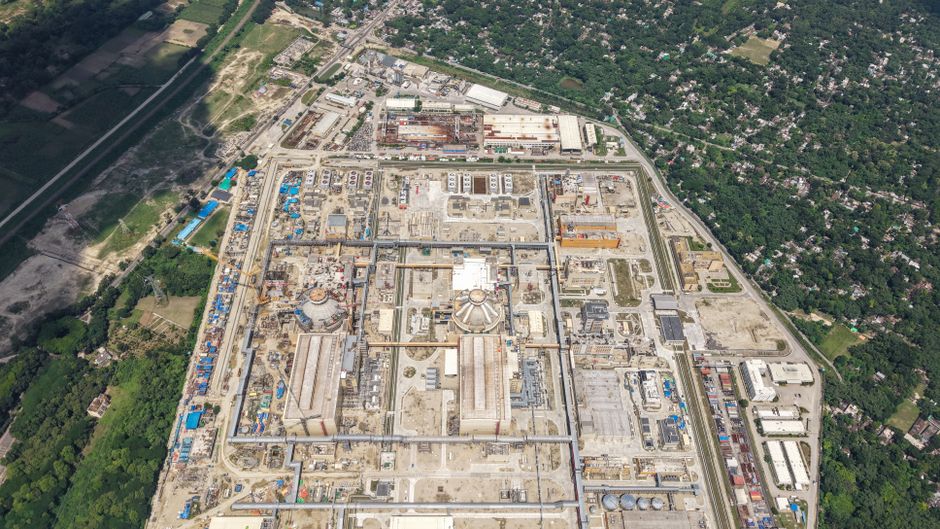
- Deep Fission is developing compact, modular nuclear reactors for carbon-free power at scale.
- The company is seeking to raise up to $157 million in its initial public offering.
- Deep Fission has a history of failed attempts at going public, including a 2022 SPAC merger.
- Global investment in advanced nuclear has surged past $6 billion in 2023.
- The nuclear energy sector is experiencing a renaissance due to its potential for net-zero emissions and grid reliability.
In an era where climate targets loom and energy grids strain under rising demand, Deep Fission claims it has a solution: compact, modular nuclear reactors capable of delivering carbon-free power at scale. The California-based startup recently announced plans for an initial public offering that could raise up to $157 million, reigniting interest in its controversial journey from stealth-mode venture to Wall Street hopeful. Yet the announcement comes with a caveat — this isn’t Deep Fission’s first attempt at going public. After a failed SPAC merger in 2022 and years of opaque development timelines, investors are asking not just whether the technology works, but whether the company can deliver on its lofty promises. With global investment in advanced nuclear surging past $6 billion in 2023, according to ScienceDaily, the stakes for Deep Fission have never been higher.
The Nuclear Renaissance and Deep Fission’s Timing

Nuclear energy is experiencing a quiet renaissance. As nations scramble to meet net-zero emissions goals without sacrificing grid reliability, governments and private investors are revisiting atomic power — particularly next-generation designs like small modular reactors (SMRs). Unlike traditional plants, which take over a decade to build and cost tens of billions, SMRs promise factory-built scalability and enhanced safety features. Deep Fission positions itself at the forefront of this shift, touting a proprietary molten salt reactor design that operates at atmospheric pressure and uses fuel that is both proliferation-resistant and more efficient than conventional uranium. The company claims its reactors can be deployed in as little as five years and integrated into existing power infrastructure. Against this backdrop, Deep Fission’s IPO timing appears strategic: federal incentives under the Inflation Reduction Act now support advanced nuclear projects, and the U.S. Department of Energy has committed over $2 billion to SMR demonstration programs.
From Stealth Startup to Public Market Contender

Founded in 2018 by a group of former Los Alamos and MIT nuclear engineers, Deep Fission initially attracted attention — and $85 million in Series B funding — by promising a reactor that could fit inside a standard shipping container and generate 50 megawatts of continuous power. By 2021, the company had signed memorandums of understanding with three utility companies in the Midwest and secured a test site in Idaho National Laboratory’s Advanced Test Reactor complex. However, progress stalled. Regulatory approvals lagged, prototype testing was delayed, and by 2022, Deep Fission abandoned its planned merger with a special purpose acquisition company (SPAC) due to insufficient investor interest. Now, with the new IPO filing under Regulation A+, which allows smaller issuances to non-accredited investors, the company is attempting to bypass traditional Wall Street skepticism and appeal directly to retail markets. The offering will be managed by Beacon Securities, a boutique investment bank with limited experience in energy IPOs.
Technical Claims Meet Financial Scrutiny

Deep Fission’s core innovation lies in its fluoride salt-cooled, high-temperature reactor (FHR), which uses tristructural-isotropic (TRISO) fuel particles embedded in graphite pebbles. These fuels are inherently stable and resistant to meltdown, a key selling point after Fukushima. The company claims a thermal efficiency of 48%, significantly higher than the 33% typical of light-water reactors. But experts remain cautious. Dr. Elena Rodriguez, a nuclear materials scientist at MIT, told Reuters that while the design is theoretically sound, “no FHR has yet achieved sustained operation beyond six months, and fuel degradation in molten salts remains an unresolved challenge.” Financial disclosures in Deep Fission’s IPO filing reveal $210 million in cumulative losses since inception and only $12 million in current cash reserves. Revenue remains nonexistent, with commercial deployment now projected for 2030 — a full five years behind initial estimates.
Implications for Investors and the Energy Sector

If Deep Fission succeeds, it could reshape decentralized energy production, offering carbon-free baseload power for remote communities, data centers, and industrial zones. But failure could deepen investor wariness toward nuclear startups, many of which have burned through capital without delivering working reactors. The IPO’s $157 million target is modest compared to earlier clean energy listings — for context, fusion company Helion raised $500 million from private investors in 2023 — but it could still influence policy. A successful public listing might prompt further DOE loan guarantees or state-level procurement contracts. Conversely, poor market reception could signal that the public is not yet ready to bet on unproven nuclear tech, regardless of climate urgency. Retail investors, in particular, may lack the technical literacy to assess the risks, raising ethical questions about broad market access to highly speculative energy ventures.
Expert Perspectives
Opinions on Deep Fission are sharply divided. Proponents, like energy analyst Mark Tran of BloombergNEF, argue that “private capital has failed to fund long-horizon nuclear innovation — public markets may be the only path.” Others, including Dr. Susan Park of the Union of Concerned Scientists, warn that “offering untested reactors to everyday investors blurs the line between innovation and financialization.” Some experts stress that regulatory clarity, not capital, is the biggest barrier. The Nuclear Regulatory Commission has yet to certify any molten salt reactor design, a process that typically takes 3–5 years. Until then, Deep Fission’s reactors remain theoretical, no matter how compelling the pitch.
Looking ahead, investors should watch for three key developments: confirmation of a third-party technical audit, progress toward NRC pre-application reviews, and any shift in utility off-take agreements. The IPO itself may go through, but sustainable valuation will depend on verifiable milestones, not vision statements. As the world seeks clean alternatives to fossil fuels, Deep Fission’s gamble could either catalyze a new nuclear era — or become a cautionary tale of ambition outpacing execution.
Source: TechCrunch