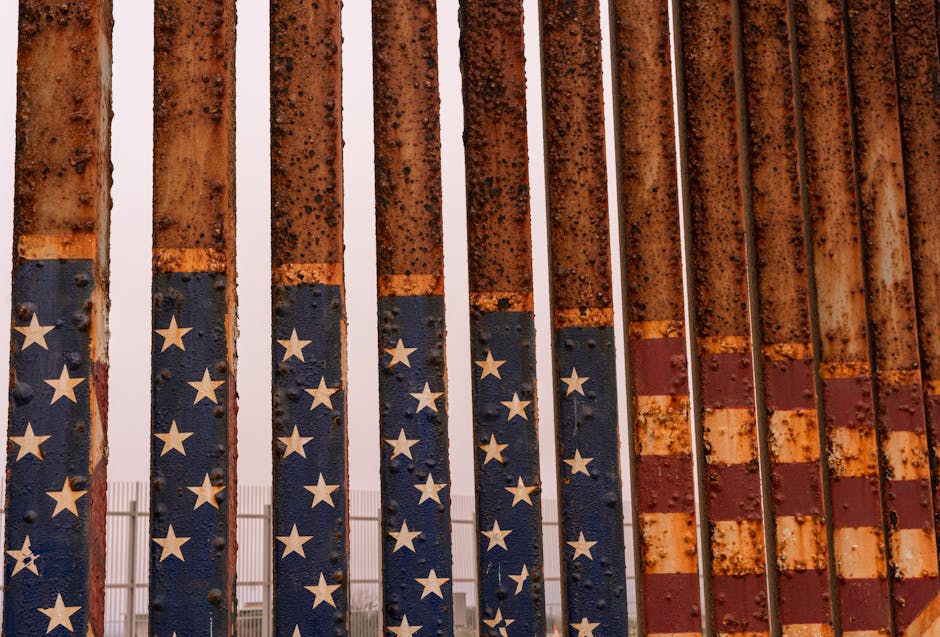
- Iran’s national soccer team will relocate its training base from the US to Tijuana, Mexico, due to security concerns and diplomatic incidents.
- The decision reflects a delicate balance between international sports and foreign policy to avoid escalating tensions between Washington and Tehran.
- Mexico has agreed to host Iran’s delegation as a gesture of regional cooperation and logistical pragmatism during the 2026 FIFA World Cup.
- The Iranian team will play its group stage matches in US cities as scheduled, with easy access to match venues from its new training base in Tijuana.
- FIFA has insisted on the inclusion of all qualified teams, including Iran, despite strained relations between the US and Iran.
Mexican President Claudia Sheinbaum confirmed on Monday that the United States formally requested Iran’s national soccer team be relocated from American soil to Tijuana, Mexico, for the duration of the 2026 FIFA World Cup. While Iran will still play its group stage matches in U.S. cities as scheduled, its training base and accommodations will be established just south of the border, a rare diplomatic maneuver amid ongoing geopolitical tensions between Washington and Tehran. The arrangement, coordinated at the highest levels, reflects the delicate balance between international sports and foreign policy, allowing the tournament to proceed without escalating political friction. Sheinbaum emphasized Mexico’s readiness to host, calling it a gesture of regional cooperation and logistical pragmatism during one of the world’s largest sporting events.
Iran’s World Cup Base Shifts to Tijuana

The Iranian national team will set up its official training camp in Tijuana, a border city directly adjacent to San Diego, California, enabling easy access to U.S. match venues while maintaining political distance from American soil. According to President Sheinbaum, the decision was initiated by U.S. officials concerned about potential security risks and diplomatic incidents associated with hosting Iran’s delegation amid longstanding hostilities between the two nations. Despite decades of strained relations, FIFA has insisted on the inclusion of all qualified teams, and the U.S., as co-host of the 2026 tournament alongside Canada and Mexico, is obligated to uphold that principle. The compromise allows Iran to participate fully while mitigating political sensitivities. The team will travel daily or weekly across the border for matches in cities like Los Angeles and Seattle, relying on enhanced cross-border coordination between U.S. and Mexican authorities to ensure safe passage.
How Geopolitics Influenced a Sporting Decision

The relocation of Iran’s base camp is not without precedent. International sports have long been entangled with global politics, from the U.S.-led boycott of the 1980 Moscow Olympics to Iran’s own restrictions on competing against Israeli athletes. The U.S. and Iran have had no formal diplomatic relations since 1980, and tensions have flared repeatedly over nuclear ambitions, sanctions, and military actions in the Middle East. Hosting Iran’s delegation on American soil—even for a sporting event—could have sparked protests, security threats, or political backlash. In 2022, Iranian players faced scrutiny during the Qatar World Cup amid nationwide protests back home, and the U.S. State Department reportedly raised concerns about potential intelligence or surveillance risks associated with Iranian officials traveling under diplomatic cover. By shifting the base to Mexico, the U.S. avoids direct hosting responsibilities while still fulfilling its commitments as a tournament co-host.
The Players and Policymakers Behind the Move

The decision involved high-level coordination between U.S. Department of State officials, FIFA administrators, Mexican security agencies, and sports ministries. While FIFA has maintained public neutrality, internal discussions have acknowledged the unique challenges posed by politically sensitive delegations. President Sheinbaum positioned Mexico as a pragmatic facilitator, emphasizing regional solidarity and the country’s capacity to manage high-profile international events securely. Iranian team officials have not issued public statements, but sources within the Football Federation Islamic Republic of Iran suggest they view the arrangement as a workable compromise, preferable to being excluded or isolated in a remote location. Meanwhile, U.S. soccer leaders, including U.S. Soccer Federation President Cindy Parlow Cone, have remained silent, likely deferring to federal guidance on national security matters. The quiet diplomacy underscores how sports bodies increasingly operate within geopolitical constraints rather than in isolation from them.
Consequences for Diplomacy and International Sports

This arrangement sets a subtle but significant precedent for how international sporting events manage politically contentious participants. While the 2026 World Cup aims to celebrate unity and global participation, the Iran case reveals the limits of that ideal in practice. Other nations with strained relations to host countries may now anticipate similar accommodations, potentially fragmenting the traditional model of host-nation immersion. For Mexico, the move reinforces its role as a key regional partner in North American security and event logistics. For Iran, it ensures participation without full exposure to a hostile political environment. However, critics warn that such compromises risk normalizing the exclusion of teams based on geopolitics rather than sport, potentially undermining FIFA’s mission of inclusivity. The long-term impact may influence how future tournaments handle nations under sanctions or with adversarial foreign policies.
The Bigger Picture
The relocation of Iran’s World Cup base to Tijuana is more than a logistical adjustment—it’s a reflection of how deeply international sports are embedded in global power dynamics. As seen during the Cold War and in modern Olympic contests, athletic competition rarely exists outside the shadow of statecraft. The 2026 World Cup, marketed as a unifying event across three democracies, now confronts the reality that inclusion sometimes requires geographic and political workarounds. This moment highlights the growing role of host nations and neighboring countries in de-escalating tensions, turning border cities like Tijuana into diplomatic buffers. It also raises questions about the future of sports in an era of heightened nationalism and digital surveillance, where a team’s presence can carry intelligence and symbolic weight far beyond the pitch.
As the 2026 World Cup approaches, all eyes will be on how smoothly Iran’s cross-border operations function and whether similar arrangements emerge for other sensitive delegations. The success of this model could influence how FIFA and host nations manage geopolitical flashpoints in future tournaments. For now, Tijuana stands not just as a training ground, but as a symbol of compromise—where soccer, sovereignty, and security intersect.
Source: Fortune