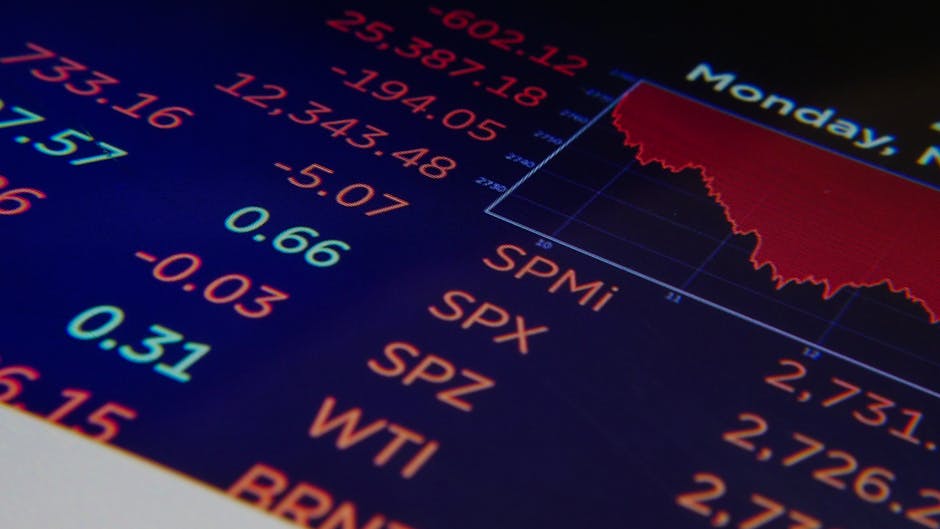
- Donald Trump’s Iran war threats have ended the US economic ‘goldilocks’ era of moderate growth and controlled inflation.
- JP Morgan warns of a potential ‘negative growth shock’ due to rising geopolitical risk premiums and energy market volatility.
- The ‘goldilocks’ economy, characterized by balanced growth and inflation, has been disrupted by renewed geopolitical instability.
- Increased tensions over Iran’s nuclear program and possible military action threaten global oil supply chains and drive up crude oil prices.
- Weakening consumer confidence and tighter monetary conditions are undermining recent economic resilience in the US.
Former President Donald Trump’s escalating rhetoric around Iran has ended the U.S. economy’s ‘goldilocks’ scenario—a rare period of moderate growth, controlled inflation, and robust labor markets—with JP Morgan now warning of a potential ‘negative growth shock.’ The shift stems from rising geopolitical risk premiums, particularly in energy markets, as tensions over Iran’s nuclear program and possible military action threaten global oil supply chains. With crude oil prices spiking and financial volatility increasing, the bank forecasts weakening consumer confidence and tighter monetary conditions, undermining recent economic resilience. This marks a pivotal risk to macroeconomic stability, especially if such tensions escalate during the 2024 election cycle.
End of the Economic Sweet Spot

The so-called ‘goldilocks’ economy, a term used to describe conditions that are ‘not too hot, not too cold,’ has been a defining feature of the U.S. recovery since 2023. Characterized by inflation gradually cooling toward the Federal Reserve’s 2% target, unemployment holding near historic lows, and GDP expanding at a sustainable 2–3% annual rate, this balance allowed policymakers to cautiously ease restrictive monetary policy. However, renewed geopolitical instability, particularly surrounding U.S.-Iran relations under a potential second Trump administration, has disrupted this equilibrium. JP Morgan’s economists argue that the market is now pricing in higher risk premiums, especially in energy, where even the threat of conflict can spike prices and trigger inflationary pressures. Unlike pandemic-era shocks, this risk emerges from deliberate foreign policy brinkmanship, making it harder for central banks to insulate economies.
Trump’s Foreign Policy and Market Reaction

Although no active war with Iran is currently underway, Donald Trump’s campaign statements and past actions—including the 2020 assassination of Iranian general Qasem Soleimani—have reignited concerns about a return to aggressive containment policies. His administration previously withdrew from the Iran nuclear deal (JCPOA) in 2018 and reimposed harsh sanctions, leading to a brief spike in oil prices. Recent signals suggest a second Trump term could pursue even more confrontational measures, including preemptive strikes if Iran nears nuclear weapons capability. Markets have responded swiftly: Brent crude rose over 7% in early May 2026 following a series of hawkish speeches, while bond yields climbed as investors sought safe-haven assets. JP Morgan notes that such volatility undermines business investment and consumer spending, two pillars of sustained growth.
Energy Shocks and Inflation Risks

The core of JP Morgan’s warning lies in the transmission mechanism between geopolitical risk and macroeconomic performance. A spike in oil prices directly feeds into transportation, manufacturing, and consumer costs, reigniting inflation just as the Federal Reserve prepares to cut interest rates. Historically, oil shocks have preceded recessions: the 1973 Arab oil embargo, the 1990 Gulf War, and the 2008 price surge all preceded economic downturns. Today, even a modest 20% increase in crude prices could add 0.5–0.7 percentage points to core inflation, delaying rate cuts and tightening financial conditions. The bank’s models suggest that if oil exceeds $100 per barrel due to supply disruptions, the U.S. could face negative GDP growth in at least one quarter of 2026. This scenario, they argue, is no longer a tail risk but a plausible outcome given current geopolitical trajectories.
Economic Vulnerability in an Election Year

The timing of these risks couldn’t be more critical. With the 2024 U.S. presidential election approaching, economic perceptions will heavily influence voter behavior. While current data remains strong, forward-looking indicators like consumer sentiment and small business confidence are already softening. A sustained rise in gas prices—a highly visible cost for American households—could erode public confidence rapidly. Moreover, the Federal Reserve may be forced to maintain higher interest rates longer, increasing borrowing costs for mortgages, auto loans, and business credit. This dynamic could disproportionately affect lower- and middle-income households, potentially amplifying social and political tensions. Unlike past crises, today’s economy lacks fiscal breathing room, with federal debt exceeding 120% of GDP, limiting policymakers’ ability to respond with stimulus if growth stalls.
Expert Perspectives
Economists are divided on the severity of the threat. While JP Morgan’s warning has gained attention, some analysts, like those at Reuters, argue that markets may be overreacting to campaign rhetoric that often softens after elections. Others, including former Treasury officials, caution that Trump’s past actions suggest a willingness to act unilaterally on Iran, making the threat credible. Energy experts from BBC News note that Iran controls critical chokepoints like the Strait of Hormuz, through which 20% of the world’s oil passes, meaning even a limited conflict could have outsized effects. The consensus is that while full-scale war remains unlikely, the risk of miscalculation is rising.
Looking ahead, investors and policymakers should monitor three key indicators: oil price trends, U.S. military deployments in the Persian Gulf, and Federal Reserve communications. Any sustained move above $90 per barrel for WTI crude would signal deepening concern. Additionally, the re-entry of Iran into nuclear weapons development, as assessed by the IAEA, could trigger new sanctions and further escalation. With both domestic and global economies still recovering from recent shocks, the return of geopolitical risk as a dominant force marks a turning point. The ‘goldilocks’ era may be over—not with a crash, but with the slow burn of rising uncertainty.
Source: Reddit