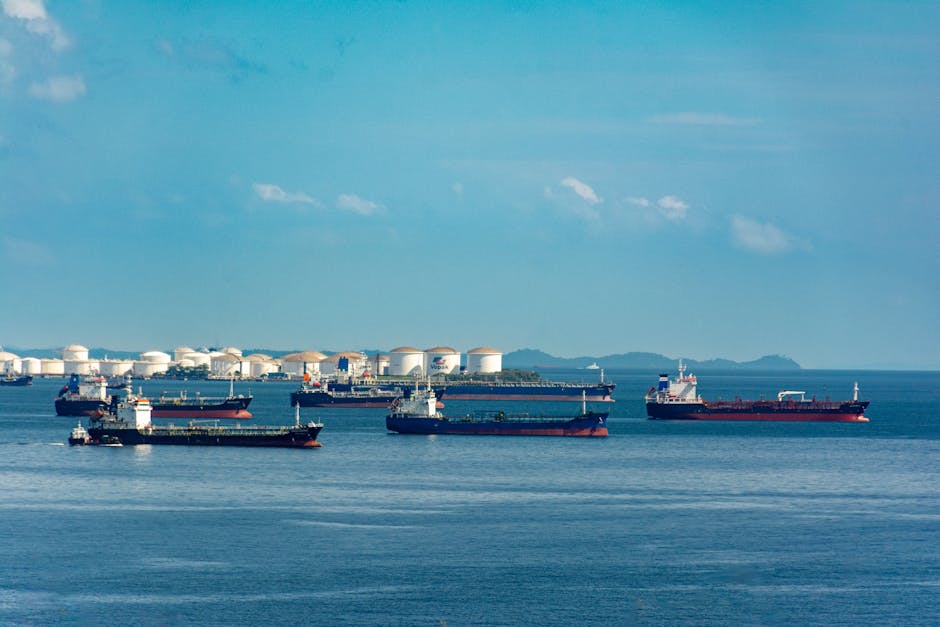
- Brent crude oil prices surged 2% after U.S. President Trump’s renewed threats against Iran escalated tensions in the Strait of Hormuz.
- The Strait of Hormuz is a critical global oil shipping lane, through which 20% of the world’s seaborne oil passes.
- Trump’s comments threatened to reverse diplomatic progress, potentially escalating regional conflict and disrupting oil flows.
- Middle East geopolitics have a profound impact on global markets, with the region being the world’s most pivotal energy source.
- The perception of conflict in the Strait of Hormuz can trigger market volatility, affecting energy traders and global economic stability.
Brent crude oil prices surged 2% on May 26, 2026, as former U.S. President Donald Trump’s renewed threats of military action against Iran cast doubt on fragile nuclear negotiations and heightened instability in the Strait of Hormuz, a critical global oil shipping lane. The price jump reflects growing investor anxiety over supply disruptions in the Persian Gulf, where over 20% of the world’s seaborne oil passes through the narrow strait. With energy markets already sensitive to geopolitical risks, Trump’s comments signaled a potential reversal of diplomatic progress, threatening to escalate regional conflict and disrupt oil flows. This development matters not only for energy traders but also for global inflation, manufacturing costs, and economic stability in oil-importing nations.
Why Middle East Geopolitics Drive Global Markets

The Middle East remains the world’s most pivotal energy region, and any threat to its stability reverberates across global financial systems. The Strait of Hormuz, located between Iran and the Arabian Peninsula, is the chokepoint through which approximately 17 to 21 million barrels of oil pass daily, according to the U.S. Energy Information Administration. Even the perception of conflict can trigger market volatility, as insurers raise premiums, shipping routes are rerouted, and speculative trading intensifies. In recent months, diplomatic efforts to revive the 2015 Iran nuclear deal had offered hope for de-escalation. However, Trump’s public intervention—despite no longer holding office—carries weight due to his influence over Republican foreign policy and potential return to power in the 2028 election. This convergence of political rhetoric and physical risk infrastructure makes oil markets especially reactive to saber-rattling.
Trump’s Warning and the Collapse of Diplomatic Momentum

On May 25, 2026, Donald Trump stated in a televised interview that ongoing negotiations with Iran were “proceeding nicely,” but added a stark warning: “If those talks fail, the United States must be ready to act swiftly and decisively.” While he did not specify what “decisive action” might entail, analysts interpreted the remark as a veiled threat of military strikes on Iranian nuclear or naval facilities. His comments disrupted a period of cautious optimism following indirect talks facilitated by European intermediaries and the International Atomic Energy Agency (IAEA). Iran had recently signaled willingness to limit uranium enrichment in exchange for sanctions relief, creating a narrow opening for diplomacy. Yet Trump’s intervention undercut these efforts, emboldening hardliners in Tehran who argue that the U.S. cannot be trusted. The Iranian Foreign Ministry responded by stating that “threats will not alter our sovereign path,” raising the likelihood of renewed confrontation.
Oil Market Reaction and Supply Chain Vulnerabilities

Markets reacted swiftly to the heightened rhetoric. Brent crude futures for July delivery climbed 2% to $98.70 per barrel on the London ICE exchange, while U.S. West Texas Intermediate (WTI) rose 1.8% to $94.35. The surge was driven by hedge funds and energy traders adjusting their positions in anticipation of supply shocks. tanker rates in the Gulf increased by 12% overnight, and insurers began revising war risk premiums for vessels transiting near Iranian waters. Historical precedent supports such caution: in 2019, attacks on oil tankers near the Strait of Hormuz—widely attributed to Iran—triggered a 5% spike in Brent prices within days. More recently, in 2024, Houthi attacks in the Red Sea disrupted alternative shipping lanes, demonstrating how regional instability can compound global logistics pressures. With inventories still below pre-pandemic levels in key economies like the U.S. and Europe, even a short-term disruption could tighten supply and push prices toward $100 per barrel.
Broader Economic Implications of Rising Oil Prices

A sustained increase in oil prices threatens to reignite inflationary pressures in major economies, complicating monetary policy for central banks already navigating post-pandemic recovery. For consumer economies like the United States, Germany, and Japan, higher fuel costs translate into increased transportation and production expenses, eventually filtering into retail prices. The International Monetary Fund (IMF) has previously warned that a 10% rise in oil prices could reduce global GDP growth by 0.2 percentage points over a year. Emerging markets, particularly those with large import bills and weak currencies, are especially vulnerable. Countries like Egypt, Pakistan, and Turkey could face balance-of-payment crises if energy costs remain elevated. Moreover, political instability in oil-producing nations often correlates with social unrest, creating feedback loops that deepen economic fragility.
Expert Perspectives
Analysts are divided on whether Trump’s comments reflect a genuine shift in U.S. strategy or are merely political posturing. “Trump doesn’t hold executive authority, but his words shape Republican doctrine,” said Dr. Leila Hassan, Middle East analyst at Chatham House. “By threatening force, he’s undermining diplomacy and giving hardliners in Iran an excuse to stall.” Conversely, energy economist James Callahan of the Peterson Institute argues that “rhetoric alone won’t move markets long-term unless backed by action.” He notes that actual U.S. military engagement would face significant domestic and international opposition, limiting its feasibility. Still, both agree that the mere perception of risk is enough to influence trading behavior in tightly balanced markets.
Looking ahead, markets will closely monitor developments in Vienna, where IAEA inspectors are expected to report on Iran’s compliance with enrichment limits. Any sign of non-compliance could trigger new sanctions or embolden calls for military action. Conversely, a breakthrough in talks could stabilize prices. Investors should also watch U.S. strategic petroleum reserve releases and OPEC+ decisions on production levels, both of which can offset geopolitical shocks. Ultimately, the trajectory of oil prices in the coming months will depend less on supply fundamentals than on the volatile intersection of politics, perception, and power in the Persian Gulf.
Source: CNBC