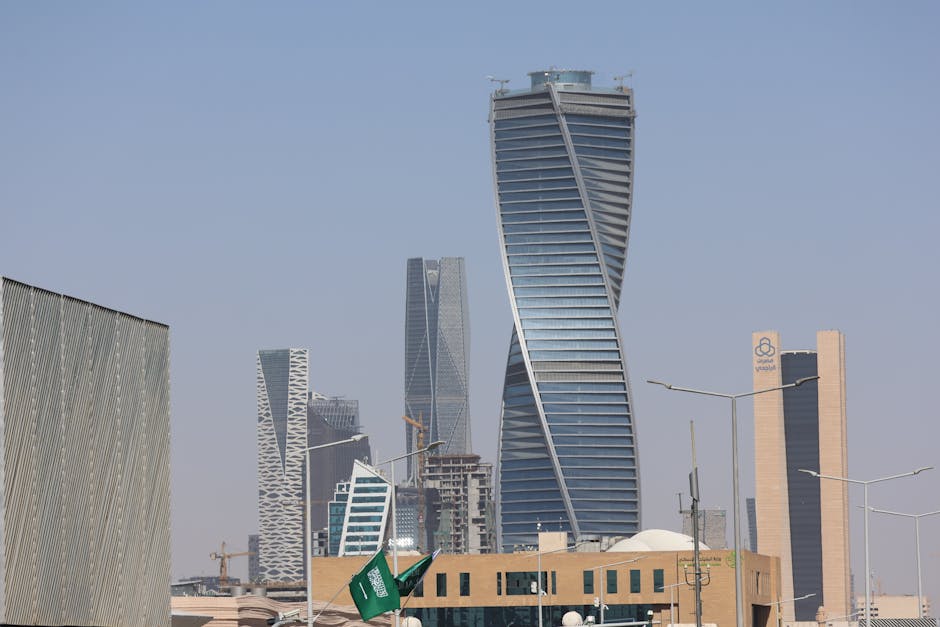
- Saudi Arabia’s Vision 2030 transformation plan faces a budget wall due to declining oil revenues and rising public debt.
- The government has scaled back spending and delayed non-essential projects in response to financial sustainability concerns.
- Declining oil revenues threaten the viability of state-led development in Saudi Arabia, particularly in an era of energy transition.
- The shift from expansion to consolidation in Saudi Arabia’s economic approach prioritizes sustainability over ambitious projects.
- Vision 2030’s breakneck pace was financially unsustainable, forcing the government to recalibrate its economic strategy.
Saudi Arabia’s $1 trillion Vision 2030 transformation plan, launched in 2016 by Crown Prince Mohammed bin Salman (MBS), aimed to reshape the oil-dependent kingdom into a global economic hub. But after years of aggressive spending on megaprojects like NEOM, Red Sea tourism resorts, and global sports acquisitions, the kingdom is now facing a fiscal reality check. Declining oil revenues, rising public debt, and slower-than-expected foreign investment have forced the government to scale back spending and delay non-essential projects. This shift matters because it signals a potential recalibration of one of the most ambitious economic overhauls in modern Middle Eastern history—and raises questions about the sustainability of state-led development in an era of energy transition.
What Changed in Saudi Arabia’s Economic Strategy?

The core shift in Saudi Arabia’s economic approach lies in the recognition that Vision 2030’s breakneck pace was financially unsustainable. Originally bankrolled by soaring oil profits and sovereign wealth fund returns, the spending spree included plans for a $500 billion futuristic city (NEOM), a $23 billion motor racing circuit (The Line), and high-profile acquisitions like the Premier League’s Newcastle United. However, as global oil demand fluctuates and renewable energy adoption accelerates, the kingdom’s primary revenue source has become less reliable. In response, the government has shifted from expansion to consolidation—prioritizing projects with near-term returns while postponing others. Finance Minister Mohammed Al-Jadaan confirmed in 2023 that capital spending would be trimmed to align with fiscal prudence, marking a departure from earlier ambitions of rapid transformation.
What Evidence Shows Vision 2030 Is Slowing Down?

Multiple indicators confirm that Saudi Arabia’s megaproject momentum has cooled. According to the International Monetary Fund (IMF), Saudi Arabia’s budget deficit widened to 2.5% of GDP in 2023 after years of surplus, driven by lower hydrocarbon revenues and sustained public investment. The government’s debt-to-GDP ratio, once negligible, has climbed to over 30%, a significant shift for a nation historically averse to borrowing. Reports from Reuters indicate that NEOM’s construction timelines have been revised, with only a fraction of its planned infrastructure completed. Additionally, Saudi Arabia has reduced its annual capital expenditures by nearly $40 billion compared to peak spending years. Even MBS acknowledged in a 2023 speech that “not everything will happen by 2030,” signaling a more measured timeline for the vision’s goals.
Are There Skeptics of This Economic Pivot?

While the government frames the spending slowdown as prudent fiscal management, critics argue it exposes deeper structural flaws in Vision 2030. Some economists question whether the kingdom can attract enough foreign direct investment (FDI) to offset declining oil income, noting that business reforms have not yet translated into broad private-sector growth. Others point to demographic challenges: despite efforts to employ more Saudis, youth unemployment remains above 20%, and many locals remain reliant on public-sector jobs. There are also geopolitical concerns—Saudi Arabia’s growing alignment with global sports and entertainment, including hosting boxing matches and LIV Golf tournaments, has drawn accusations of “sportswashing” rather than genuine economic diversification. Additionally, human rights organizations have criticized the concentration of power around MBS, warning that top-down decision-making could stifle long-term institutional development needed for a sustainable economy.
What Are the Real-World Consequences of This Shift?

The slowdown in Vision 2030 spending is already affecting contractors, foreign investors, and domestic workers. Major construction firms like China’s CRCC and Spain’s FCC have reported delays in payments and project suspensions. Foreign investors, initially drawn by promises of regulatory reform and economic liberalization, are now demanding clearer legal frameworks and faster dispute resolution. For Saudi citizens, the shift may delay job creation in new sectors, prolonging dependence on oil-funded public employment. On the global stage, the reevaluation could influence how other resource-rich nations approach economic diversification—offering both cautionary lessons and strategic insights. Meanwhile, Saudi Arabia continues to pursue selective high-impact deals, such as tech partnerships with Apple and Microsoft, suggesting a pivot toward quality over quantity in its economic outreach.
What This Means For You
If you’re tracking global economic trends or energy markets, Saudi Arabia’s recalibration of Vision 2030 reflects a broader shift in how petrostates are adapting to a post-oil future. The kingdom’s experience underscores that even well-funded, politically backed transformation plans face hard limits when confronted with market realities. For investors, it highlights the importance of fiscal sustainability over headline-grabbing announcements. For policymakers in resource-dependent economies, it offers a case study in balancing ambition with economic discipline.
Going forward, the key question is whether Saudi Arabia can transition from construction-driven growth to innovation- and service-led development without losing momentum. Will delayed megaprojects eventually deliver on their promises, or will they become white elephants? And can the private sector finally take the lead in job creation and investment? The answers will not only shape Saudi Arabia’s future but could redefine the playbook for national economic transformations in the 21st century.
Source: BBC