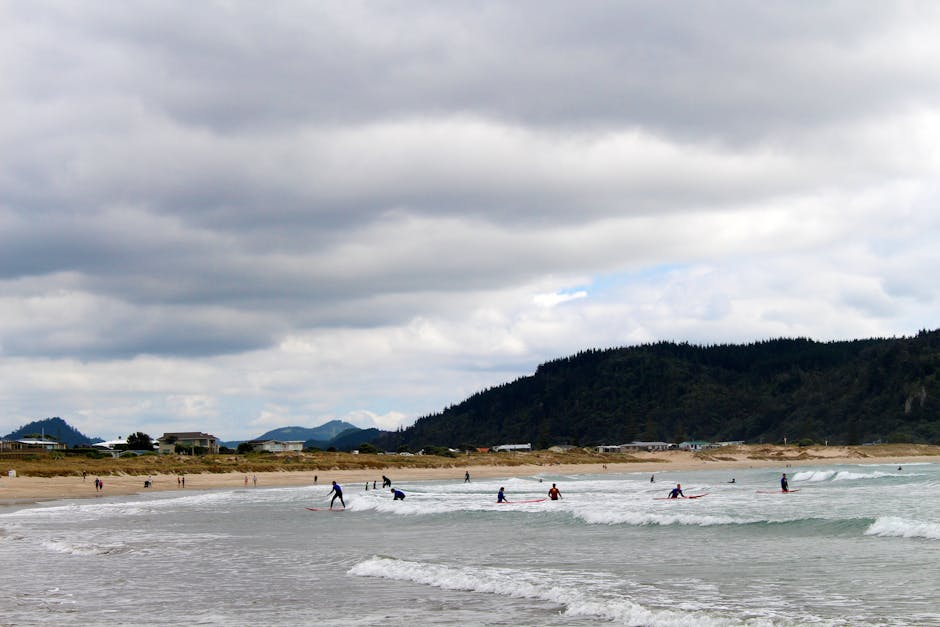
- A photographer was bitten by a sea creature during the World Surf League finals in New Zealand.
- The incident raises concerns about marine safety protocols for water-based media crews and athletes.
- The attack likely occurred due to the expansion of global surfing events into ecologically sensitive zones.
- New Zealand’s coastal waters host a large population of protected but occasionally aggressive New Zealand sea lions.
- The incident highlights the need for more effective marine wildlife management and safety measures.
A photographer covering the World Surf League (WSL) finals in New Zealand was bitten by an unidentified sea creature, likely a shark or sea lion, marking a rare incident at an elite coastal sporting event. The attack occurred near the shoreline during the competition’s final rounds at Raglan’s famed surf break, prompting immediate medical response and temporary suspension of the event. While the photographer survived with non-life-threatening injuries, the episode raises urgent questions about marine safety protocols for water-based media crews and athletes, particularly as global surfing events expand into ecologically sensitive zones frequented by marine wildlife.
Details from the Attack Site and Medical Reports

According to emergency services and eyewitness accounts, the incident unfolded around midday on Saturday when the freelance photographer, whose identity has not been released, was stationed in shallow waters capturing close-up action shots of surfers. Local paramedics confirmed the man sustained a laceration to his lower leg, consistent with either a sea lion bite or a small shark interaction. He was treated on-site before being airlifted to Waikato Hospital for further evaluation and stitches. Marine biologists reviewing the injury pattern suggest a sea lion is the more likely culprit, as New Zealand’s coastal waters host a large population of New Zealand sea lions (Phocarctos hookeri), a protected but occasionally aggressive species. No shark sightings were officially reported in the area prior to the event, though great whites are known to frequent the Tasman Sea. The Department of Conservation (DOC) is collaborating with WSL officials to analyze water activity data and camera footage from the competition.
Key Players: WSL, Local Authorities, and Marine Experts

The World Surf League, the event organizer, has launched an internal review of safety procedures for on-water personnel. While WSL has standard protocols for athlete safety — including drone surveillance and shark spotters in high-risk regions like South Africa and Australia — no such measures were deployed in New Zealand, where marine attacks are historically rare. Local authorities, including Surf Life Saving New Zealand and Environment Waikato, are now consulting with marine ecologists to assess whether future events should include wildlife monitoring. The photographer was not affiliated directly with WSL but was contracted through a third-party media agency, highlighting gaps in unified safety standards for independent contractors. Meanwhile, the DOC emphasizes that sea lions are often curious, especially juveniles, and may approach swimmers or photographers without intent to harm — though defensive bites can occur if the animal feels threatened.
Trade-Offs Between Access, Safety, and Wildlife Conservation

The incident underscores a growing tension between high-access sports photography and the preservation of natural marine behavior. Photographers often enter the surf zone to capture dynamic angles, placing them in close proximity to marine life. Yet increased human presence in coastal ecosystems can disrupt animal patterns and provoke defensive reactions. While no fatalities or serious injuries have previously been recorded at WSL events due to marine wildlife, similar interactions have occurred in other water sports: in 2022, a diver in California was bitten by a sea lion during a kelp forest expedition, and shark encounters have disrupted events in Australia. Introducing measures like exclusion zones, underwater deterrents, or mandatory protective gear for photographers could reduce risk but may compromise visual storytelling. Moreover, any aggressive response to wildlife — such as culling or relocation — would conflict with New Zealand’s strict conservation laws and Māori cultural values that regard marine animals as taonga (treasures).
Why the Timing of the Incident Raises Alarm

This attack comes at a time when climate change is altering marine animal distributions and behavior. Warmer sea temperatures have been linked to increased sea lion sightings in northern New Zealand, beyond their traditional subantarctic range. Concurrently, the WSL has expanded its global footprint, hosting events in remote, ecologically rich areas that often overlap with marine mammal habitats. The incident in Raglan, while isolated, aligns with broader patterns observed by scientists: as human recreational activity and marine wildlife ranges converge, the likelihood of unexpected interactions rises. Unlike shark-prone coasts where monitoring systems are established, New Zealand’s temperate waters have not required such infrastructure — making this event a potential catalyst for policy change.
Where We Go From Here
In the next six to twelve months, three scenarios could unfold. First, the WSL may adopt region-specific wildlife safety guidelines, mandating risk assessments and protective measures for media and athletes in ecologically sensitive zones. Second, New Zealand authorities might implement seasonal monitoring programs during major coastal events, using drones or marine observers to detect animal presence. Third, if no further incidents occur, the event could be dismissed as an anomaly, delaying systemic changes despite underlying ecological shifts. The outcome will depend on how regulators balance athlete and crew safety with environmental stewardship and cultural respect.
Bottom line — while rare, the bite incident at the WSL finals signals a growing need for integrated safety frameworks that account for both human activity and marine wildlife behavior in an era of ecological change.
Source: News