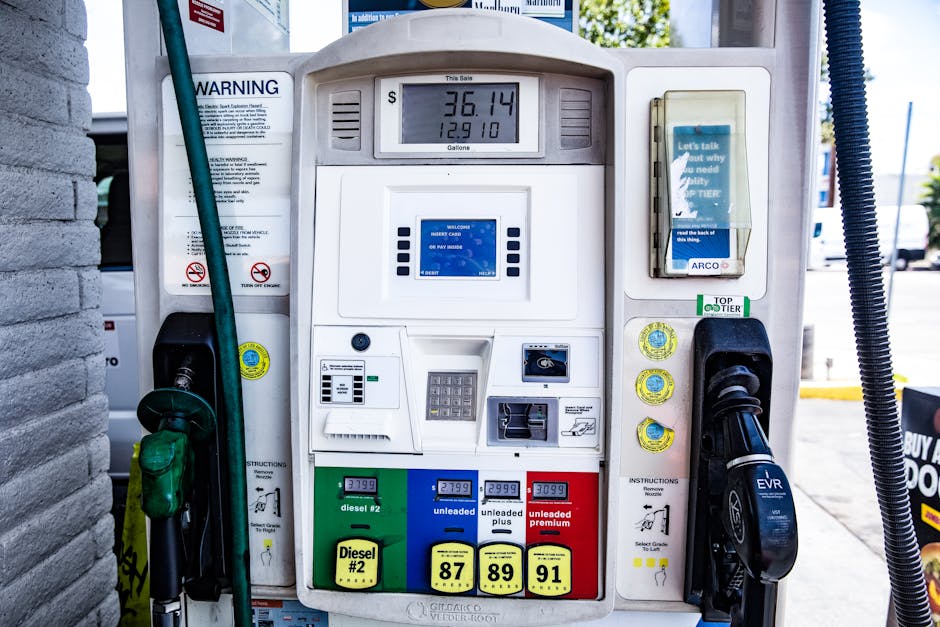
- Gas prices have surged 51% since February 2026, pushing real wages into decline for the first time in three years.
- Two-thirds of American consumers reduce spending on non-essentials due to rising fuel costs, affecting middle- and lower-income households hardest.
- Inflation reaccelerating puts pressure on the Federal Reserve to reconsider its dovish stance, despite stock markets remaining detached from economic realities.
- Energy costs are once again dictating household budgets and national economic momentum, marking a pivotal moment in the post-pandemic recovery.
- More than 65% of U.S. consumers report cutting discretionary spending in response to higher gas prices, per a national survey by the Consumer Sentiment Index.
Gas prices have surged 51% since February 2026, pushing real wages into decline for the first time in three years as two-thirds of American consumers reduce spending on non-essentials, according to federal labor and retail data. The spike—driven by geopolitical tensions in oil-producing regions and limited refining capacity—has effectively erased wage gains from the past year, hitting middle- and lower-income households hardest. With inflation reaccelerating, the Federal Reserve faces renewed pressure to reconsider its dovish stance, even as stock markets remain detached from economic realities. This shift marks a pivotal moment in the post-pandemic recovery, where energy costs are once again dictating household budgets and national economic momentum.
Consumers Pull Back Amid Soaring Fuel Costs

As of May 2026, more than 65% of U.S. consumers report cutting discretionary spending—on everything from dining out to retail purchases and summer travel—in response to higher gas prices, per a national survey by the Consumer Sentiment Index. The average price for regular gasoline surpassed $4.87 per gallon nationwide, a level not seen since 2022, erasing real income gains that had briefly lifted household purchasing power through early 2025. Retail sales data from the Department of Commerce shows a 0.7% month-over-month decline in April, with particularly sharp drops in big-ticket sectors like furniture, electronics, and leisure services. Even automobile dealerships report fewer buyers, as higher fuel costs make larger vehicles less attractive. This pullback is not uniform: households earning under $75,000 are cutting spending at nearly twice the rate of higher earners, exacerbating existing economic inequalities.
How We Got Here: The Path to $4.87 Gas

The current price surge traces back to supply disruptions in early 2026, including attacks on oil infrastructure in the Persian Gulf and voluntary production cuts by OPEC+ nations seeking to stabilize global markets. At the same time, U.S. refining capacity has failed to keep pace with demand, particularly on the Gulf Coast, where aging facilities have struggled with maintenance delays and regulatory constraints. Meanwhile, domestic oil production plateaued after a boom in 2023–2024, as investment in new drilling slowed amid policy uncertainty and shifting ESG mandates. The Biden administration’s decision not to replenish the Strategic Petroleum Reserve—after releasing 180 million barrels in 2022—also removed a key buffer. When global crude benchmarks like Brent surpassed $100 per barrel in April, the impact was swiftly transmitted to U.S. pumps. Unlike in 2022, however, inflation is now more entrenched, and consumers have less savings to absorb shocks, making this round of price hikes more economically disruptive.
The People Driving the Response

On Main Street, families are reworking budgets overnight. Teachers, service workers, and gig drivers—many of whom already faced tight margins—are now skipping meals or carpooling to save on fuel. Local school districts in Texas and Ohio have reported increased requests for transportation assistance, as parents can no longer afford daily commutes. Meanwhile, corporate leaders in retail and hospitality are scaling back hiring and marketing, anticipating weaker demand. At the policy level, Federal Reserve Chair Jerome Powell faces a dilemma: raise interest rates and risk slowing the economy further, or hold steady and allow inflation to reignite. Treasury Secretary Janet Yellen has called for a review of energy policy, including potential tax relief on fuel, though congressional gridlock makes swift action unlikely. Consumer advocates, meanwhile, are renewing calls for long-term investments in public transit and electric vehicle infrastructure.
Consequences for Workers, Markets, and Policy

The erosion of real wages—down 0.4% in April 2026 despite nominal pay increases—threatens to undermine consumer-driven economic growth, which accounts for nearly 70% of U.S. GDP. For workers, this means diminished living standards and increased financial stress, especially in car-dependent regions with limited public transit. Businesses reliant on foot traffic or discretionary spending face margin pressure, potentially leading to layoffs or consolidation. Financial markets, however, have remained buoyant, with the S&P 500 reaching new highs, driven by AI-related tech stocks and investor optimism about corporate earnings. This divergence between Wall Street and Main Street risks deepening public distrust in economic institutions. If inflation expectations become unanchored, the Fed may be forced into aggressive rate hikes, potentially triggering a recession.
The Bigger Picture
This episode underscores the fragile balance between energy security, inflation control, and wage growth in a globalized economy. Despite years of talk about energy transition and resilience, the U.S. remains vulnerable to oil price shocks, and consumer behavior remains highly sensitive to fuel costs. The 51% gas price surge is not just a temporary blip—it’s a reminder that energy is still the lifeblood of modern economies. Without structural reforms in energy policy, transportation infrastructure, and income support, such shocks will continue to destabilize household budgets and national economic stability. The 2026 price spike may become a pivotal case study in the limits of monetary policy when supply-side pressures dominate.
What comes next depends on both policy agility and market dynamics. If crude prices stabilize in the third quarter, some consumer confidence may return. But without coordinated action—from releasing strategic reserves to accelerating clean energy adoption—the cycle of price shocks and spending cuts could become the new normal. Economists are now watching wage trends closely; if employers begin offering fuel allowances or remote work incentives, it could signal a shift in labor-market adaptation. One thing is certain: when gas goes up, everything else gets harder to afford.
Source: Fortune