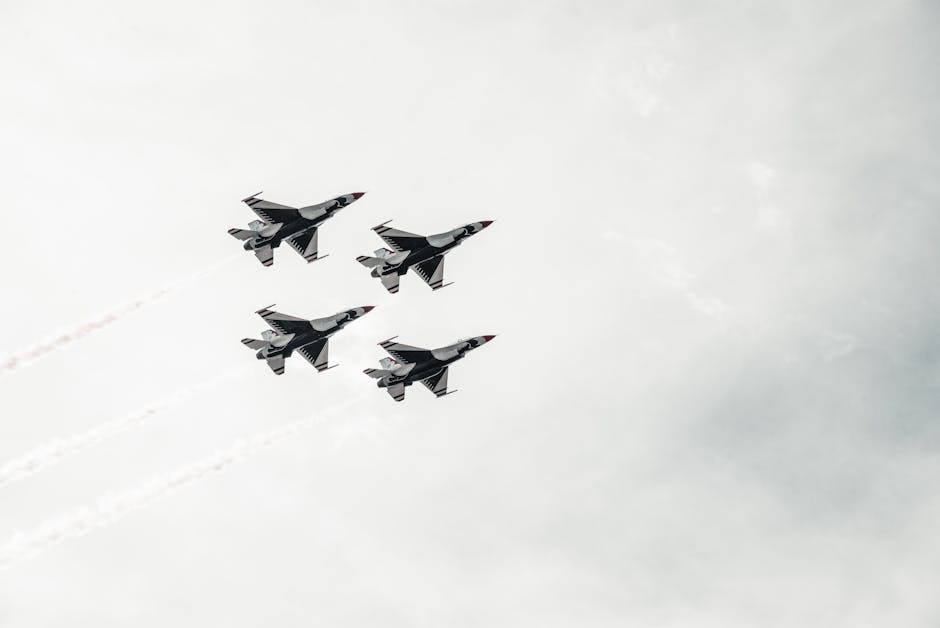
- China’s military has sent warplanes near Taiwan twice in 7 days, sparking concerns over escalating tensions in the region.
- Taiwan has scrambled fighter jets, activated air defense systems, and issued warnings in response to the Chinese military drills.
- The joint combat readiness patrols are a show of force by Beijing, which asserts Taiwan as part of its sovereign territory.
- China’s pressure campaign against Taiwan has led to a concerning trend of increased military assertiveness in the Indo-Pacific.
- The repeated drills underscore the escalating risks of miscalculation in the region, heightening tensions between China and Taiwan.
Taiwan has responded to a second Chinese ‘joint combat readiness patrol’ in just one week, with its military reporting increased aerial activity near the island as Beijing dispatched fighter jets and naval assets in what Taipei described as an ‘unprovoked’ show of force. The patrol, confirmed on May 26, 2026, prompted Taiwan to scramble fighter aircraft, activate air defense systems, and issue warnings via its established hotlines. The maneuvers occurred near Taiwan’s southwestern air defense identification zone (ADIZ), a frequent flashpoint in cross-strait relations. With China asserting Taiwan as part of its sovereign territory, these operations signal heightened military assertiveness at a time of delicate geopolitical balance in the Indo-Pacific. The repeated drills underscore escalating risks of miscalculation and mark a concerning trend in Beijing’s pressure campaign against the self-governing democracy.
China’s Escalating Military Drills Near Taiwan

Chinese military activity near Taiwan has surged in recent days, with the People’s Liberation Army (PLA) conducting its second coordinated air and naval operation within seven days under the banner of a ‘joint combat readiness patrol.’ According to Taiwan’s Ministry of National Defense, the May 26 mission included multiple J-16 and J-11 fighter jets, accompanied by a Y-9 electronic warfare aircraft and a naval escort operating in the Bashi Strait and near the southern tip of Taiwan. These patrols are designed to simulate rapid response scenarios and test Taiwan’s defensive readiness, often crossing into areas Taiwan considers critical for early warning and deterrence. Unlike routine flights, ‘joint’ operations integrate air, maritime, and electronic warfare units, signaling a higher level of tactical coordination and strategic intent. Taiwan responded by launching F-16V fighters, deploying Patriot missile batteries, and maintaining continuous radar surveillance. While no direct engagement occurred, the proximity and frequency of these missions increase the risk of accidental confrontation, especially in congested airspace.
The Long Buildup to Cross-Strait Tensions

Tensions between China and Taiwan have deep historical roots, but military posturing has intensified since 2016, when President Tsai Ing-wen of the Democratic Progressive Party (DPP) took office. Beijing views the DPP as a de facto pro-independence party and has responded with diplomatic isolation and military pressure. In recent years, China has institutionalized ‘combat readiness patrols’ as part of its broader strategy to normalize the presence of its forces around Taiwan. The PLA flew over 1,700 sorties into Taiwan’s ADIZ between 2020 and 2023, according to official Taiwanese data, a dramatic increase from previous decades. These operations are not isolated incidents but part of a sustained campaign to erode Taiwan’s operational freedom and test international reactions. The current pattern echoes past crises, such as the 1995–1996 Taiwan Strait missile tests, but with far more advanced capabilities and greater integration of cyber, space, and electronic warfare domains.
Leaders and Militaries Shaping the Standoff

The current standoff is driven by strategic calculations in Beijing and defensive imperatives in Taipei. On the Chinese side, President Xi Jinping has repeatedly emphasized ‘reunification’ with Taiwan as a core national goal, calling it ‘an inevitable requirement for the great rejuvenation of the Chinese nation.’ The PLA, under his centralized command, has modernized rapidly and now conducts large-scale exercises simulating blockades and amphibious assaults. In Taiwan, President Tsai and her defense establishment are focused on asymmetric warfare strategies, investing in stealthy missile boats, indigenous submarines, and precision strike systems to deter invasion. U.S. defense officials also play a behind-the-scenes role, providing intelligence sharing and arms sales under the Taiwan Relations Act. While no party seeks open conflict, the actions of military planners and political leaders are creating a feedback loop of provocation and response that could spiral out of control.
Implications for Taiwan and the Indo-Pacific

The repeated combat patrols have immediate and long-term consequences for Taiwan’s security and regional stability. Domestically, they reinforce public support for defense spending and deepen distrust of Beijing, making any future reconciliation more difficult. For the U.S. and its allies, including Japan and the Philippines, these actions validate concerns about China’s revisionist ambitions in the Indo-Pacific. Increased PLA activity near Taiwan could prompt a stronger allied presence in the region, including more frequent freedom of navigation operations and joint military drills. However, there is also a risk of fatigue or normalization — treating these patrols as routine rather than as escalatory acts. For Taiwan’s military, the strain of constant alert cycles could impact pilot readiness and equipment maintenance over time, especially given its smaller force size.
The Bigger Picture
This pattern of military signaling reflects a broader shift in global security dynamics, where gray-zone tactics — actions below the threshold of war — are becoming central to statecraft. China’s use of combat patrols mirrors its approach in the South China Sea, where coast guard vessels and fishing fleets assert control without triggering open conflict. In doing so, Beijing tests the limits of international tolerance while building de facto control. As the BBC has noted, such operations are designed to ‘establish a new normal’ through persistence and repetition. The Taiwan Strait is now one of the most militarized and closely watched regions in the world, where a single misstep could trigger a broader crisis.
Looking ahead, analysts expect China to continue and possibly expand these joint patrols, particularly around politically sensitive dates such as Taiwan’s presidential inaugurations or U.S.-China diplomatic meetings. The international community, especially Washington, will face growing pressure to clarify its defense posture toward Taiwan without provoking further escalation. What remains uncertain is whether deterrence can hold indefinitely in an environment of rising nationalism, technological disruption, and eroding diplomatic channels. The world is watching — and hoping the next patrol doesn’t become the last straw.
Source: Al Jazeera