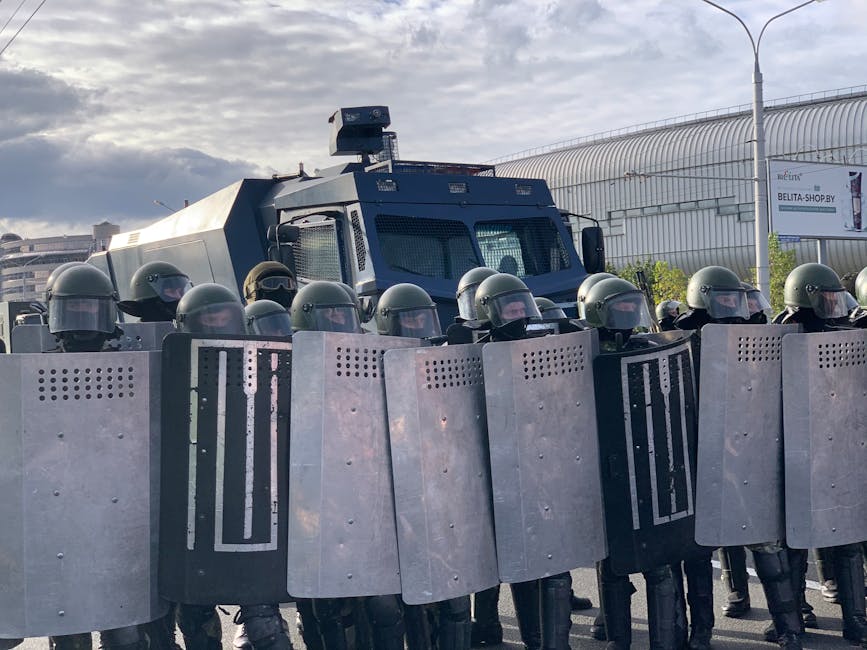
- Spanish authorities clashed with Gaza flotilla activists at Bilbao Airport over humanitarian aid delivery.
- The incident highlights growing tension between grassroots activism and government control in conflict zones.
- Freedom of assembly and the blockade of Gaza are key issues reignited by the confrontation.
- The event underscores the ongoing Israel-Hamas war’s impact on global diplomacy.
- Civil society’s role in wartime diplomacy is a pressing question raised by the incident.
What happened when a group of humanitarian activists tried to board a plane bound for the Mediterranean with supplies for Gaza? Why did Spanish authorities respond with force, resulting in injuries and widespread outrage? As details emerge from the scene at Bilbao Airport, a pressing global question has taken hold: when does state security override civilian efforts to deliver aid in conflict zones? The incident, which quickly went viral on platforms like r/worldnews, underscores the growing tension between grassroots activism and government control in the context of the ongoing Israel-Hamas war. With images of bloodied protesters circulating online, the event has reignited debates over freedom of assembly, the blockade of Gaza, and the role of civil society in wartime diplomacy.
The Immediate Confrontation at Bilbao Airport

On the morning of May 12, 2024, a coalition of pro-Palestinian activists affiliated with the Freedom Flotilla movement attempted to board a chartered flight at Bilbao Airport intended to transport medical supplies and humanitarian aid to Gaza via sea. According to witness accounts and video footage, the group—comprising 27 individuals from Spain, France, and Ireland—was intercepted by Spanish National Police before reaching the departure gate. Authorities claimed the activists lacked proper documentation for the cargo and violated aviation security protocols. However, the situation escalated rapidly when officers used batons and physical force to disperse the group, resulting in at least 12 injuries, three of which required hospitalization. The Spanish Interior Ministry later stated that the operation was conducted to “maintain public order” and prevent “unauthorized maritime activity” that could destabilize regional security.
Video Evidence and International Reactions

Footage shared by journalist Maria Lopez on Twitter and verified by BBC News shows police officers shoving activists against walls, striking them with batons, and dragging individuals by the arms. One clip captures a woman in a wheelchair being pushed backward during the chaos. The European Bureau for Conscientious Objection condemned the response as “disproportionate and unlawful,” while Amnesty International launched an inquiry into potential human rights violations. Meanwhile, the Palestinian Foreign Ministry issued a statement praising the activists’ “peaceful mission” and accusing Spain of “complicity in the siege of Gaza.” The Spanish government has since announced an internal review of police conduct, though no officers have been suspended. Independent monitors from the Council of Europe have requested access to surveillance footage and medical reports to assess compliance with international policing standards.
Skeptical Views: National Security vs. Civil Disobedience

While activists and human rights groups have uniformly criticized the police response, some security analysts argue that the Spanish authorities faced a complex operational challenge. Dr. Elena Márquez, a counterterrorism expert at the University of Madrid, noted that unauthorized maritime operations in the eastern Mediterranean could inadvertently trigger naval confrontations with Israeli or Egyptian forces, given the current military restrictions on Gaza’s coastline. She stated, “Even well-intentioned flotillas can escalate into international incidents, especially if they attempt to breach naval blockades.” Others point to the 2010 Gaza Freedom Flotilla, in which nine activists were killed when Israeli commandos stormed the Mavi Marmara ship, as a precedent for such concerns. Spanish officials have also cited intelligence reports warning of potential exploitation by extremist groups attempting to smuggle materials under the guise of humanitarian aid. While these arguments do not justify excessive force, they frame the incident as part of a broader dilemma: how to balance civilian activism with national and regional security imperatives.
Humanitarian Impact and the Gaza Blockade

The confrontation in Bilbao highlights the dire humanitarian situation in Gaza, where over 2.2 million people face severe shortages of food, medicine, and clean water due to an ongoing blockade and active hostilities. According to the United Nations Office for the Coordination of Humanitarian Affairs (OCHA), only 10% of essential medical supplies are reaching the population through official channels. Activist groups argue that state-sanctioned aid mechanisms are insufficient and too slow, necessitating direct civilian intervention. The Freedom Flotilla movement, which has organized similar missions since 2010, insists that their efforts are nonviolent and legally protected under international law. Yet, governments including Spain, Greece, and Cyprus have increasingly restricted such initiatives, citing diplomatic coordination and security protocols. The Bilbao incident may deter future attempts, but it has also galvanized global support, with solidarity protests occurring in Dublin, Paris, and Barcelona in the days following the clash.
What This Means For You
For citizens around the world, the Bilbao airport clash is a stark reminder that the Israel-Hamas conflict extends far beyond the Middle East, influencing civil liberties, protest rights, and humanitarian policies in democratic nations. It raises urgent questions about how governments respond to civilian-led peace efforts and whether security justifications are being used to suppress dissent. If you participate in or support activist causes, it’s crucial to understand the legal frameworks governing international aid and protest rights in your country. Moreover, the incident underscores the power of digital evidence in holding authorities accountable.
As investigations continue, a deeper question remains: can grassroots movements safely challenge state policies in times of war without facing suppression? And if not, what alternatives exist for civilians who feel compelled to act when official channels fail? The answer may shape the future of humanitarian activism worldwide.
Source: Ynetnews