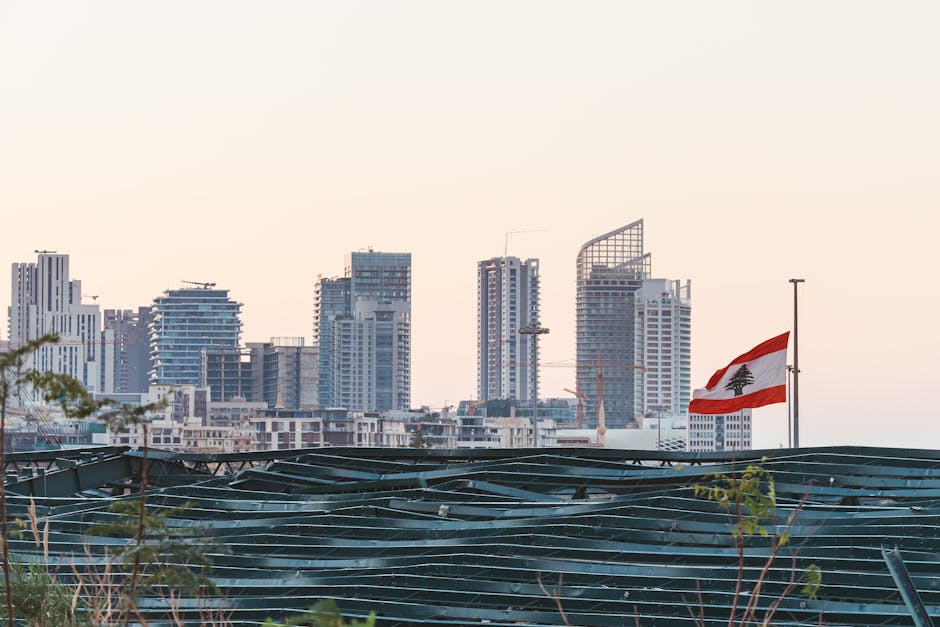
- Israeli airstrikes damaged a main hospital and killed several medics in Lebanon’s city of Tyre.
- Funerals were held for the paramedics killed in the previous day’s violence, amid widespread condemnation.
- The Lebanese government called for an emergency UN Security Council meeting to address the situation.
- The Israeli military claimed its actions were in response to rocket attacks from Lebanon.
- The strikes left many without access to basic necessities like electricity and water.
The sun had barely risen over the Lebanese city of Tyre on Saturday when the sound of Israeli airstrikes pierced the air, sending shockwaves through the already fragile community. The strikes, which targeted various locations in the city, damaged a main hospital and killed several medics, including paramedics who were providing critical care to those in need. As the city struggled to come to terms with the latest wave of violence, funerals were held for the paramedics killed a day earlier, their bodies solemnly carried through the streets by mourners.
Current Situation

The current situation in Lebanon is one of heightened tension and uncertainty, as the Israeli strikes have sparked widespread condemnation and fears of further escalation. The Lebanese government has called for an emergency meeting of the United Nations Security Council to address the situation, while the Israeli military has stated that its actions are in response to rocket attacks from Lebanon. The BBC reports that the strikes have damaged several buildings, including the hospital, and have left many without access to basic necessities like electricity and water.
Historical Context

The story behind the latest wave of violence in Lebanon is complex and multifaceted, with roots stretching back decades. The country has long been a battleground for regional and international powers, with various factions and militias vying for control. The Israeli-Palestinian conflict has played a significant role in shaping the region, with Lebanon often finding itself caught in the middle. The country’s own civil war in the 1970s and 1980s further destabilized the region, creating a power vacuum that has been exploited by various groups.
Key Players

The individuals and groups shaping the current situation in Lebanon are numerous and diverse, with each having their own motivations and agendas. The Israeli government, led by Prime Minister Benjamin Netanyahu, has stated that its actions are necessary to protect the country’s citizens from rocket attacks. The Lebanese government, on the other hand, has condemned the strikes as a violation of its sovereignty and has called for international intervention. Hezbollah, the Shia militant group based in Lebanon, has also been involved in the conflict, with its leader Hassan Nasrallah vowing to retaliate against Israeli aggression.
Consequences

The consequences of the latest violence in Lebanon are far-reaching and devastating, with the potential to destabilize the entire region. The strikes have already resulted in the loss of life, including the killing of medics who were providing critical care to those in need. The damage to the hospital in Tyre has also left many without access to basic medical care, exacerbating an already dire humanitarian situation. The World Health Organization has expressed concern over the situation, warning of a potential health crisis if the violence continues.
The Bigger Picture
The latest violence in Lebanon is part of a larger pattern of conflict and instability in the region, with far-reaching implications for global security and stability. The Guardian reports that the conflict has the potential to draw in other regional and international powers, including the United States and Iran. The situation is further complicated by the complex web of alliances and rivalries in the region, with each side having its own interests and agendas.
As the situation in Lebanon continues to unfold, one thing is clear: the need for a lasting and sustainable peace is more pressing than ever. The international community must come together to address the root causes of the conflict and work towards a solution that takes into account the needs and concerns of all parties involved. Until then, the people of Lebanon will continue to suffer, caught in the midst of a conflict that shows no signs of abating.
Source: The New York Times