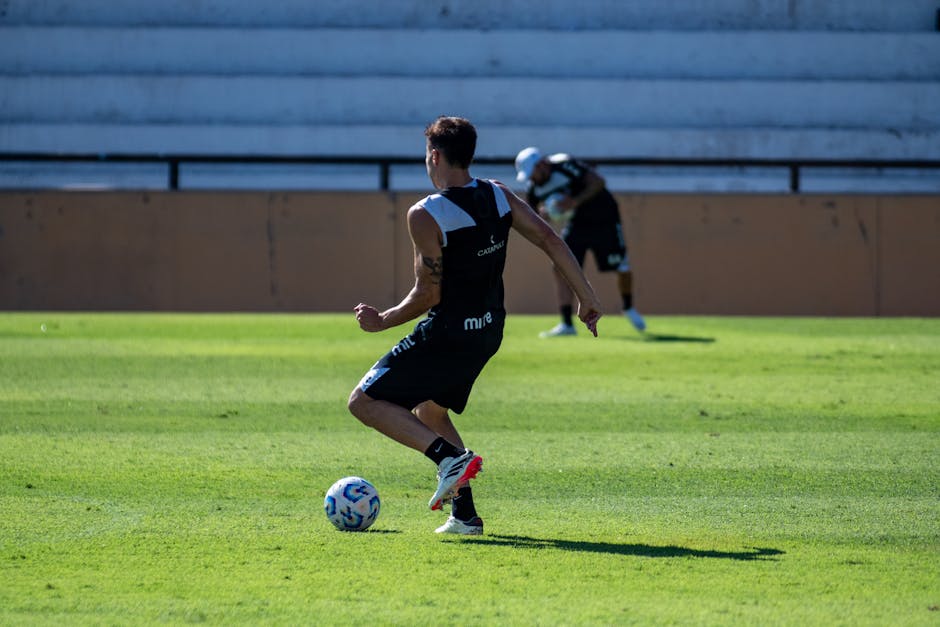
- Alejandro Zendejas was selected for the USMNT’s World Cup roster due to his impressive performance in Liga MX.
- Zendejas’ pace, crossing ability, and defensive work rate were key factors in convincing the coaching staff.
- Tanner Tessmann, a reliable defensive midfielder at Lyon, was surprisingly omitted from the roster.
- Diego Luna, a dynamic playmaker at Real Salt Lake, was also left out, sparking debate among fans and analysts.
- The USMNT’s roster reflects a blend of established names and controversial calls, raising questions about team chemistry and tactical flexibility.
Why is Alejandro Zendejas on the USMNT’s World Cup roster while in-form players like Diego Luna and Tanner Tessmann were left out? As the 2026 FIFA World Cup approaches, head coach Mauricio Pochettino’s 26-man squad selection has sparked debate across American soccer circles. The inclusion of Club América’s Zendejas, a long-contested figure due to his past dual-nationality saga, stands in contrast to the omission of promising talents who have shined in European and domestic leagues. With Gio Reyna and Sebastian Berhalter securing spots, the roster reflects a blend of established names and controversial calls. Fans and analysts alike are questioning the criteria behind Pochettino’s decisions—especially given the absence of players performing at consistently high levels abroad. What does this mean for team chemistry, tactical flexibility, and the future of U.S. soccer?
Who Made the Cut—and Who Didn’t?

The most immediate takeaway from Pochettino’s roster is the inclusion of Alejandro Zendejas, the 25-year-old winger who has become a key figure for Club América in Liga MX. Despite not playing in Europe, Zendejas has impressed with his pace, crossing ability, and defensive work rate—qualities that appear to have swayed the coaching staff. Meanwhile, Tanner Tessmann, who has developed into a reliable defensive midfielder at Lyon, was surprisingly omitted. Equally puzzling is the exclusion of Diego Luna, Real Salt Lake’s dynamic playmaker, who has registered double-digit assists in back-to-back MLS seasons. Gio Reyna’s inclusion, though anticipated, is significant given his injury-plagued tenure at Borussia Dortmund. Sebastian Berhalter, son of former USMNT coach Gregg Berhalter, earns a spot likely due to his versatility in midfield and strong performances for Columbus Crew. These decisions suggest Pochettino is prioritizing adaptability, squad cohesion, and current form within North American soccer over pure pedigree or European exposure.
What the Data and Experts Say

Analytics from FBref show that Zendejas ranks in the 87th percentile among wingers in expected assists and successful take-ons per 90 minutes in Liga MX this season. His ability to stretch defenses and deliver from wide areas complements Pochettino’s preferred high-pressing, wide-pivoting system. In contrast, Tessmann played just 12 matches for Lyon’s first team, mostly in cup games, limiting his visibility. Still, his performance in UEFA Youth League and reserve matches suggested developmental promise. As for Luna, his omission is harder to justify statistically—he led MLS midfielders in chance creation in 2024 and was named to the All-Star team. Former U.S. international and ESPN analyst Taylor Twellman noted, “Leaving out Luna is a missed opportunity. He’s producing at a high level week in, week out.” However, Pochettino may be valuing physicality and defensive discipline more highly, especially given the anticipated pace of World Cup competition.
Alternative Views: Is the Roster Too Conservative?

Some critics argue that Pochettino’s selections reveal a conservative bias, favoring players with prior national team experience over emerging talent. The choice to include Zendejas, while bold in one sense, also reflects a pattern of relying on Liga MX-based players—a trend that has drawn scrutiny in past cycles. Historically, the U.S. has struggled to integrate players based outside Europe into major tournaments. Moreover, the omission of Tessmann, a player trained in the U.S. development system and now at a top European academy, sends a mixed message about the pathway for young Americans abroad. Others counter that roster decisions must account for chemistry and tactical fit, not just individual stats. “You can’t just pick the best 26 players,” said Sarah Kate Ellis, president of U.S. Soccer. “You have to pick the 26 who function best as a unit.” Still, the absence of Luna—widely regarded as one of the brightest young minds in American soccer—raises questions about whether the team is balancing present needs with future growth.
Real-World Impact on Team Dynamics and Fan Perception

The roster choices have tangible consequences on locker room morale and fan engagement. Zendejas, once criticized for choosing Mexico before reversing his decision and committing to the U.S., now represents a redemption arc that could galvanize support, especially among Mexican-American fans. His presence may also strengthen U.S. outreach in key bilingual markets. On the field, his chemistry with fellow wide players like Christian Pulisic and Yunus Musah could unlock new attacking dimensions. Conversely, leaving out Luna may dampen enthusiasm in MLS markets, where homegrown stars are seen as vital to the league’s credibility. Tessmann’s exclusion risks discouraging young players in European academies who see limited return on investment. Internationally, the roster will be scrutinized for its balance—can a team with several Liga MX-based starters compete with elite European and South American squads? The answer could shape U.S. Soccer’s strategy for years.
What This Means For You
If you’re a U.S. soccer fan, this roster signals a transitional phase under Pochettino—where loyalty, form, and tactical fit outweigh pure potential. Zendejas’s inclusion may pay off if he replicates his Club América impact on the world stage. But the snubs of Luna and Tessmann suggest that breaking into the national team requires not just performance, but timing and positional need. For young players, the message is clear: excellence isn’t always enough—visibility and adaptability matter just as much.
Still, one question remains: Can a U.S. team built on a mix of European-based stars, MLS standouts, and Liga MX contributors coalesce into a true World Cup contender? The answer will unfold not in press conferences, but on the pitch in 2026.
Source: The Guardian