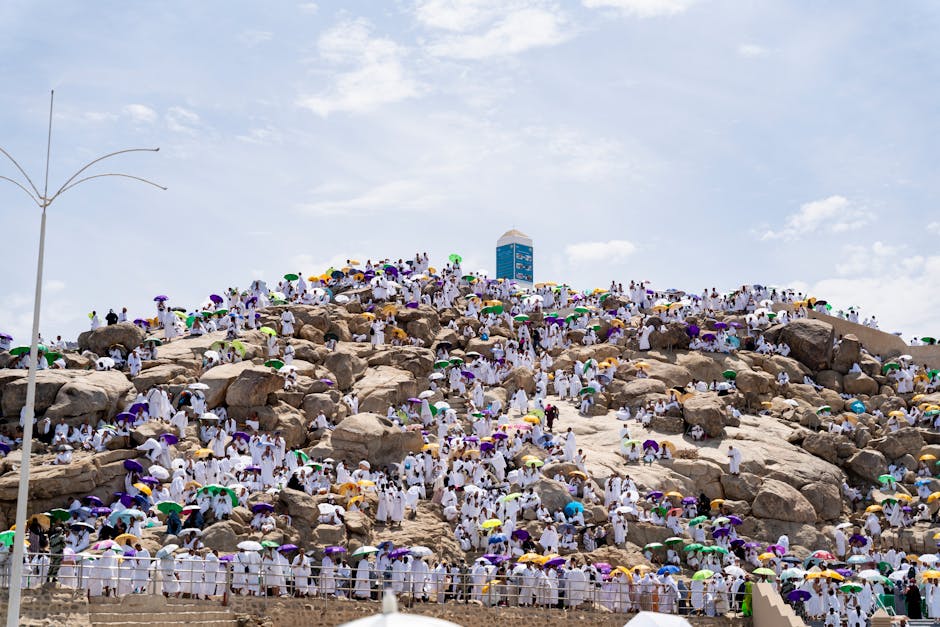
- Over 1.5 million pilgrims have gathered in Mecca, enduring temperatures above 46°C (115°F), amidst concerns over heat-related illnesses.
- The surge in pilgrims is driven by a combination of religious significance and post-pandemic easing of travel restrictions.
- Saudi authorities have reinstated full capacity for the Hajj pilgrimage, allowing around 2 million pilgrims this year.
- Many pilgrims are elderly or have preexisting health conditions, making the physically demanding journey even more challenging.
- The convergence of devotion, public health, and environmental risk has created an urgent need for sustainable solutions to the Hajj in an era of intensifying climate extremes.
What happens when faith collides with extreme weather? As the annual Hajj pilgrimage approaches, more than 1.5 million Muslims have already gathered in Mecca, enduring scorching temperatures exceeding 46°C (115°F). These pilgrims—many elderly, some with preexisting health conditions—are navigating a spiritual journey that is as physically taxing as it is sacred. With heat-related illnesses on the rise and global attention focused on crowd safety, a pressing question emerges: How sustainable is the Hajj in an era of intensifying climate extremes? The convergence of devotion, public health, and environmental risk has never been more urgent.
What Is Driving Such High Attendance Amid Dangerous Heat?

The surge in pilgrims stems from both religious significance and post-pandemic easing of travel restrictions. Hajj, one of the Five Pillars of Islam, requires every able-bodied Muslim who can afford it to make the pilgrimage at least once in their lifetime. After scaled-back gatherings during the COVID-19 years, Saudi authorities have reinstated full capacity—around 2 million pilgrims this year. Though the official Hajj rituals begin in mid-June 2024, millions arrive early to perform Umrah and acclimatize. The Saudi Ministry of Hajj and Umrah reported that over 1.5 million foreign pilgrims had entered the country by early June, joining domestic worshippers in Mecca’s holy sites. Despite government warnings about extreme heat, the spiritual imperative outweighs physical risk for many.
What Evidence Exists of Heat-Related Health Crises?

Data from Saudi health officials confirm a sharp rise in heat-related emergencies. As of early June, over 1,800 pilgrims required medical treatment for heat exhaustion, with dozens hospitalized for heatstroke—a potentially fatal condition. Temperatures in Mecca have regularly topped 46°C during daylight hours, with heat index values (factoring in humidity) reaching over 50°C (122°F) in enclosed areas. The Saudi Civil Defense has issued repeated alerts, urging pilgrims to avoid outdoor movement between 10 a.m. and 4 p.m. In a statement, the Ministry of Health emphasized that Mina and Arafat—key ritual sites with limited shade—are especially high-risk zones. Reuters reported that more than 1,000 cases of heat stress were treated in just one week, underscoring the severity of the situation.
Are There Alternative Views on the Risks and Responses?

While health officials sound alarms, some religious leaders and pilgrims downplay the danger, framing endurance as part of spiritual purification. Sheikh Abdullah Al-Manea, a senior Saudi cleric, stated that “patience and trust in God are central to Hajj,” suggesting that reliance on divine protection is as important as medical precautions. Others argue that modern infrastructure—like air-conditioned tents, misting stations, and mobile clinics—has significantly reduced mortality compared to past decades. Critics, however, point to inconsistent enforcement of safety measures and overcrowding, especially among unauthorized pilgrims who bypass official quotas. Human rights groups have also raised concerns about access for lower-income pilgrims, who may lack proper hydration gear or medical insurance. The tension between faith-based resilience and evidence-based safety protocols remains unresolved.
What Are the Real-World Consequences of These Conditions?

The human cost is already evident. In 2024, reports emerged of pilgrims collapsing during the Tawaf—the circumambulation of the Kaaba—due to dehydration and heat stress. In one case, a 72-year-old man from Indonesia died after fainting near the Grand Mosque, prompting his national embassy to issue a travel advisory. Saudi authorities have responded by expanding shaded walkways, deploying thousands of medical personnel, and using drones to monitor crowd density and temperature zones. Still, infrastructure strain persists. Pilgrims from Bangladesh, Nigeria, and Pakistan have reported long waits for water distribution and limited access to air-conditioned rest areas. The logistical challenge of safeguarding over 2 million people in extreme heat reveals systemic vulnerabilities, especially as climate projections suggest future Hajj seasons may face even harsher conditions.
What This Means For You
If you or a loved one plans to undertake Hajj, understanding the growing climate risks is essential. Preparation now extends beyond spiritual readiness to include heat acclimatization, hydration strategies, and awareness of emergency services. Saudi authorities provide guidelines, but individual vigilance—especially for older pilgrims or those with chronic conditions—is critical. Travel insurance, electrolyte supplements, and scheduling activities at cooler times are no longer optional; they are survival tools. As global temperatures rise, the intersection of faith and environmental reality will only intensify.
Looking ahead, can religious traditions adapt fast enough to climate change? And what role should international health bodies play in safeguarding mass gatherings in extreme weather? With the World Meteorological Organization projecting more frequent heatwaves across the Middle East, the answers may shape not just future Hajj experiences, but the broader future of global pilgrimage itself.
Source: Al Jazeera