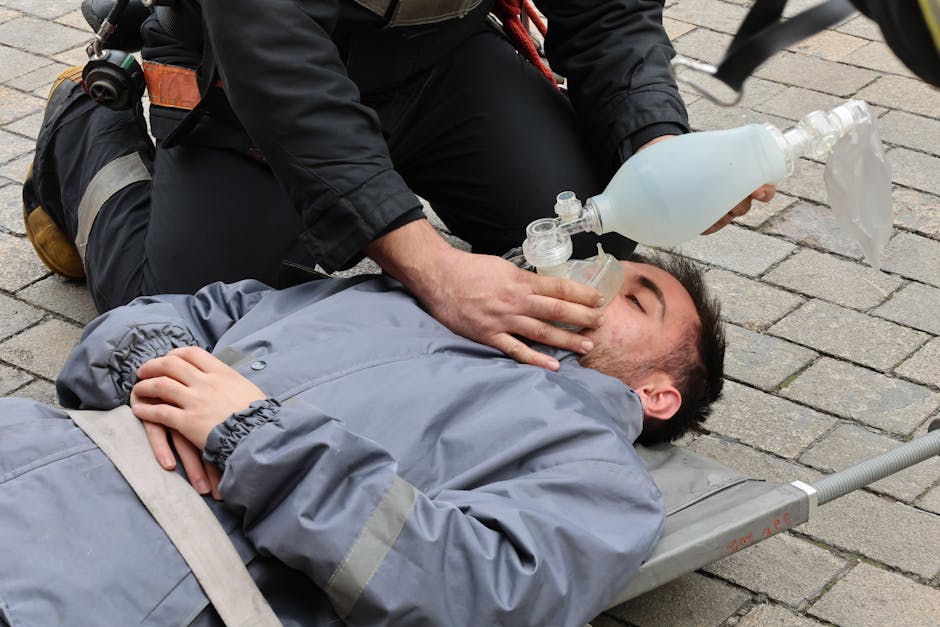
- Four paramedics were killed in Israeli airstrikes in southern Lebanon, sparking outrage over civilian casualties.
- The attacks targeted a mobile ambulance unit and a medical support center, both clearly marked with the Red Crescent emblem.
- The incident is one of the deadliest for medical workers in the region since the escalation between Israel and Hezbollah in October 2023.
- The killings threaten to destabilize the already fragile border region between Israel and Lebanon.
- The incident highlights a growing pattern of violence challenging the principles of distinction and proportionality in the Geneva Conventions.
Israeli airstrikes killed four paramedics in southern Lebanon on Friday, triggering funerals attended by thousands and reigniting international concern over the conduct of military operations near civilian and medical infrastructure. The attacks, which struck two separate locations within hours, occurred in areas affiliated with Hezbollah’s operational zones, though the victims were confirmed as emergency medical personnel operating under Lebanese Red Crescent protocols. The killings mark one of the deadliest single incidents for medical workers in the region since the renewed escalation between Israel and Hezbollah in October 2023, and they threaten to further destabilize an already fragile border region. The incident underscores a growing pattern of violence that challenges the principles of distinction and proportionality enshrined in the Geneva Conventions.
Confirmed Casualties and Strike Locations

According to the Lebanese Ministry of Public Health, the airstrikes hit a mobile ambulance unit near the village of Kfar Kila and a medical support center in the town of Bint Jbeil, both located within five kilometers of the Israeli border. The attacks killed four paramedics and injured two others, with rescue teams reporting that the vehicles were clearly marked with the Red Crescent emblem and operating during daylight hours. Satellite imagery reviewed by Reuters confirms the proximity of the strike sites to known medical facilities and the absence of visible military assets at the time of impact. The World Health Organization (WHO) has since issued a statement citing ‘credible evidence’ that the targeted units were engaged in non-combat medical evacuations, raising serious concerns about potential violations of international humanitarian law.
Key Actors and Escalatory Postures

The Israeli Defense Forces (IDF) acknowledged conducting ‘precision strikes’ in southern Lebanon but claimed the targets were Hezbollah operatives using ambulances for logistical support. In a press briefing, IDF spokesperson Lt. Col. Avichay Adraee stated that ‘terrorist infrastructure frequently embeds within civilian frameworks,’ referencing past incidents where Hezbollah was accused of weaponizing medical transport. Meanwhile, Hezbollah has not officially claimed responsibility for any attacks from the immediate vicinity of the strikes but has vowed retaliation, with senior commander Naim Qassem declaring that ‘the blood of our martyred medics will not be forgotten.’ The Lebanese government, already weakened by political paralysis and economic collapse, has called for an emergency session of the UN Security Council, while the United Nations Interim Force in Lebanon (UNIFIL) has intensified patrols along the Blue Line to prevent further escalation.
Humanitarian and Strategic Trade-Offs

The targeting of medical personnel presents a profound ethical and strategic dilemma. While Israel asserts its right to self-defense amid persistent rocket fire from Hezbollah—over 4,500 projectiles have been launched since October 2023, according to Israeli military data—the erosion of protected status for medical workers risks normalizing violations of the laws of war. Humanitarian organizations warn that such incidents deter emergency responders from operating in high-risk zones, indirectly increasing civilian mortality. Conversely, Israeli security officials argue that Hezbollah’s documented use of civilian cover—verified in reports by BBC News and UN monitoring groups—complicates battlefield distinctions. The result is a dangerous precedent: each side cites tactical necessity, while the protection of non-combatants erodes.
Why the Escalation Now?

The timing of the strikes coincides with intensified cross-border exchanges following the collapse of ceasefire negotiations in late April and Israel’s military operations in Rafah, Gaza. Analysts suggest that both Israel and Hezbollah are signaling resolve amid perceived strategic windows: Israel seeks to degrade Hezbollah’s capabilities before a potential ground invasion, while the militant group aims to maintain pressure to force regional concessions. Additionally, the recent U.S. veto of a UN resolution calling for an immediate Gaza ceasefire has diminished diplomatic channels, leaving military deterrence as the primary language of engagement. The killing of medics, whether intentional or collateral, fits within a broader pattern of escalating tit-for-tat actions that risk uncontrollable spillover.
Where We Go From Here
In the next 6–12 months, three scenarios are plausible. First, a localized escalation could erupt into full border warfare if Hezbollah responds with high-casualty attacks, prompting large-scale Israeli ground operations. Second, international mediation led by France, the U.S., or the UN could yield a fragile de-escalation agreement, contingent on disengagement and monitoring mechanisms. Third, a prolonged low-intensity conflict may persist, characterized by recurrent strikes and humanitarian deterioration, further destabilizing Lebanon’s fragile state institutions. Each path depends on the interplay between military calculations, diplomatic interventions, and the resilience of civilian protection frameworks.
Bottom line — the killing of medics in southern Lebanon is not merely a tragic incident but a potential indicator of eroding norms in asymmetric warfare, with far-reaching implications for regional stability and the future of humanitarian law.
Source: Al Jazeera