- NIPSCO lost $11.5 million in six months due to a federal order to keep coal units online.
- The directive was issued by MISO to ensure grid reliability amid coal plant retirements and growing demand.
- The Schahfer and Michigan City plants were required to stay operational until June 2024.
- The order highlights the tension between the energy transition and the need for fossil-fueled infrastructure.
- The financial losses for NIPSCO demonstrate the hidden costs of transitioning to a more renewable energy future.
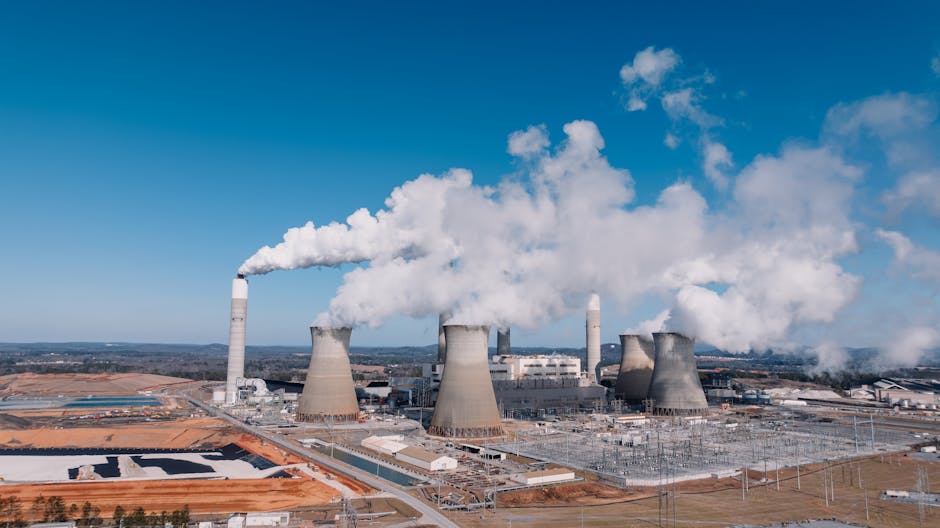
In the predawn chill of northern Indiana, smoke still curls from the cooling towers of the Michigan City Generating Station—a coal-fired relic that, by all market logic, should have been retired. But in early 2023, Northern Indiana Public Service Company (NIPSCO) found itself compelled to keep the aging plant online, not by demand or profit, but by federal mandate. The result: $11.5 million in financial losses over a six-month period. This wasn’t a failure of planning or engineering, but a collision between evolving energy markets and the rigid demands of grid reliability. As wind and solar gain ground, NIPSCO’s predicament reveals the hidden costs of an energy transition still tethered to fossil-fueled infrastructure. The smoke rising into the gray dawn is more than exhaust—it’s the visible residue of a power system struggling to reconcile its past with its future.
Federal Directive Forces Coal Unit Operation

In 2023, the Midcontinent Independent System Operator (MISO), the regional transmission organization overseeing electricity delivery across 15 U.S. states and parts of Canada, issued a directive requiring NIPSCO to keep two coal-fired units at its Schahfer and Michigan City plants operational through June 2024. The order came amid growing concerns about grid stability, particularly during peak winter and summer demand. MISO cited reliability risks due to projected shortfalls in capacity as utilities retire coal plants faster than new generation can come online. For NIPSCO, which had already committed to ending coal use by 2028 and investing heavily in solar and battery storage, the mandate created a financial bind. Running the units at reduced capacity—well below economic efficiency—resulted in $11.5 million in net losses, according to company filings with the Indiana Utility Regulatory Commission. The utility was unable to recoup costs through market sales, as electricity prices did not reflect the inflated operating expenses of maintaining outdated infrastructure.
From Coal Dependence to Clean Energy Pledge

NIPSCO’s current dilemma is rooted in a broader strategic pivot announced in 2018 with its Integrated Resource Plan. At the time, the utility declared it would phase out coal entirely by 2028, replacing it with 3,000 megawatts of solar capacity and 400 megawatts of battery storage. This shift was driven by falling renewable prices, rising environmental pressures, and changing consumer expectations. By 2022, NIPSCO had retired several coal units and reduced its carbon emissions by more than 70% since 2005. However, MISO’s reliability concerns emerged as other utilities across the Midwest made similar moves, collectively reducing dispatchable power capacity. The regional grid operator, responsible for preventing blackouts, began requiring certain coal and gas plants to remain on standby. NIPSCO’s situation underscores a growing tension: while individual utilities pursue decarbonization, regional planning has not kept pace, leaving companies vulnerable to last-minute operational mandates that undermine their economic and environmental goals.
Utilities, Regulators, and the Balancing Act

The key players in this unfolding drama include NIPSCO, MISO, the Federal Energy Regulatory Commission (FERC), and the Indiana Utility Regulatory Commission (IURC). NIPSCO executives have expressed frustration, arguing that they followed market signals and regulatory approvals in retiring coal assets. MISO, meanwhile, maintains that its directives are essential to maintaining grid resilience in the face of climate-driven weather extremes and supply chain disruptions. FERC oversees MISO and has the authority to intervene in cost-recovery disputes, though it has not done so in this case. The IURC is now reviewing whether NIPSCO can pass some of the $11.5 million in losses to ratepayers—a politically sensitive question in a state where energy affordability is a top concern. Behind the scenes, energy economists and policy analysts warn that without coordinated federal and regional planning, utilities face a lose-lose scenario: either they retire plants and risk reliability mandates, or they delay the energy transition and face climate and financial penalties.
Implications for Ratepayers and Energy Policy

The immediate consequence of the MISO order is financial uncertainty for NIPSCO and its 500,000 customers. If the IURC denies cost recovery, the losses will fall on shareholders, potentially dampening future investment in clean energy. If approved, ratepayers could face higher bills—ironically to fund the operation of polluting plants the utility had pledged to abandon. More broadly, the case raises questions about who bears the cost of grid reliability during the energy transition. Other utilities in MISO’s footprint, including those in Illinois and Wisconsin, are watching closely, as similar directives could be issued. Energy analysts at Reuters have noted that delays in transmission expansion and interconnection queues are exacerbating the problem, slowing the integration of renewables just when they are needed most.
The Bigger Picture
This episode is not merely a regional accounting issue—it reflects a national challenge. Across the U.S., the pace of coal retirements has outstripped the development of reliable, clean alternatives, leaving grid operators reliant on aging infrastructure. Without stronger federal coordination on transmission, storage, and capacity markets, utilities will continue to face conflicting mandates. The $11.5 million loss at NIPSCO is a warning: decarbonization cannot succeed without parallel investments in grid modernization and regional planning.
What comes next may hinge on upcoming FERC decisions on grid reform and MISO’s 2025 planning cycle. NIPSCO has indicated it will continue advancing its solar and storage projects, but the path is no longer linear. As climate pressures mount and energy systems transform, the cost of transition will increasingly fall on those caught between policy ambition and operational reality. The smoke over Michigan City may eventually clear—but only if the institutions governing power can finally align.
Source: Reddit