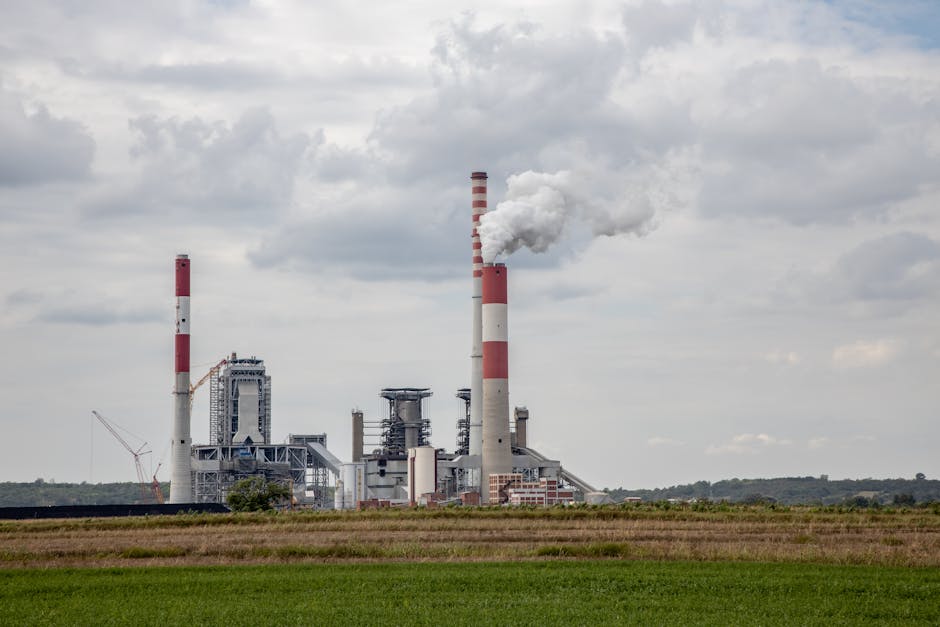
- NIPSCO faced a $11.5 million financial loss due to a federal order to keep coal units running at its Michigan City Generating Station.
- The Federal Energy Regulatory Commission (FERC) mandated the operation of two coal-fired units through the winter of 2023-2024 to ensure reserve power capacity.
- NIPSCO’s coal phase-out plan by 2028 was put on hold due to the FERC order, despite approval from Indiana regulators.
- The utility company was burning excess fuel, losing money on each megawatt produced, to comply with the FERC directive.
- FERC’s decision was aimed at preserving grid stability in the Midwest during peak demand months.
In a dimly lit control room at the Michigan City Generating Station, engineers monitored coal-fired turbines that should have been idle. The massive boilers, lined with decades of grime and wear, pulsed with activity not because they were needed, but because federal regulators said they had to run. For Northern Indiana Public Service Company (NIPSCO), this moment symbolized a jarring reversal in its energy strategy. Once heralded for its bold plan to phase out coal by 2028 and pivot to solar and battery storage, the utility found itself tethered to outdated infrastructure, burning fuel it didn’t need, and losing money with each megawatt produced. By year’s end, the cost of compliance would total $11.5 million—money spent not to serve customers, but to answer a top-down directive from the Federal Energy Regulatory Commission (FERC) aimed at preserving grid stability across the Midwest.
Coal Units Stay Online Despite Decommissioning Plans

NIPSCO’s financial loss stems from a 2023 FERC order requiring the continued operation of two coal-fired units at its Michigan City plant through the winter of 2023–2024. The mandate was issued to ensure reserve power capacity during peak demand months, following reliability concerns raised by MISO (Midcontinent Independent System Operator), the regional grid manager overseeing 15 states. Despite NIPSCO’s formal retirement plans and a clean energy roadmap approved by Indiana regulators, FERC classified the units as ‘essential reliability resources’ under emergency provisions. As a result, NIPSCO was forced to maintain staffing, fuel supply, and emissions compliance for units it had already begun decommissioning. The $11.5 million loss reflects higher-than-market fuel costs, operational maintenance, and missed opportunities to redirect capital toward renewable investments. In a statement, NIPSCO called the directive ‘a temporary but costly setback to our long-term decarbonization goals.’
How Grid Reliability Clashed with Energy Transition

The roots of this conflict trace back to a broader tension between federal grid oversight and state-level energy policies. Over the past decade, Indiana has seen growing pressure to modernize its coal-reliant energy mix, and NIPSCO responded in 2020 with its ‘Next Level Plan,’ promising to retire all coal units by 2028 and double solar capacity. The plan won approval from the Indiana Utility Regulatory Commission (IURC) and was lauded by environmental groups. However, MISO’s 2023 reliability assessment revealed potential shortfalls in reserve margins due to synchronized retirements of fossil fuel plants across the region. FERC, empowered under the Federal Power Act to ensure grid resilience, invoked its authority to mandate continued operation of select units—even those slated for retirement. This override, while legal, has sparked debate over whether federal agencies are undermining state-led climate initiatives in the name of short-term stability.
The Players Behind the Power Struggle

At the center of this clash are three key actors: NIPSCO’s leadership, federal regulators, and regional grid planners. Joe Hamrock, NIPSCO’s CEO, has publicly supported the transition to renewables, calling them ‘more reliable and affordable in the long run.’ Yet his hands were tied by FERC’s directive. Meanwhile, MISO officials argue they’re simply responding to data showing a 12% decline in dispatchable capacity since 2020. ‘We can’t afford surprises during extreme weather,’ said MISO spokesperson Jennifer Ewing in an interview with Reuters. FERC, traditionally neutral on energy sources, faces criticism for prioritizing fossil-based reliability over clean energy innovation. Environmental advocates, including the Sierra Club, have accused the commission of ‘perpetuating outdated infrastructure at the public’s expense.’ The situation underscores a growing rift between utility companies trying to pivot forward and regulatory systems still calibrated for a fossil-fuel era.
Financial and Environmental Repercussions

The $11.5 million loss affects more than NIPSCO’s balance sheet—it risks delaying its broader clean energy investments. Executives warn that redirected funds could postpone the construction of two planned solar farms and a 200-megawatt battery storage facility. Ratepayers may also bear the burden: while NIPSCO has not requested a rate hike yet, past precedents suggest such costs are often recovered through future adjustments. Environmentally, the extended operation of the coal units resulted in an estimated 420,000 additional tons of CO₂ emissions, according to calculations by the U.S. Environmental Protection Agency. For a company marketing its green transition, this setback undermines credibility. More broadly, other utilities in Illinois, Ohio, and Wisconsin now face similar mandates, raising concerns that regional reliability planning could systematically delay the national shift to renewable energy.
The Bigger Picture
This episode reflects a nationwide dilemma: how to modernize the energy grid while ensuring reliability during the transition. As climate change intensifies, extreme weather events strain power systems, making regulators cautious about retiring any dispatchable generation too quickly. Yet clinging to coal undermines emissions goals and long-term resilience. The NIPSCO case highlights the lack of coordination between federal, regional, and state energy policies. Without a unified framework, utilities are caught in regulatory crossfire—forced to pay for outdated systems while trying to build the future. Experts argue for better forecasting tools, expanded transmission for renewable distribution, and financial mechanisms to compensate utilities for early retirements.
What comes next may set a precedent. FERC is reviewing its reliability protocols in light of increasing clean energy adoption, with new guidelines expected by late 2024. NIPSCO’s coal units are scheduled to shut down permanently by June 2025, barring another emergency order. In the meantime, the $11.5 million loss stands as a cautionary tale: even the most forward-looking energy plans can be undone by the inertia of an aging grid—and the institutions designed to protect it.
Source: Nwitimes