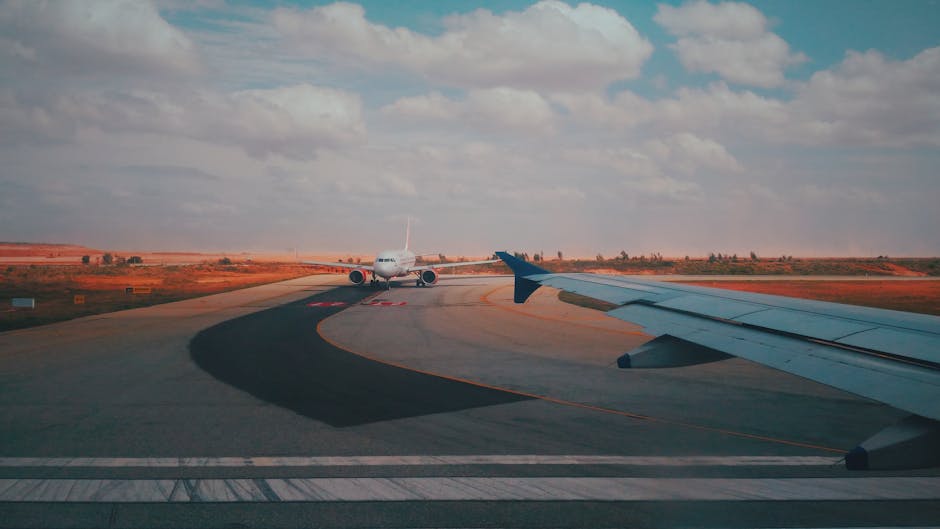
- A prolonged Middle East conflict could disrupt global air travel, forcing airlines to reroute flights and change pricing structures.
- The Gulf region’s airports, including Dubai, Doha, and Abu Dhabi, play a crucial role in connecting Asia and Europe.
- The hub-and-spoke model, which has defined global aviation for two decades, may be dismantled in the face of sustained conflict.
- Gulf carriers, such as Emirates and Qatar Airways, have dominated long-haul routes with low costs and extensive route networks.
- A conflict could lead to costly and logistically complex changes to flight paths and pricing worldwide.
Over 60% of long-haul flights between Asia and Europe currently pass through airports in the Gulf region—primarily Dubai, Doha, and Abu Dhabi—making the Middle East the linchpin of global air connectivity. These hubs, operated by Emirates, Qatar Airways, and Etihad Airways, have transformed international travel by offering low-cost, high-frequency connections across continents. But as regional tensions escalate, airlines are already rerouting flights, adding fuel surcharges, and canceling services. A sustained conflict could dismantle the hub-and-spoke model that has defined global aviation for the past two decades, forcing a costly and logistically complex reconfiguration of flight paths and pricing structures worldwide.
\n
The Rise of the Gulf Aviation Giants

\n
The meteoric rise of Gulf carriers since the early 2000s reshaped global air travel economics. Backed by sovereign wealth, airlines like Emirates and Qatar Airways invested heavily in state-of-the-art fleets, luxury service, and expansive route networks. Their central geographic location allowed them to connect distant markets—such as Sydney to London or Johannesburg to Vancouver—more efficiently than legacy carriers. This advantage, combined with low operating costs and minimal taxation, enabled them to dominate long-haul routes. By 2019, Dubai International Airport had become the world’s busiest for international passenger traffic, handling over 86 million travelers annually. This hub model reduced travel costs, increased connectivity, and pressured traditional airlines to adapt or lose market share.
\n
Escalating Tensions and Immediate Flight Disruptions

\n
In recent months, rising geopolitical instability—sparked by escalating conflicts in Yemen, the Red Sea crisis, and heightened Iran-Israel tensions—has already forced airlines to alter flight paths. Several carriers have suspended routes to Tel Aviv, Beirut, and Tehran, while others are avoiding Iranian and Iraqi airspace entirely. Even minor detours add significant fuel costs and flight time: a reroute around Iran can increase a Dubai-Munich flight by nearly 40 minutes and 3,000 kilograms of fuel. The International Air Transport Association (IATA) estimates that airspace closures could cost airlines an additional $1.2 billion annually under prolonged disruption. Gulf carriers, whose entire business model relies on seamless transit through this region, are disproportionately exposed.
\n
Economic and Strategic Vulnerabilities Exposed

\n
The Gulf aviation model is built on stability, open airspace, and predictable regulatory environments—all now under threat. Unlike European or North American hubs, which serve large local markets, Gulf airports depend almost entirely on transit passengers. Any sustained drop in connectivity risks collapsing this delicate ecosystem. Furthermore, aircraft manufacturers like Boeing and Airbus rely on the region for critical long-haul orders; a decline in Gulf airline expansion could ripple through aerospace supply chains. Financially, Emirates alone contributes an estimated 14% to Dubai’s GDP. A prolonged downturn could strain public finances and delay infrastructure projects, including the planned expansion of Al Maktoum International Airport.
\n
Global Repercussions for Travelers and Trade

\n
A shift away from Gulf hubs would have wide-ranging consequences. Passengers could face fewer direct connections, longer layovers, or higher fares—particularly on routes between Asia-Pacific and Europe. Cargo operations, which depend on passenger aircraft belly capacity, may also slow, affecting global supply chains. Airlines in Turkey, India, and Southeast Asia could benefit by filling the gap, but lack the infrastructure to fully replace Gulf capacity. Additionally, millions of migrant workers who rely on affordable Gulf-based flights to return home may face increased costs and logistical hurdles. The World Bank has warned that prolonged aviation disruptions in key transit zones could reduce global trade efficiency by up to 3%.
\n
Expert Perspectives
\n
“The Gulf’s dominance was always a function of geography and political stability,” says Dr. Sarah Malik, aviation economist at the London School of Economics. “Remove one, and the entire model wobbles.” Others argue the crisis could accelerate a long-overdue diversification of global air networks. According to IATA’s chief economist, “Regional hubs in Istanbul, Mumbai, and even Nairobi are poised to gain—if they can scale quickly.” However, regulatory hurdles and infrastructure gaps remain significant barriers. Meanwhile, defense analysts warn that military escalation could lead to further airspace closures, particularly if drone or missile threats expand into commercial zones.
\n
Looking ahead, the resilience of the global air network will depend on how swiftly alternative routes and partnerships can be established. Satellite-based navigation and polar routes offer partial solutions, but come with their own operational challenges. Airlines are already stress-testing contingency plans, including code-sharing expansions and long-term leases on larger aircraft for non-stop routes. The key question is not whether the Gulf will remain central to aviation, but for how long—and what the world will do when it no longer can.
Source: BBC