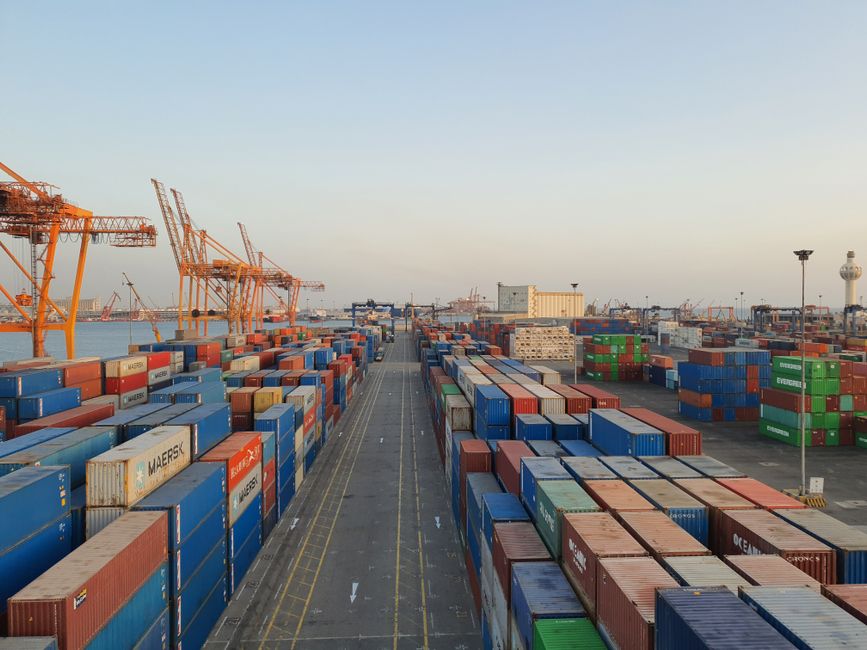
- Escalating tensions in the Strait of Hormuz are driving a global recalibration of maritime security priorities.
- The Strait of Hormuz, a vital shipping route, accounts for nearly 20% of the world’s oil supply.
- Alternative shipping routes, such as the Malacca Strait, are becoming critical due to the Strait of Hormuz’s vulnerability.
- Maritime incidents, including hijackings and drone attacks, are increasing in the Persian Gulf region.
- Shipping reroutes are lengthening average voyages, impacting global trade and energy logistics.
Escalating tensions in the Strait of Hormuz are triggering a global recalibration of maritime security priorities, as nations rush to safeguard alternative shipping routes critical to energy and trade. The narrow passage, through which nearly 20% of the world’s oil supply flows, has become a flashpoint for regional and international rivalry, with attacks on commercial vessels disrupting supply chains and spiking insurance costs. This strategic vulnerability is now driving a broader contest over lesser-known but equally vital waterways, from the Malacca Strait to the Bab el-Mandeb, where military posturing, infrastructure investments, and diplomatic maneuvering are intensifying to preempt future disruptions.
Chokepoints Under Pressure: Data from Global Trade Routes

According to the U.S. Energy Information Administration, approximately 17 million barrels of crude oil per day passed through the Strait of Hormuz in 2023, underscoring its unparalleled role in global energy logistics. The International Maritime Bureau reports a 40% increase in maritime incidents in the broader Persian Gulf region over the past 18 months, including hijackings, drone attacks, and GPS spoofing. Meanwhile, the Malacca Strait, handling about 25% of global seaborne trade, saw 67 reported piracy incidents in 2023—up from 42 in 2022—according to the ReCAAP Information Sharing Centre. Satellite data from MarineTraffic shows shipping reroutes have lengthened average voyages by 12% for vessels diverting from the Red Sea due to Houthi attacks, adding $2.5 million in fuel and insurance costs per voyage for large container ships. These figures illustrate how localized conflicts rapidly escalate into systemic trade risks, with cascading effects on inflation, energy prices, and supply reliability.
Key Players: Navies, Corporations, and Regional Powers

The United States Fifth Fleet, headquartered in Bahrain, continues to lead multinational efforts to secure Gulf waters, recently expanding its Combined Maritime Forces to include 42 nations. Iran’s Islamic Revolutionary Guard Corps Navy has intensified patrols and conducted live-fire drills near the strait, while China has deployed surveillance assets and offered port infrastructure deals in Oman and Djibouti to expand its strategic footprint. Private shipping giants like Maersk and MSC have rerouted fleets around Africa’s Cape of Good Hope, increasing transit times by up to two weeks. India has accelerated naval cooperation with Japan and Australia under the MILAN framework, while the European Union has launched Operation Aspides to protect Red Sea shipping. These moves reflect a fragmented but increasingly coordinated response, where state and corporate actors are forced to balance profit, safety, and geopolitical alignment in real time.
Strategic Trade-Offs: Security vs. Efficiency, Sovereignty vs. Access

Nations face difficult choices between securing maritime routes and maintaining cost-effective global trade. Military escorts and surveillance networks enhance safety but inflate operational costs, which are ultimately passed on to consumers. Rerouting ships avoids immediate danger but increases carbon emissions—diverted Suez-bound vessels now emit an estimated 18,000 additional tons of CO₂ daily, according to analysis by BBC Climate Lab. Moreover, port-state agreements that allow foreign naval access often provoke sovereignty concerns, as seen in Sri Lanka’s pushback against Indian naval expansion at Trincomalee. Meanwhile, insurers are recalibrating risk models: Lloyd’s of London has classified the southern Red Sea and Gulf of Aden as ‘high-risk zones,’ raising premiums by up to 300%. The balance between open access and controlled security is becoming a defining challenge for the future of maritime commerce.
Why Now? Shifting Alliances and Rising Disruption

The current crisis is not merely a spike in hostilities but the culmination of long-simmering geopolitical shifts. The U.S. pivot to Asia has reduced its perceived commitment to Gulf security, creating space for Iran to test deterrence thresholds. Simultaneously, China’s Belt and Road Initiative has expanded its influence in key littoral states, offering economic incentives in exchange for port access. The war in Ukraine disrupted traditional energy flows, pushing Europe to source more oil from the Middle East, thereby increasing traffic through contested waters. Furthermore, non-state actors like the Houthis have demonstrated asymmetric capabilities to challenge state navies, emboldening similar groups. These converging factors have transformed narrow seas from logistical corridors into arenas of hybrid warfare, where economic leverage and military presence are increasingly intertwined.
Where We Go From Here
Three scenarios are likely over the next 12 months. First, a fragile stabilization could emerge through backchannel diplomacy, with Iran de-escalating in exchange for sanctions relief, allowing shipping to resume under enhanced monitoring. Second, a broader conflict could erupt if an attack results in significant loss of life or environmental damage, triggering a multinational military response and further fragmentation of trade routes. Third, a new multilateral security framework may take shape, modeled on the 2008-2016 anti-piracy missions off Somalia, with permanent naval coalitions and AI-powered surveillance networks deployed across critical straits. Each path carries profound implications for global trade resilience and geopolitical alignment.
Bottom line — the battle for narrow seas is no longer a regional concern but a central front in the struggle for economic stability, where control of waterways determines the flow of power as much as oil.
Source: Financial Times