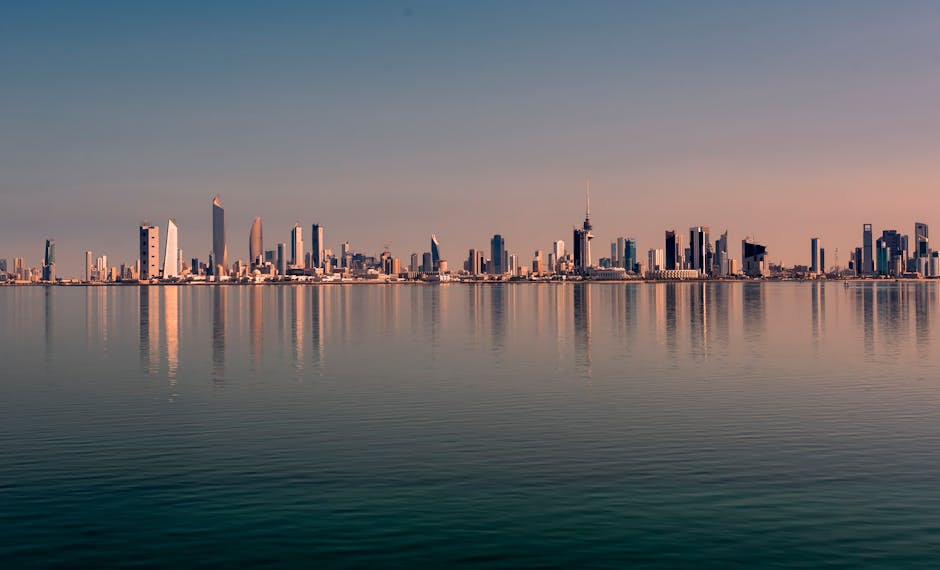
- The Gulf states have invested heavily in AI infrastructure, but regional conflict and energy costs are forcing a reevaluation of their tech hub stability.
- Despite the challenges, analysts believe the Gulf’s AI ambitions remain intact, backed by strong government support and long-term investment.
- Security and energy sustainability are now critical factors in the viability of large-scale AI infrastructure in the region.
- Data centers, the backbone of AI operations, demand uninterrupted power and cooling, which are under strain due to rising electricity prices.
- The Gulf’s position as a neutral tech gateway between East and West remains a key advantage in attracting major cloud providers.
Can the Gulf states still achieve their vision of becoming global leaders in artificial intelligence when war looms nearby and energy costs keep climbing? Governments across the region — especially the United Arab Emirates and Saudi Arabia — have poured billions into building data centers, attracting tech giants, and launching national AI strategies. But recent missile attacks on critical infrastructure and a sustained spike in electricity prices are forcing investors and operators to rethink the region’s stability as a tech hub. The dream of transforming oil wealth into digital dominance suddenly faces a harsh geopolitical reality. How resilient is this tech-driven transformation in the face of escalating regional conflict?
Are Gulf States Still Viable for AI Infrastructure?

The short answer is yes — but with growing caveats. Analysts say the Gulf’s ambition to become a regional AI powerhouse remains intact, backed by strong government support and long-term investment. Countries like the UAE have positioned themselves as neutral tech gateways between East and West, hosting major cloud providers such as Microsoft, Oracle, and Huawei. However, the viability of large-scale AI infrastructure now hinges on security and energy sustainability. Data centers, the backbone of AI operations, demand uninterrupted power and cooling — both of which are under strain. According to the International Energy Agency (IEA), electricity prices in the Gulf have risen by over 30% since 2023 due to global supply chain disruptions and increased regional demand. This undermines one of the Gulf’s key selling points: cheap, abundant energy.
What Evidence Shows the Gulf’s Tech Vulnerabilities?

Recent attacks on data centers in the region have highlighted physical risks once considered remote. In early 2024, a drone strike near a major data facility in Abu Dhabi — though it caused minimal damage — sent shockwaves through the tech investment community. While no major AI outages occurred, insurers began revising risk assessments for critical infrastructure in the Gulf. According to a report from BloombergNEF, data center operators are now factoring in geopolitical risk premiums that could add 15–20% to operational costs. Furthermore, the Gulf’s reliance on desalinated water for cooling systems makes it vulnerable to disruptions in both energy and water supplies. As Reuters has reported, some firms are reconsidering expansion timelines, opting instead to strengthen redundancy in Europe or Southeast Asia. These shifts suggest that while the Gulf remains attractive, it is no longer seen as a low-risk haven for AI infrastructure.
What Do Skeptics Say About the Gulf’s AI Future?

Not all experts agree that conflict will derail the Gulf’s tech ambitions. Some argue that the region’s governments have the financial and political tools to insulate critical infrastructure. “The UAE and Saudi Arabia are investing heavily in air defense and cyber resilience,” says Dr. Hala al-Dosari, a Gulf policy analyst at the Carnegie Middle East Center. “They’re treating data centers like strategic national assets, much like oil refineries.” Others point to the region’s long-term vision: Saudi Arabia’s NEOM project includes plans for a $500 million AI-powered smart city, while the UAE has appointed a Minister of Artificial Intelligence since 2017. Skeptics of the doomsday scenario also note that most regional conflicts have so far avoided direct strikes on civilian tech infrastructure. Still, there’s growing concern that even indirect disruptions — such as shipping delays in the Red Sea affecting server imports — can compound over time, creating a slow erosion of investor confidence.
What Are the Real-World Consequences for Global AI?

The stakes extend far beyond the Gulf. If data center growth slows in the region, it could delay AI deployment across Africa, South Asia, and parts of Europe that rely on Gulf-based cloud services. For example, Ethiopian startups using UAE-hosted AI platforms have already reported latency spikes during regional tensions. Moreover, tech firms may begin diversifying their Middle East footprint, splitting operations between Dubai and Amman or Cairo to mitigate risk. This could lead to a more fragmented regional tech landscape. There’s also a broader signal being sent to global investors: even state-backed tech megaprojects are not immune to geopolitical volatility. As the BBC has analyzed, the Gulf’s tech ambitions are now part of a larger debate about where to locate energy-intensive AI infrastructure in an era of climate stress and geopolitical uncertainty.
What This Means For You
If you rely on AI-driven services — from cloud storage to machine learning tools — the stability of systems may increasingly depend on regions you’ve never considered. The Gulf’s struggle to balance ambition with security could affect the speed, cost, and reliability of AI applications worldwide. For investors, it underscores the need to assess geopolitical risk as closely as technical capability. And for policymakers, it highlights the growing convergence of energy, security, and digital infrastructure in the 21st-century economy.
Still, one question remains unanswered: Can any region truly insulate itself from global instability when building the foundation of the next technological era? As AI demand surges, the world may need not just more data centers — but smarter, more resilient ones, located in places where peace is as reliable as power.
Source: CNBC