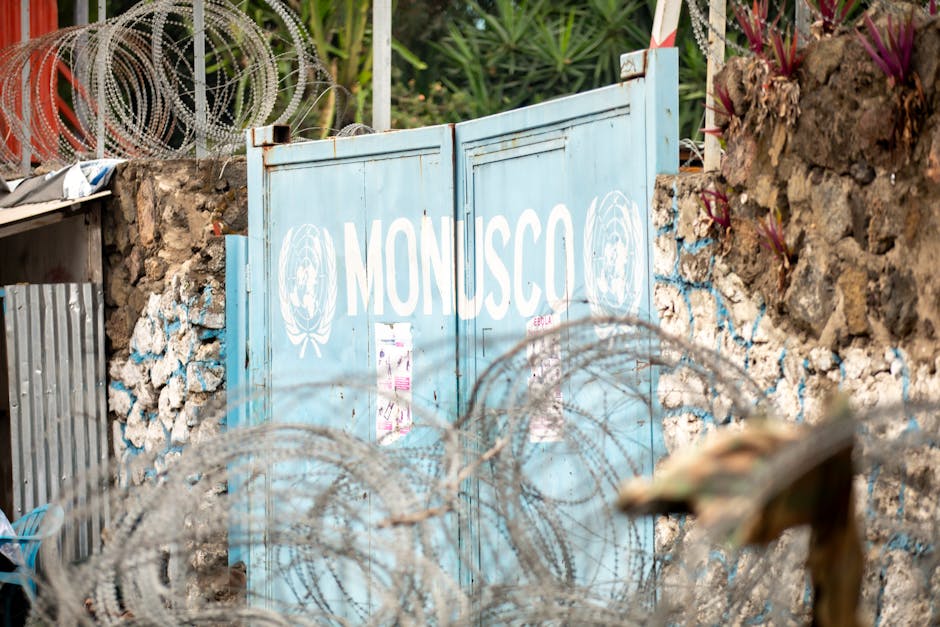
- Armed attackers set fire to an Ebola treatment center in eastern Congo, allowing 18 suspected patients to escape.
- The incident has raised fears of renewed transmission, as the virus can kill up to 90% of untreated cases.
- The World Health Organization has expressed alarm over the attack, warning it undermines years of progress in outbreak response.
- The Beni region in North Kivu province has long been plagued by violence and weak governance, exacerbating the public health crisis.
- Violence against health infrastructure is a growing concern in the eastern DRC, where over 140 armed groups operate.
In a troubling escalation of violence against health infrastructure, 18 suspected Ebola patients escaped from a treatment center in eastern Democratic Republic of Congo after armed attackers set fire to a medical tent—a second such attack in just over a week. The incident occurred in the town of Beni, a hotspot during previous Ebola outbreaks and a region plagued by long-standing armed conflict. Health officials confirmed that the blaze destroyed critical supplies and disrupted ongoing containment efforts, raising fears of renewed transmission. With the virus capable of killing up to 90% of untreated cases and spreading through bodily fluids, the escape of unmonitored patients poses a severe public health threat. The World Health Organization (WHO) has expressed alarm, warning that such attacks undermine years of progress in outbreak response and jeopardize both patient safety and regional stability.
Resurgence of Violence in an Epidemic Zone

The latest assault underscores the dangerous convergence of armed insurgency and public health crisis in the eastern DRC, where over 140 armed groups operate amid weak governance and persistent humanitarian emergencies. The Beni region, located in North Kivu province, has long been a flashpoint for violence, particularly from the Allied Democratic Forces (ADF), a militant group suspected in the attack. While the exact motive remains under investigation, previous attacks on Ebola centers have been fueled by misinformation, distrust of government, and suspicion of foreign medical teams. This latest incident follows a similar arson event days earlier in the same area, suggesting a coordinated effort to destabilize health operations. Health workers, many of whom come from outside the region, are increasingly seen as extensions of a distant and distrusted central authority, complicating efforts to gain community cooperation during outbreaks.
Attack Details and Immediate Aftermath

On the night of the attack, witnesses reported seeing armed men approaching the temporary Ebola treatment unit on the outskirts of Beni, igniting the isolation tent before fleeing into nearby forests. The facility, operated by the DRC Ministry of Health with support from Médecins Sans Frontières (MSF), was housing 22 suspected cases at the time. Four individuals remained under supervision, but 18 managed to escape into the surrounding community. Local health authorities launched a rapid response to locate the missing patients, using mobile teams to trace contacts and conduct door-to-door screenings. The destruction of diagnostic kits, protective gear, and medical records further hampered containment. According to a spokesperson for the Ministry of Health, the attackers specifically targeted the isolation unit, bypassing administrative areas, indicating an intent to disrupt care rather than loot supplies. Security forces have since increased patrols, though their presence often exacerbates community tensions.
Root Causes: Mistrust, Misinformation, and Militancy

The repeated targeting of Ebola facilities reflects deep-seated issues beyond mere criminality. In eastern DRC, years of conflict have eroded trust in state institutions, and health workers—especially those associated with foreign organizations—are often viewed with suspicion. Rumors persist that Ebola is a hoax or that treatment centers are harvesting organs, beliefs that have been amplified by social media and local influencers. A 2019 study published in The Lancet found that nearly half of surveyed residents in Ebola-affected areas believed the outbreak was fabricated. Meanwhile, armed groups exploit this mistrust to undermine government legitimacy and control territory. The ADF, which has links to regional extremist networks, has a history of attacking civilian infrastructure to destabilize the region. With mobile clinics and health workers becoming collateral in this broader conflict, effective disease control becomes nearly impossible without addressing the root drivers of violence and misinformation.
Public Health and Security Implications

The escape of 18 suspected Ebola patients creates a high-risk scenario for uncontrolled transmission, particularly in densely populated neighborhoods with limited access to clean water and healthcare. Each undetected case can spark a chain of infections, especially if traditional burial practices involving direct contact with the deceased continue unchecked. Children, the elderly, and immunocompromised individuals are most vulnerable. Moreover, health workers are now operating under heightened threat, leading to staff shortages and reduced outreach. The WHO has warned that such attacks could force the suspension of vaccination campaigns, which have been instrumental in curbing previous outbreaks. In 2018–2020, over 300,000 people were vaccinated using the rVSV-ZEBOV vaccine, significantly reducing mortality. Any rollback in these efforts risks not only local lives but regional stability, as neighboring countries like Uganda and Rwanda remain on high alert for cross-border spread.
Expert Perspectives
Public health experts emphasize that medical interventions alone cannot succeed in conflict zones without community engagement. Dr. Joanne Liu, former international president of Médecins Sans Frontières, stated, “You can’t vaccinate your way out of an epidemic when people don’t trust the people giving the vaccine.” Meanwhile, security analysts argue that military responses must be balanced with diplomatic and informational strategies. “Treating health workers as combatants only fuels recruitment for armed groups,” noted a senior analyst at the International Crisis Group. Others stress the need for localized leadership in health campaigns, urging that Congolese community leaders—not just international agencies—lead outreach to counter misinformation and build legitimacy.
Looking ahead, authorities face a daunting challenge: containing a deadly virus while navigating a war zone where health care has become a battleground. The situation in Beni may set a precedent for how global health responds to outbreaks in conflict-affected areas. With over 30 suspected cases reported in North Kivu in recent weeks, the window for intervention is narrow. The international community must decide whether to increase security for medical teams, invest in grassroots trust-building, or risk another uncontrolled outbreak. As one epidemiologist put it, “The virus doesn’t care about conflict—but our response must.”
Source: Pbs