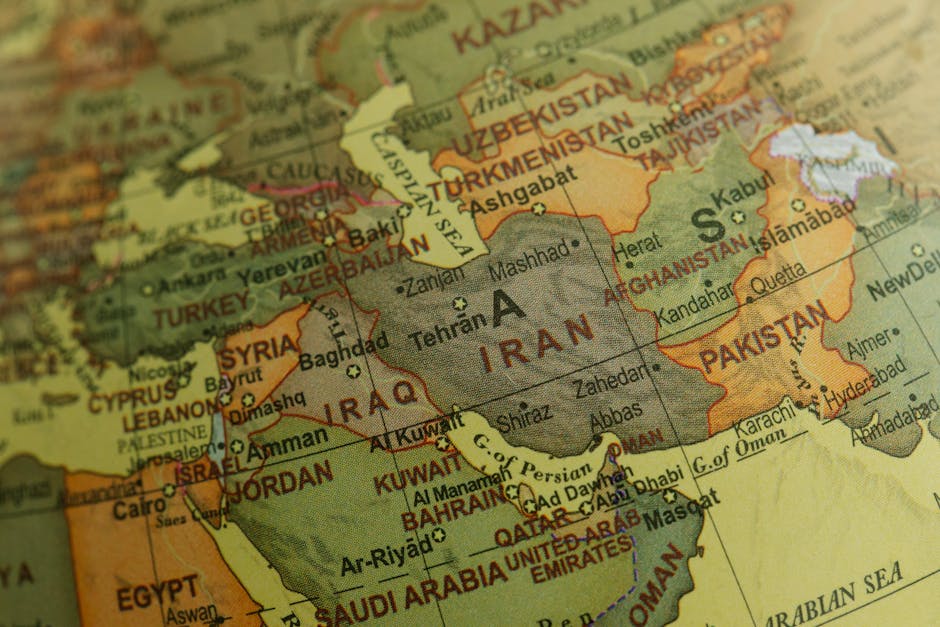
- Iran has released an official map claiming sovereignty over significant portions of the Strait of Hormuz, previously considered international or under Emirati and Omani control.
- The map redraws maritime boundaries, including waters near key islands and shipping lanes, raising concerns about freedom of navigation and energy security.
- The Strait of Hormuz is a critical waterway carrying nearly a fifth of the world’s oil supply, with global implications for markets and energy security.
- The cartographic shift tests the resilience of international maritime law and sets a concerning precedent for regional disputes.
- The map’s release has sparked diplomatic uproar across the Gulf, with regional powers and global stakeholders on high alert.
Why is Iran suddenly claiming sovereignty over waters belonging to the UAE and Oman? A newly released official map from Tehran has sparked diplomatic uproar across the Gulf, asserting jurisdiction over significant portions of the Strait of Hormuz previously considered international or under Emirati and Omani control. The map, published by Iran’s National Cartographic Center, redraws maritime boundaries to include waters near key islands and shipping lanes, raising alarms about freedom of navigation, energy security, and potential military escalation. With nearly a fifth of the world’s oil supply passing through the Strait annually, the implications of this cartographic shift extend far beyond regional borders—threatening global markets and testing the resilience of international maritime law.
What Does Iran’s New Map Actually Show?

Iran’s revised maritime map extends its territorial waters significantly into the Strait of Hormuz, encompassing areas adjacent to the UAE’s Greater and Lesser Tunb islands and parts of the maritime zone near Oman’s Musandam Peninsula. These areas have long been recognized as either under Emirati sovereignty or as international waters governed by the United Nations Convention on the Law of the Sea (UNCLOS). While Iran has historically contested UAE control over the Tunb islands, the new cartographic claim goes further by formally incorporating surrounding waters into its national jurisdiction. This move appears to be both symbolic and strategic, reinforcing Iran’s narrative of regional dominance while potentially laying groundwork for increased naval patrols or legal challenges to foreign vessel movements. Notably, Iran is not a party to UNCLOS, which limits its ability to legally enforce such claims under international law.
What Evidence Supports Iran’s Escalating Maritime Ambitions?

Several recent developments underscore Iran’s growing assertiveness in the Gulf. In 2023, the Islamic Revolutionary Guard Corps Navy conducted drills near the Strait, simulating blockades and anti-ship operations. According to Reuters, these exercises explicitly tested Iran’s capacity to disrupt shipping in the waterway. Additionally, Iranian officials have repeatedly warned foreign navies to leave the region, with Foreign Minister Hossein Amir-Abdollahian stating in June 2023 that the Persian Gulf is a “red line” for Tehran. Satellite imagery analyzed by the Middle East Institute has also shown increased naval activity near disputed zones. While no direct military confrontations have occurred since the map’s release, the U.S. Fifth Fleet, based in Bahrain, has reportedly increased surveillance and patrol frequency in response to potential provocations.
Are There Counterarguments to Iran’s Maritime Claims?

Yes—many regional and international actors reject Iran’s claims as illegitimate and destabilizing. The UAE has formally protested the map through diplomatic channels, reaffirming its sovereignty over the Tunb islands, which it has administered since 1971. Oman, though maintaining a traditionally neutral stance, has quietly expressed concern through backchannel communications, fearing disruption to its vital port of Duqm and maritime trade. Legal experts point out that unilateral map changes do not alter established maritime boundaries under international law unless ratified through arbitration or bilateral agreement. The BBC reported that scholars at the International Tribunal for the Law of the Sea emphasize that territorial claims require historical evidence, consistent administration, and recognition by affected parties—none of which Iran currently possesses for these waters. Some analysts suggest the map is more about domestic posturing than actual enforcement, aimed at rallying nationalist sentiment amid economic hardship and political unrest.
What Are the Real-World Implications of This Dispute?

The most immediate impact is on global energy markets. The Strait of Hormuz handles approximately 18-20 million barrels of oil per day, according to the U.S. Energy Information Administration. Any credible threat to navigation could spike oil prices and trigger contingency plans among importing nations. In 2019, Iranian seizures of commercial vessels led to a temporary surge in insurance premiums for ships transiting the Gulf. Shipping firms are now reassessing risk assessments, with some rerouting vessels farther into the Gulf at increased fuel and time costs. Militarily, the U.S. and its allies may bolster naval presence, risking miscalculation. For Gulf states, the dispute accelerates defense cooperation, with the UAE and Saudi Arabia reportedly discussing joint maritime patrols. Long-term, unresolved tensions could undermine regional stability and discourage foreign investment in port infrastructure and energy projects.
What This Means For You
If you rely on stable energy prices or global supply chains, Iran’s maritime claims matter—even if you live far from the Gulf. Disruptions in the Strait of Hormuz ripple through fuel costs, shipping logistics, and inflation worldwide. Consumers may see higher gasoline prices, while businesses face increased transportation expenses. Geopolitical uncertainty also affects financial markets, particularly energy stocks and currencies tied to oil exports. The situation underscores how regional power plays can have tangible, everyday consequences for households and economies across continents.
Could diplomatic negotiations prevent a deeper crisis, or is military confrontation inevitable given the strategic stakes? As Iran consolidates its narrative through cartography and naval presence, the international community faces a critical test: how to uphold maritime law without escalating tensions. What mechanisms exist to mediate such disputes before they boil over?
Source: Euronews