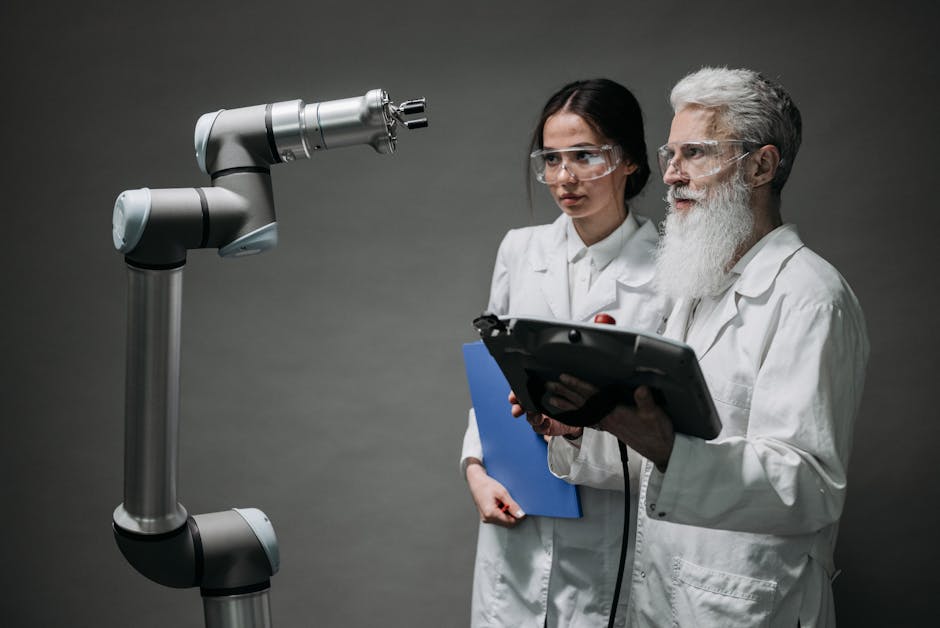
- Wearable robots are providing essential support and strength to children with spinal muscular atrophy, enabling them to stand and walk.
- The device uses sensors and motors to provide stability and assist with muscle movement, promoting greater mobility and independence.
- Research has shown the wearable robot to be effective in building up strength in the knees of children with spinal muscular atrophy.
- This technology has the potential to greatly improve the lives of children with spinal muscular atrophy, a debilitating disease.
- Further development and refinement of the wearable robot are crucial to its successful integration into treatment plans.
The scene is set in a physical therapy room, where a young child is taking their first steps with the help of a wearable robot. The device, which resembles a robotic exoskeleton, is strapped to the child’s legs and is providing the necessary support and strength to help them stand and walk. This is a breakthrough moment for children with spinal muscular atrophy, a neuromuscular disease that affects the nerve cells responsible for controlling voluntary muscle movement. The wearable robot is the result of years of research and development, and it has the potential to greatly improve the lives of children with this debilitating disease.
Current Progress in Wearable Robot Technology

According to a recent study published in Nature, the wearable robot has been shown to be effective in helping children with spinal muscular atrophy build up strength in their knees. The device uses a combination of sensors and motors to provide the necessary support and stability, allowing children to stand and walk with greater ease. The study’s findings are promising, and they suggest that the wearable robot could be a valuable tool in the treatment of this disease. With further development and refinement, the wearable robot has the potential to greatly improve the lives of children with spinal muscular atrophy.
The Story Behind the Wearable Robot

The development of the wearable robot is a story of innovation and perseverance. Researchers have been working on the device for years, and they have faced numerous challenges and setbacks along the way. However, their dedication and commitment to finding a solution have paid off, and the wearable robot is now a reality. The device is the result of a collaboration between engineers, scientists, and medical professionals, who have worked together to design and develop a device that meets the needs of children with spinal muscular atrophy. The story of the wearable robot is a testament to the power of collaboration and innovation in overcoming complex challenges.
The People Behind the Wearable Robot

The people behind the wearable robot are a team of dedicated researchers and scientists who are passionate about finding new ways to treat and manage spinal muscular atrophy. They are motivated by a desire to improve the lives of children with this disease, and they are driven by a commitment to excellence and innovation. The team includes experts in engineering, biology, and medicine, who have worked together to design and develop the wearable robot. Their work is a testament to the power of interdisciplinary collaboration, and it has the potential to make a significant impact on the lives of children with spinal muscular atrophy.
Consequences of the Wearable Robot

The wearable robot has the potential to greatly improve the lives of children with spinal muscular atrophy. By providing the necessary support and strength, the device can help children to stand and walk with greater ease, which can have a significant impact on their quality of life. The wearable robot can also help to reduce the risk of complications and improve overall health outcomes. For example, children who use the wearable robot may be less likely to experience respiratory problems, which are a common complication of spinal muscular atrophy. The wearable robot is a valuable tool in the treatment of this disease, and it has the potential to make a significant difference in the lives of children with spinal muscular atrophy.
The Bigger Picture
The wearable robot is part of a larger trend towards the development of assistive technologies that can help people with disabilities to live more independently. These technologies have the potential to greatly improve the lives of people with disabilities, and they can help to promote greater inclusion and accessibility. The wearable robot is a prime example of how technology can be used to improve the human condition, and it has the potential to inspire further innovation and development in this field. As researchers continue to develop and refine the wearable robot, they may uncover new insights and discoveries that can be applied to other areas of assistive technology.
The development of the wearable robot is a significant breakthrough, and it has the potential to make a lasting impact on the lives of children with spinal muscular atrophy. As researchers continue to refine and improve the device, it is likely that we will see even more exciting developments in the field of assistive technology. With its potential to improve the lives of children with spinal muscular atrophy, the wearable robot is an important step forward in the pursuit of greater inclusion and accessibility, and it is a testament to the power of innovation and collaboration in overcoming complex challenges.
Source: Nature