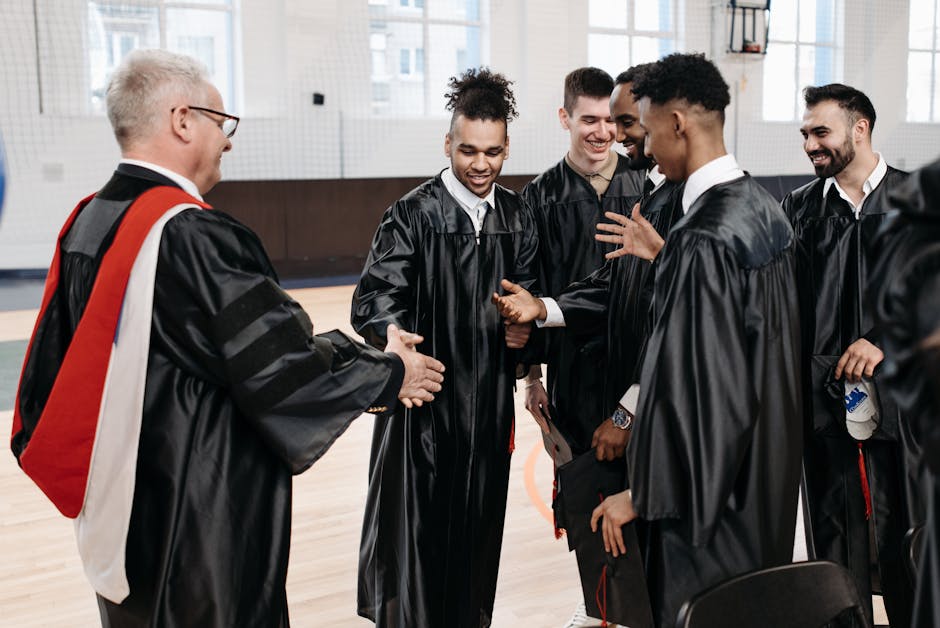
- AI-powered name announcement system failed to recognize over 300 graduates at Midwestern State University.
- The university had promoted the event as a ‘cutting-edge digital transformation’ but instead faced widespread criticism.
- The incident has sparked debate over the unchecked integration of artificial intelligence into human institutions.
- Budget constraints and administrative inefficiencies led Midwestern State to invest in an AI-driven student management platform.
- The AI system’s failure has raised questions about its reliability and accuracy in critical situations.
More than 300 graduates at Midwestern State University were left unrecognized during their commencement ceremony last Saturday when an AI-powered name announcement system failed to list them, prompting a wave of boos, student protests, and a viral backlash online. The university had promoted the event as a “cutting-edge digital transformation,” integrating machine learning to streamline the graduation process. Instead, families watched in confusion as rows of students remained seated while only a fraction heard their names called. Video footage from the ceremony, widely shared on Reddit and social media, captured students holding up handwritten signs reading “I Exist” and “AI Forgot Me.” The incident has become a flashpoint in the debate over the unchecked integration of artificial intelligence into deeply human institutions.
The Push for AI in Academic Administration

Midwestern State, like many public universities facing budget constraints and administrative inefficiencies, had invested heavily in an AI-driven student management platform developed in partnership with Edvance Analytics, a Silicon Valley startup specializing in education automation. The university administration believed the new system would reduce human error, speed up ceremonies, and modernize its image. The AI was trained on historical graduation data and designed to cross-reference student records, verify degree completion, and generate real-time name pronunciations. However, officials now admit a critical flaw: the system was programmed to exclude students flagged for ‘pending administrative reviews’—a broad category that inadvertently included hundreds who had resolved minor holds weeks prior. The glitch was not detected during dry runs, raising serious questions about testing protocols and algorithmic transparency in academic settings.
What Went Wrong During the Ceremony

As the ceremony unfolded, only about 20% of the expected 1,500 graduates were called to the stage. Confused faculty members later discovered that the AI had filtered out students based on outdated financial aid and library fine records, many of which had been resolved but not manually updated in the legacy subsystem the AI relied on. Student organizers quickly mobilized, circulating spreadsheets to document omissions. Among them was Jasmine Tran, a first-generation computer science major, whose name was skipped despite completing all requirements. “I worked three jobs to be here,” Tran told Reuters, “and an algorithm erased me in five seconds.” The university president issued an apology mid-ceremony, but the damage was done—students and families felt the moment, meant to celebrate years of effort, had been dehumanized by faulty code.
Underlying Causes and Systemic Vulnerabilities

Experts point to a broader pattern: AI systems often fail when deployed in complex, real-world environments with incomplete or siloed data. “Automating high-stakes rituals without rigorous auditing is reckless,” said Dr. Lena Cho, a digital ethics researcher at Carnegie Mellon University. A 2023 Nature study on AI in public institutions found that over 60% of algorithmic errors stemmed from data integration gaps, not model design flaws. In this case, the AI relied on an unpatched API connecting student finance and academic records, creating a blind spot. Moreover, the absence of human oversight—no backup list or real-time monitor—amplified the failure. Critics argue that universities are rushing to adopt AI to cut costs, often without involving faculty, students, or ethicists in the design process. The Midwestern State incident underscores how automation, when poorly implemented, can erode trust in institutions meant to uplift individuals.
Implications for Students and Institutions

The fallout extends beyond a single ceremony. Affected students report anxiety over whether their degrees will be officially recognized, despite university assurances. Some employers and graduate programs request verification of commencement participation, which could disadvantage those overlooked. The incident also threatens the university’s reputation, with prospective applicants questioning its competence. More broadly, it signals a warning to other institutions considering AI for ceremonial or credentialing functions. Trust in academic rituals is built on consistency and personal recognition—values difficult to encode in software. As AI permeates enrollment, advising, and now graduation, the risk of alienating the very people these systems are meant to serve grows significantly.
Expert Perspectives
Opinions are divided. Proponents like Dr. Rajiv Mehta of MIT’s Education Lab argue that “AI can enhance scalability in education” if paired with robust fail-safes. Others, like ethicist Dr. Amara Singh, warn that “automating symbolic moments risks reducing human achievement to data points.” Singh adds, “When a name isn’t called, it’s not just an error—it’s a denial of visibility.” The debate reflects a larger tension: can technology support tradition without undermining its meaning? Without inclusive design and accountability, experts agree, such systems risk doing more harm than good.
As Midwestern State promises a full audit and manual recognition event, questions remain: Who is liable when AI fails in ceremonial roles? How should institutions balance innovation with dignity? And what safeguards should be mandated before AI touches life milestones? With universities nationwide exploring similar automation, this incident may become a cautionary benchmark—one where technology didn’t just malfunction, but momentarily erased hundreds of personal triumphs.
Source: Comicsands