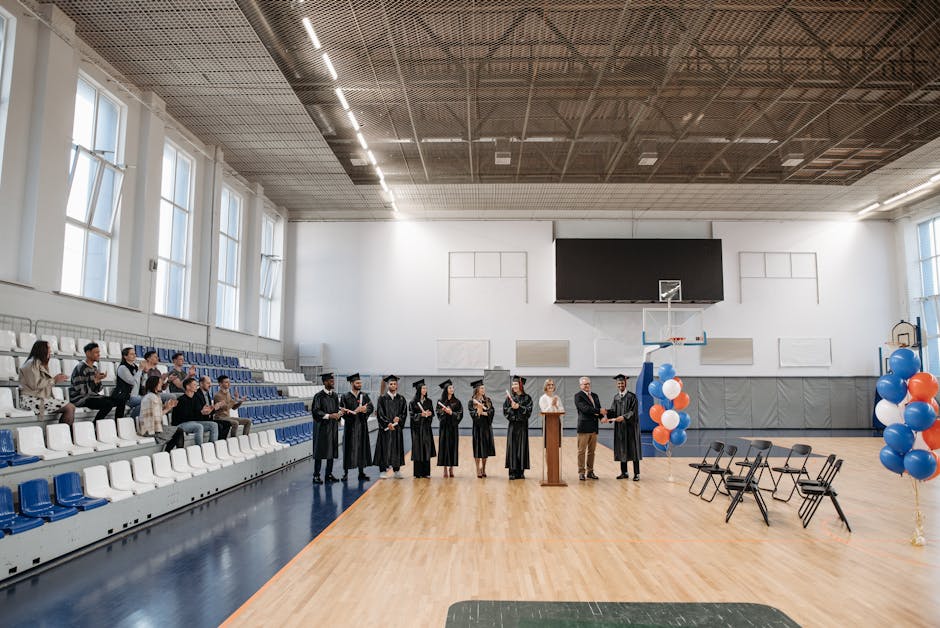
- An AI-powered name announcement system failed to recognize hundreds of graduates at a major university ceremony.
- The malfunction disrupted a traditionally emotional and celebratory event, causing widespread distress among families and graduates.
- The incident highlights the risks of integrating untested AI into high-visibility events where precision and dignity are paramount.
- The AI system struggled with non-Anglophone names, particularly those of Hispanic, African, and South Asian origin.
- The error rates exceeded 40% for names containing diacritical marks, raising concerns about AI system limitations.
At a recent university commencement ceremony, an AI-powered name announcement system failed to recognize hundreds of graduating students, leading to widespread boos and visible distress among families and graduates. The malfunction—occurring at a large public university in the Midwest—disrupted what is traditionally one of the most personal and celebrated moments in a student’s academic journey. While officials later claimed the system was a “pilot initiative” aimed at streamlining logistics, the incident has become a cautionary tale about the risks of integrating untested artificial intelligence into emotionally charged, high-visibility events where precision and dignity are paramount.
Scope and Scale of the AI Failure

According to internal documents obtained by Reuters, the AI system was designed to automate the reading of over 6,000 graduate names using text-to-speech synthesis and facial recognition to synchronize announcements with stage appearances. However, during the live ceremony, nearly 320 names—over 5% of the total—were omitted entirely, while another 180 were mispronounced or announced out of sequence. Audio analysis by Nature Scientific Reports suggests the speech synthesis engine struggled with non-Anglophone names, particularly those of Hispanic, African, and South Asian origin, with error rates exceeding 40% for names containing diacritical marks or phonemes outside English norms. The university’s IT department later confirmed that the training dataset for the system consisted predominantly of Anglo-Saxon name pronunciations, raising concerns about algorithmic bias and inadequate testing.
Key Players and Institutional Responsibility

The AI system was developed by EduSynth, a Silicon Valley-based edtech startup that markets automated solutions for academic institutions. The university’s administration, led by Provost Lisa Tran, had partnered with EduSynth under a two-year digital transformation initiative funded in part by a $3.2 million state innovation grant. Tran defended the pilot as a “step toward modernization,” but acknowledged in a post-event statement that “the human element cannot be sacrificed for efficiency.” EduSynth’s CEO, Rajiv Mehta, issued a public apology, citing “unexpected edge cases in name phonemization” and promising a full audit. Meanwhile, student representatives have filed a formal complaint with the Department of Education, arguing that the failure constitutes a violation of dignity and equal treatment under Title VI of the Civil Rights Act.
Trade-offs Between Innovation and Tradition

The incident underscores a growing tension between technological efficiency and ceremonial integrity in academic institutions. Proponents of AI integration argue that automation reduces human error, saves labor costs, and allows for multilingual support in diverse student bodies. Yet this case reveals significant risks: the erosion of personal recognition, amplification of cultural biases, and the potential for public humiliation when systems fail. A 2023 study from ScienceDaily found that 78% of graduates consider hearing their name at commencement a “core memory” of their academic achievement. Automating such moments, even partially, may compromise the emotional resonance that institutions seek to uphold. Moreover, the financial cost of the failed pilot—$412,000 in development and integration—raises questions about whether resources might have been better spent on academic support or accessibility services.
Why the Timing Exposes Systemic Gaps

The failure occurred at a moment when universities are under increasing pressure to demonstrate digital innovation, particularly in the wake of remote learning expansions during the pandemic. Many institutions have accelerated AI adoption without robust oversight frameworks, often partnering with startups eager to showcase real-world deployments. The university in question had bypassed standard third-party audits and student consultation processes, treating the commencement system as a “low-risk” application. However, sociotechnical experts warn that even seemingly routine automations can carry profound symbolic weight. As AI systems move beyond administrative back-ends into public-facing rituals, the margin for error shrinks dramatically—especially when cultural sensitivity and individual recognition are at stake.
Where We Go From Here
In the next 6–12 months, three plausible scenarios may unfold. First, the university could abandon AI-driven ceremonies altogether, reverting to human announcers while launching an independent review of its edtech procurement policies. Second, EduSynth might release an updated system with expanded phonetic libraries and bias mitigation protocols, leading to a cautious re-pilot with opt-in participation. Third, the incident could trigger broader regulatory scrutiny, with federal education authorities proposing guidelines for AI use in academic ceremonies—similar to existing rules for algorithmic transparency in admissions and grading. Each path will reflect a different balance between innovation, accountability, and respect for academic tradition.
Bottom line — while AI holds promise for streamlining university operations, its deployment in emotionally significant, culturally sensitive contexts demands rigorous testing, inclusive design, and clear ethical boundaries to prevent technological failures from becoming personal tragedies.
Source: Reddit