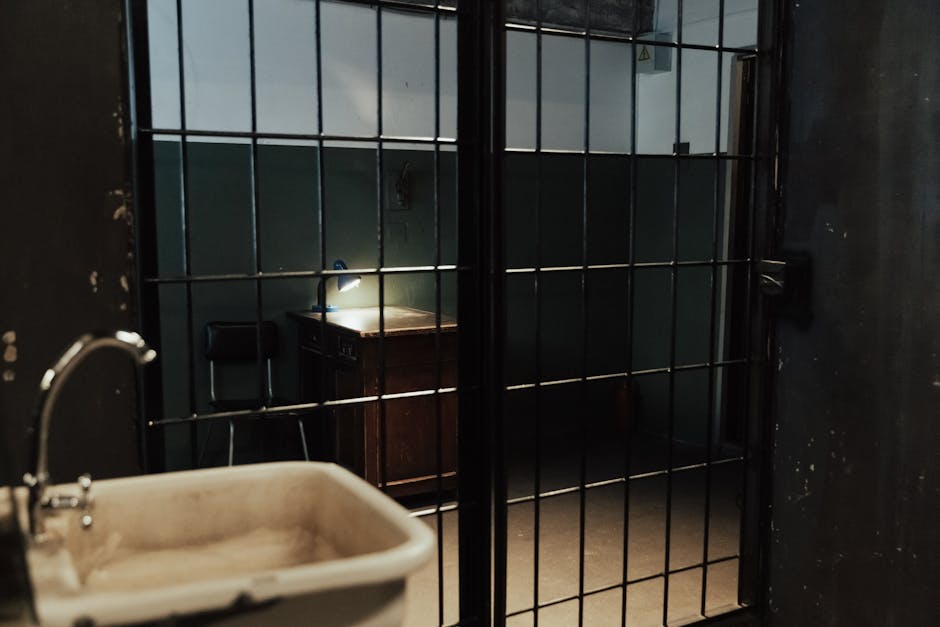
- Walid Daqqa spent 38 years in prison yet remained intellectually unchained, producing novels and essays.
- Daqqa’s legacy is one of sustained defiance through thought, love, and creativity, offering a counter-narrative to the Israeli-Palestinian conflict.
- He became a symbol of resistance through persistence of identity, language, and education under duress.
- Daqqa earned a law degree and master’s in philosophy from the Open University of Israel while in prison.
- He authored four novels, including ‘The Education of …’
Walid Daqqa’s life was defined by confinement, yet his mind remained unchained. Over 38 years of imprisonment, the Palestinian writer transformed isolation into intellectual resistance, producing novels, theoretical essays, and mentoring a generation of young Palestinians from behind bars. His death in April 2024 at age 62, after being denied adequate medical treatment, ignited protests and soul-searching across the occupied territories and the diaspora. Daqqa’s legacy is not one of violence, but of sustained defiance through thought, love, and creativity—offering a counter-narrative to cycles of retaliation that continue to shape the Israeli-Palestinian conflict. He became a symbol of how resistance can manifest not only through armed struggle but through the persistence of identity, language, and education under duress.
The Weight of Three Decades Behind Bars

Arrested in 1986 at age 24, Walid Daqqa was sentenced to 37 years in prison by an Israeli military court for membership in the Popular Front for the Liberation of Palestine (PFLP) and involvement in the killing of an Israeli soldier. Over the following decades, Israel extended his sentence multiple times, keeping him incarcerated well beyond the original term. During his imprisonment, Daqqa earned a law degree from the Open University of Israel and later completed a master’s in philosophy, writing a thesis on the concept of freedom in prison. He authored four novels, including The Education of Hillary, a fictionalized account critiquing Western imperialism through the imagined upbringing of a young Hillary Clinton. His works, smuggled out and published in Arabic, gained recognition across the Arab world. According to Al Jazeera, he also mentored hundreds of fellow prisoners in literacy and political theory, turning his cell into an informal classroom. The Israeli Prison Service confirmed he was held in Ramla’s Hadassah Medical Center prior to his death, after being diagnosed with cancer in 2022—a condition activists say was exacerbated by delayed treatment and poor prison healthcare.
Key Actors in Daqqa’s Story

Walid Daqqa’s life intersected with multiple institutions and movements shaping the Palestinian struggle. As a member of the PFLP, a Marxist-Leninist group designated as a terrorist organization by Israel, the EU, and the US, he was part of a broader ideological current that rejected negotiations with Israel in favor of armed resistance. However, his later years were marked by a shift toward intellectual activism. Palestinian civil society groups, including Addameer and the Palestinian Prisoners’ Club, consistently advocated for his release, citing deteriorating health and his non-violent contributions. Israeli authorities maintained that political prisoners convicted of involvement in attacks could not be released without security risks. Meanwhile, global human rights organizations like Amnesty International and Human Rights Watch condemned the denial of medical care, calling it a breach of international humanitarian law. Daqqa’s wife, Israa, whom he married via court-approved visit in 2017, became a prominent voice in the campaign for his release, giving birth to their daughter, Lubna, through an illegal sperm transfer in 2019—a case that sparked legal and ethical debates within Israel.
The Trade-Offs of Resistance and Incarceration

Daqqa’s life raises profound ethical and political questions about the cost of resistance and the treatment of political prisoners. On one hand, his supporters argue that his transformation from militant to intellectual exemplifies redemption and the possibility of non-violent resistance even within oppressive systems. His literary output and educational efforts are seen as acts of cultural preservation in the face of erasure. On the other hand, Israeli officials and victims’ families maintain that those responsible for attacks must serve their sentences without leniency. The use of clandestine methods—such as the sperm transfer that led to his daughter’s birth—has drawn criticism for circumventing legal boundaries, even as it underscores the extreme measures families take to maintain bonds under occupation. Moreover, the broader Palestinian prisoner population—numbering over 5,000 according to the Israeli Prison Service—remains a flashpoint in any potential peace negotiations. While some view figures like Daqqa as heroes, others see them as symbols of continued defiance that undermines reconciliation.
Why Daqqa’s Death Resonates Now

Daqqa’s death in 2024 did not occur in isolation; it unfolded amid escalating violence in the West Bank and the aftermath of the October 7 Hamas attacks on Israel. With over 10,000 Palestinians detained since October 2023, according to the United Nations, scrutiny of Israel’s prison policies has intensified. His case became emblematic of long-standing grievances over medical neglect, administrative detention, and family visitation rights. Unlike high-profile hunger strikers such as Khader Adnan, Daqqa’s resistance was quiet but persistent—built on writing, teaching, and fatherhood from afar. His passing, therefore, resonated not just as a personal tragedy but as a systemic indictment. The timing amplified his symbolic weight, positioning him as a figure through which Palestinians could articulate broader demands for dignity, justice, and international attention.
Where We Go From Here
In the coming months, Daqqa’s legacy may evolve in several directions. First, his writings could be translated and studied more widely, entering academic discourse on prison literature and resistance theory. Second, his daughter Lubna may become a symbolic figure in the Palestinian national movement, much like the children of other imprisoned leaders. Third, international pressure could mount on Israel to reform its treatment of long-term political prisoners, especially regarding healthcare and family rights. These scenarios depend heavily on the trajectory of the broader conflict. If violence continues, Daqqa may be remembered primarily as a martyr of the resistance. If diplomatic avenues reopen, his life could be invoked as a model of transformation and coexistence. Either way, his intellectual contribution challenges reductive portrayals of Palestinian prisoners as solely perpetrators or victims.
Bottom line — Walid Daqqa’s life and death underscore the enduring power of ideas in the face of physical confinement, forcing a reckoning with the human cost of prolonged imprisonment and the complex morality of resistance in occupied territories.
Source: Al Jazeera