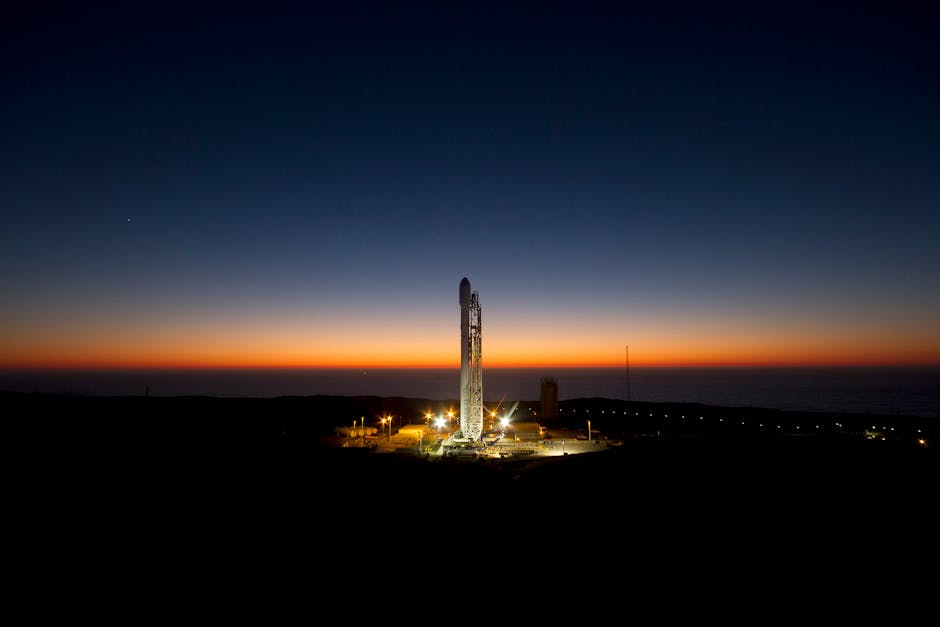
- SpaceX’s proposed $1.75 trillion valuation surpasses Apple and Microsoft’s market caps at their peaks.
- The company generated $4.5 billion in revenue in 2023, a 30% increase from the prior year, driven by Starlink’s subscriber growth.
- SpaceX’s launch business executed 98 orbital missions in 2023, with a 98.7% success rate, establishing a dominant position in the global launch market.
- Starlink is projected to reach $50 billion in annual revenue by 2028, while Starship development costs are offset by U.S. Department of Defense contracts.
- Reusable rocket technology reduces launch costs by up to 70%, providing a significant competitive advantage for SpaceX.
Elon Musk’s SpaceX is poised to make financial and technological history with the filing of a blockbuster initial public offering that could value the company at $1.75 trillion, according to newly disclosed regulatory documents. This would surpass the market caps of Apple and Microsoft at their peaks and mark the largest public debut in corporate history. The move signals a pivotal transition for the aerospace firm from a privately held innovator to a publicly traded powerhouse, with profound implications for capital markets, national security, and the future of space exploration.
Unprecedented Valuation Based on Hard Metrics

The proposed $1.75 trillion valuation rests on a foundation of robust financial and operational data. SpaceX generated over $4.5 billion in revenue in 2023, a 30% increase from the prior year, driven primarily by Starlink’s expanding global subscriber base, which now exceeds 3 million users across 80 countries. The company’s launch business executed 98 orbital missions in 2023—more than any other nation—with a 98.7% success rate, establishing a dominant position in the global launch market. According to filings with the SEC, Starlink alone is projected to reach $50 billion in annual revenue by 2028, while Starship development costs are being offset by U.S. Department of Defense contracts valued at over $4.2 billion. These figures, combined with reusable rocket technology that reduces launch costs by up to 70%, provide a compelling case for investor confidence.
Key Players Reshaping the Aerospace Landscape

At the center of this transformation is Elon Musk, whose dual role as CEO and chief engineer has been instrumental in SpaceX’s trajectory. His leadership has attracted strategic partnerships with NASA, the U.S. Space Force, and global telecom providers. NASA recently extended its Commercial Crew Program contract with SpaceX through 2030, valuing the agreement at $4.5 billion. Meanwhile, the Pentagon has increased reliance on Starlink for battlefield communications, particularly in Ukraine, where the system has become critical infrastructure. Competitors such as United Launch Alliance and Arianespace are struggling to match SpaceX’s cost efficiency and launch cadence. Even Amazon’s Project Kuiper, a direct rival to Starlink, has yet to reach orbit, highlighting SpaceX’s first-mover advantage in the satellite broadband race.
Trade-Offs Between Innovation and Market Risk

While the IPO presents immense opportunity, it also introduces significant trade-offs. Public markets demand transparency and quarterly performance, which could pressure SpaceX to prioritize short-term profits over long-term R&D, such as Mars colonization and Starship development. Regulatory scrutiny is likely to intensify, particularly regarding spectrum rights, orbital debris, and national security concerns tied to Starlink’s military use. On the other hand, access to public capital could accelerate infrastructure deployment and global expansion, particularly in underserved regions where Starlink provides the only viable internet option. Moreover, the IPO could stimulate broader investment in the space economy, with analysts estimating the global space market could reach $1 trillion by 2040, according to a 2021 BBC analysis.
Why the IPO Is Happening Now

The timing of the IPO reflects a confluence of technological maturity, geopolitical demand, and financial readiness. Starlink has reached operational scale, no longer requiring massive subsidies, while Starship has completed multiple high-altitude test flights and is nearing orbital certification. Geopolitically, the war in Ukraine has underscored the strategic value of resilient satellite networks, boosting government demand. Financially, SpaceX has reduced its dependence on private funding, having raised over $15 billion in equity since inception. With interest rates stabilizing in 2024, capital markets are more receptive to large tech-led offerings. These factors collectively create a window of opportunity that SpaceX is moving decisively to exploit.
Where We Go From Here
In the next 6 to 12 months, three scenarios could unfold. First, a successful IPO could trigger a surge in space-related SPACs and IPOs, catalyzing a new sector on Wall Street. Second, regulatory hurdles or market volatility could delay the offering, forcing SpaceX to remain private longer while expanding via debt or strategic partnerships. Third, a partial spin-off of Starlink could occur, allowing the broadband unit to go public independently while keeping Starship and deep-space projects under private control. Each path carries distinct implications for innovation velocity and shareholder expectations.
Bottom line — SpaceX’s potential $1.75 trillion IPO represents not just a financial milestone, but a transformative moment for the integration of space infrastructure into global economic and security frameworks, setting a new standard for tech-led industrial ambition.
Source: Al Jazeera