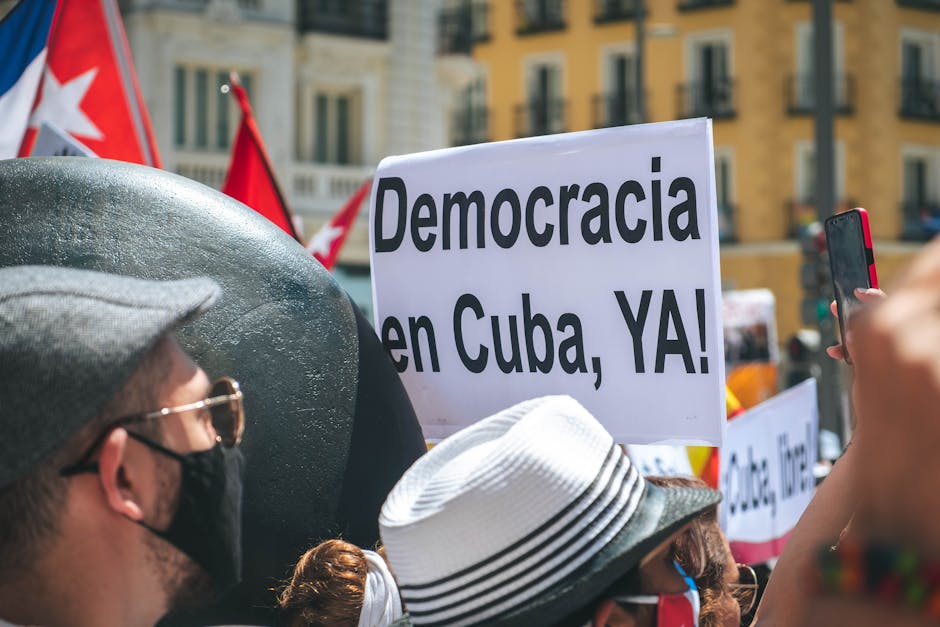
- US Attorney’s Office for the Southern District of New York is charging 93-year-old Raúl Castro with alleged human rights abuses.
- Indictment centers on torture and extrajudicial killings committed during Raúl Castro’s tenure as Minister of the Revolutionary Armed Forces.
- US charges fall under universal jurisdiction for crimes against humanity, a principle used to prosecute crimes committed abroad.
- Raúl Castro’s indictment marks a significant shift in US foreign policy, targeting a former head of state considered untouchable.
- The move has sparked tension in Cuba, where Castro remains a symbolic pillar of Cuban socialism.
Early Wednesday morning, in a quiet corridor of the U.S. Department of Justice, a sealed indictment was delivered to the U.S. Attorney for the Southern District of New York. The document, classified as Top Secret until its public release, names 93-year-old Raúl Castro, the retired leader of Cuba and brother of the late Fidel Castro. Inside the aging compound of his Havana residence, sources say Castro was informed by intelligence officers of the impending charges. The air in the Cuban capital is thick with tension, the scent of saltwater mingling with the acrid smoke of hastily lit cigars. Though no longer in power, Castro remains a symbolic pillar of Cuban socialism. To charge him now—to drag a man once considered untouchable into the reach of American law—is not just a legal maneuver, but a seismic political statement echoing across the Caribbean and beyond.
Cuba Braces for U.S. Indictment

According to multiple U.S. and Cuban intelligence sources, the indictment centers on allegations of human rights abuses, including torture and extrajudicial killings committed during Raúl Castro’s tenure as Minister of the Revolutionary Armed Forces and later as head of state from 2008 to 2018. The charges fall under the U.S. principle of universal jurisdiction for crimes against humanity. While Castro has long been criticized by human rights groups, such as Human Rights Watch and Human Rights Watch, this marks the first time a former Cuban head of state faces formal U.S. prosecution. The indictment may also reference his role in supporting revolutionary movements in Latin America during the Cold War, including alleged assistance to the FARC in Colombia. U.S. officials have not confirmed the specifics but acknowledge that the case has been under review for over two years, reflecting a broader recalibration of U.S. policy toward authoritarian regimes.
Roots of a Decades-Long Standoff

The move traces back to the 1959 Cuban Revolution, when Fidel and Raúl Castro overthrew the U.S.-backed dictator Fulgencio Batista. Raúl, a disciplined military strategist, established the island’s Soviet-style armed forces and suppressed political dissent with ruthless efficiency. The U.S. responded with an economic embargo in 1960, later enshrined in the Helms-Burton Act of 1996, which allows lawsuits against foreign companies operating on seized American property. Over the decades, Cuba became a geopolitical chess piece—first in the Cold War, then in U.S. anti-communist doctrine. Even the Obama administration’s 2014 opening, which restored diplomatic ties and eased travel, unraveled under President Trump. The current Biden administration, while reversing some Trump-era restrictions, has taken a harder line on human rights, signaling that past impunity for authoritarian leaders may no longer be tolerated.
The Architects Behind the Indictment

The decision to pursue Raúl Castro stems from a coalition within the U.S. government, including senior officials in the Justice Department’s Human Rights and Special Prosecutions Section and elements of the State Department’s Bureau of Democracy, Human Rights, and Labor. Key figures include Assistant Attorney General Matthew G. Olsen, a veteran of national security law, and Under Secretary for Civilian Security Uzra Zeya, both of whom have championed accountability for global human rights violators. Their push aligns with advocacy from Cuban-American lawmakers like Senator Marco Rubio and Representative María Elvira Salazar, who have long demanded justice for victims of the Castro regime. Behind the scenes, Cuban exile groups and survivors of political imprisonment, such as those from the infamous Combinado del Este prison, have provided testimonies that bolster the case, lending moral weight to what could become a landmark prosecution.
Regional and Diplomatic Fallout

The indictment is expected to ignite fury in Havana, where it will be framed as imperialist overreach. Cuba’s current President, Miguel Díaz-Canel, has already vowed a “dignified and resolute” response, while state media denounce the charges as politically motivated. Latin American reactions are likely to split: nations like Colombia and Costa Rica may express cautious support for accountability, while allies such as Venezuela and Nicaragua will condemn the move as neo-colonial aggression. Within the U.S., the decision could energize the Cuban-American electorate in Florida, a crucial swing demographic. However, legal experts warn that actual prosecution is unlikely—Castro is not expected to leave Cuba, and Havana will never extradite him. Still, the symbolic power of the indictment could isolate Cuba further and embolden future actions against other aging autocrats.
The Bigger Picture
This case transcends Cuba. It reflects a growing willingness among Western democracies to invoke legal mechanisms against former leaders accused of atrocities, echoing efforts seen in the prosecutions of Augusto Pinochet and Hissène Habré. In an era of democratic backsliding, the U.S. move signals that even symbolic accountability matters. It also tests the limits of legal reach in a multipolar world where sovereignty often shields the powerful. Yet by filing charges, the U.S. reinforces a norm: that no one, not even a revolutionary icon shielded by history and ideology, is beyond the reach of justice—at least in principle.
What happens next remains uncertain. The indictment may never lead to a courtroom, but its political reverberations will. Cuba could retaliate by cracking down on dissidents or expelling U.S. diplomats. The Biden administration may face diplomatic blowback at the OAS or the UN. Yet the message is clear: the ghosts of Cold War politics are not laid to rest—they are being summoned, one indictment at a time.
Source: Nbcnews