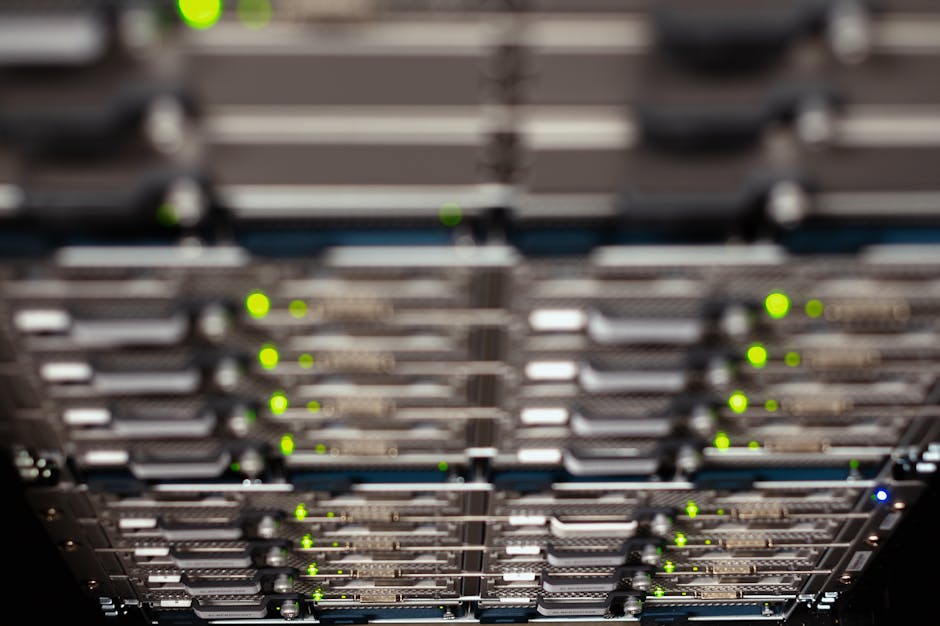
- SoftBank’s stock surged 20% due to Nvidia’s explosive AI computing hardware demand.
- Nvidia’s AI accelerators rely on Arm’s energy-efficient chip architectures for processors.
- SoftBank’s majority ownership of Arm Holdings underpins its indirect exposure to the AI revolution.
- Arm’s semiconductor designs are becoming the backbone of modern AI infrastructure.
- SoftBank’s acquisition of Arm in 2016 and its recent public listing have amplified its ties to the AI supply chain.
Why did SoftBank Group’s stock surge 20% overnight? The answer lies not in SoftBank’s own earnings, but in the explosive performance of Nvidia, whose latest quarterly results revealed unprecedented demand for AI computing hardware. As investors reevaluate the entire AI supply chain, SoftBank — often seen as a legacy telecom and investment conglomerate — has reemerged as a pivotal player. The reason? Its majority ownership of Arm Holdings, the British semiconductor design firm whose energy-efficient chip architectures underpin the processors used in AI data centers, many of which are powered by Nvidia’s GPUs. This cascade of value, from Nvidia’s AI accelerators to Arm’s foundational designs, has investors scrambling to price in SoftBank’s indirect but substantial exposure to the AI revolution.
What Link Between SoftBank and Nvidia Drove the Rally?

The direct connection lies in Arm’s role as the architectural backbone of modern AI infrastructure. While Nvidia designs the high-performance GPUs that process AI workloads, these systems rely on central processing units (CPUs) to manage tasks and coordinate operations — and increasingly, those CPUs are built on Arm’s chip designs. SoftBank acquired Arm in 2016 and, despite a failed sale attempt to Nvidia in 2022, retained full ownership and took the company public in September 2023. Now, as cloud providers like Amazon Web Services, Microsoft Azure, and Google Cloud adopt Arm-based server chips for their efficiency and scalability, the synergy with Nvidia’s AI platforms becomes clear. When Nvidia reported a 262% year-over-year revenue increase, much of it driven by data center demand, markets recognized that Arm — and thus SoftBank — stands to benefit from the same tidal wave of AI investment.
What Evidence Shows Arm’s Growing Role in AI Infrastructure?

Recent product launches underscore Arm’s expanding footprint in data centers. Amazon’s Graviton processors, built on Arm architecture, are now used in thousands of AWS server instances, offering up to 40% better price-performance than x86 alternatives. Microsoft has followed with its Azure Cobalt 100 CPU, also Arm-based, while Google continues to optimize its AI workloads on Arm-compatible infrastructure. According to Reuters reporting on Arm’s Q1 2024 results, revenue from its infrastructure segment — which includes data center chips — grew 45% year-on-year, outpacing mobile, its traditional stronghold. Analysts at Bernstein noted that “Arm is no longer just a mobile IP company; it’s becoming a critical enabler of the AI data center stack.” With SoftBank owning approximately 90% of Arm, this growth translates directly into equity value, helping justify the stock’s sharp revaluation.
Are There Reasons to Question SoftBank’s AI Windfall?

Despite the optimism, some investors caution against overestimating SoftBank’s exposure. Arm does not manufacture chips; it licenses its designs and collects royalties per unit sold, meaning its revenue scales with volume but lacks the margin leverage of a hardware producer like Nvidia. Moreover, the x86 architecture, led by Intel and AMD, still dominates the server market, accounting for over 80% of shipments. While Arm’s efficiency advantages are compelling, enterprise adoption remains gradual. As the BBC has noted, “The data center is a conservative ecosystem — switching architectures takes years, not quarters.” Skeptics also point to SoftBank’s broader portfolio, which includes aging telecom operations in Japan and volatile venture investments through its Vision Funds. These segments carry significant debt and operational risks, which could offset gains from Arm, particularly if AI spending slows or regulatory scrutiny increases on chip exports.
How Is This AI Infrastructure Shift Affecting Real Markets?

The implications are already visible in equity valuations and corporate strategy. Since Arm’s IPO, its market capitalization has more than doubled, reflecting investor appetite for scalable, royalty-based tech models. SoftBank, once criticized for its opaque structure and aggressive bets, is now being recast as a leveraged play on semiconductor IP. Hedge funds and institutional investors are rebalancing portfolios to include SoftBank as a proxy for AI infrastructure growth. Meanwhile, chipmakers like Qualcomm and Samsung are accelerating their own data center ambitions using Arm designs, fostering a competitive ecosystem that could challenge Nvidia’s dominance. In Japan, the rally has boosted sentiment around corporate reform, with SoftBank announcing new share buybacks and asset sales to streamline operations — moves likely influenced by the renewed market confidence sparked by the AI narrative.
What This Means For You
For investors, SoftBank’s surge illustrates how value in the AI era isn’t limited to headline-grabbing hardware makers. Foundational technologies — like chip architecture, software tools, and data infrastructure — can offer indirect but powerful exposure to long-term trends. Owning SoftBank may not be the same as owning Nvidia, but its stake in Arm provides a unique window into the AI supply chain’s underappreciated layers. For tech consumers and enterprises, the rise of Arm in data centers could lead to more efficient, cost-effective cloud services, ultimately lowering the barrier to deploying AI applications.
But how sustainable is this infrastructure-driven AI boom? If global chip supply chains face disruptions, or if breakthroughs in alternative computing — like neuromorphic or quantum chips — accelerate, today’s architectural winners may not dominate tomorrow. The real question isn’t just whether Arm can maintain momentum, but whether the current model of AI — reliant on massive data centers and proprietary hardware — is the final chapter in computing’s evolution.
Source: CNBC