- Scott Vincent Borba, a self-made millionaire, left his $1 billion fortune behind to become a Roman Catholic priest.
- Borba’s spiritual transformation began with a mystical encounter in the New Mexico desert in 2012.
- He describes the experience as an overwhelming sense of divine presence, both terrifying and tender.
- Borba’s journey to priesthood is marked by a shift from wealth and power to prayer and service.
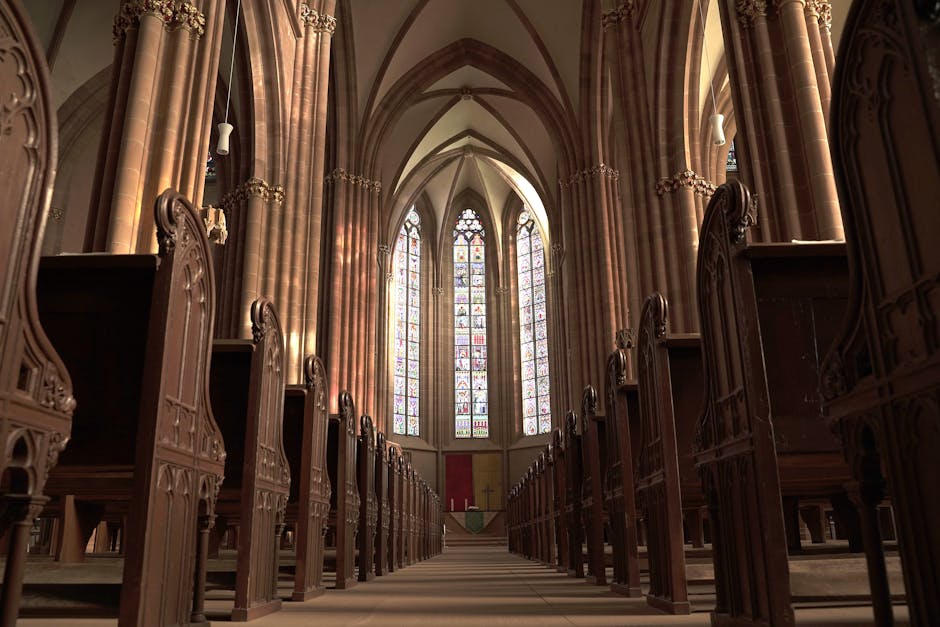
- He will be ordained at the Cathedral of Our Lady of the Angels in Los Angeles, culminating his spiritual transformation.
On a cool morning in Santa Barbara, the scent of eucalyptus drifts through the stone cloisters of a quiet seminary tucked behind olive groves. Inside, Scott Vincent Borba, once a fixture at fashion after-parties and product launches, kneels in silence before a simple wooden altar. His tailored suits have given way to clerical collars, his boardroom presentations to hours of prayer and scripture. Just over a decade ago, Borba stood atop the beauty industry, a self-made millionaire whose name was stamped across drugstore shelves from coast to coast. Today, he is days away from ordination as a Roman Catholic priest—an outcome that seemed unthinkable even to those who knew him best. The arc of his life reads like a modern parable: wealth, awakening, surrender. And now, consecration.
The Final Step in a Spiritual Transformation

This week, Borba will be ordained at the Cathedral of Our Lady of the Angels in Los Angeles, marking the culmination of a journey that began not with formal religious study, but with a single, unexplainable moment. In 2012, while on a solitary retreat in the New Mexico desert, he says he experienced a profound mystical encounter—an overwhelming sense of divine presence that he describes as both terrifying and tender. “It wasn’t a voice, but a knowing,” he later told The New York Times. “I felt chosen, not for glory, but for service.” That moment set him on a path of discernment, leading him first to volunteer work with the poor, then to formal theology studies at the Franciscan School of Theology in San Diego. Over the past eight years, he has lived under the rigorous discipline of seminary life: early Mass, spiritual direction, pastoral assignments in underserved parishes. His former colleagues in the cosmetics world are stunned; many say they had no idea he was even religious.
From Hollywood to Holy Vows

Borba’s ascent in the beauty industry was as rapid as it was unconventional. In 2004, he co-founded e.l.f. Cosmetics—standing for Eyes, Lips, Face—with makeup artist Joseph Shamah, betting that consumers wanted high-quality, cruelty-free cosmetics at drugstore prices. The gamble paid off. With savvy digital marketing and minimalist branding, e.l.f. disrupted the beauty market, going public in 2014 and eventually surpassing $1 billion in market capitalization. Borba became a poster child for entrepreneurial reinvention, frequently featured in business magazines and startup conferences. Yet beneath the success, he says he felt a persistent emptiness. “I had everything the world says you should want—money, freedom, recognition—but I was spiritually dead,” he admitted in a 2020 interview. The turning point came during that fateful retreat, where he claims he heard a clear imperative: “Leave all things, and follow me.”
The Man Behind the Mission

Friends describe Borba as intensely driven yet introspective, a man who approached both business and spirituality with equal rigor. Raised in a nominally Christian household in Southern California, he drifted from faith in his twenties, only to return to it slowly through reading mystics like Thomas Merton and Teilhard de Chardin. His decision to enter the priesthood was not impulsive, but the result of years of spiritual direction and psychological evaluation required by the Archdiocese of Los Angeles. Cardinal Robert Barron, a prominent Catholic intellectual and early supporter of Borba’s vocation, called his journey “a sign of hope in a materialistic age.” Still, the transition has not been easy. Borba reportedly sold most of his e.l.f. shares to fund his seminary education and donate to Catholic charities, including housing for the homeless and addiction recovery programs. He has also faced skepticism—from former peers who see his choice as a rejection of success, and from some in the Church wary of a “celebrity priest.”
Ripples Across Faith and Finance

Borba’s ordination carries symbolic weight far beyond the Catholic community. In an era marked by declining religious affiliation and rising wealth inequality, his story challenges dominant cultural narratives about achievement and fulfillment. For the Church, his background offers a potential bridge to secular audiences; for entrepreneurs, it raises existential questions about purpose. Some theologians see his journey as a modern echo of St. Francis of Assisi, who renounced wealth for poverty and service. “When someone gives up a billion-dollar lifestyle for a life of celibacy and obedience, it forces us to ask: What truly matters?” said Dr. Margaret O’Gara, a theologian at the University of Toronto. Meanwhile, e.l.f. Beauty continues to thrive, though Borba has no ongoing role. The company has not commented on his ordination.
The Bigger Picture
In a world that often equates success with accumulation, Borba’s choice stands as a quiet rebellion. His path reflects a growing, if still marginal, movement of professionals seeking meaning beyond economic metrics. From Silicon Valley engineers entering monasteries to Wall Street bankers becoming social workers, there’s a subtle undercurrent of spiritual reevaluation among the privileged. Borba’s story may be extreme, but it resonates with a deeper yearning—for authenticity, for connection, for transcendence. In choosing the priesthood, he isn’t rejecting his past, but reinterpreting it: the branding acumen, the empathy for consumers, the drive to create—now channeled into sacramental life.
What comes next is no longer a question of career or legacy, but of vocation. Borba will begin his ministry in a multicultural parish in East Los Angeles, where he’ll hear confessions, celebrate Mass, and walk alongside the marginalized. He won’t be a celebrity priest, he insists, but a humble servant. “Holiness isn’t about being extraordinary,” he once said. “It’s about showing up, every day, for the people God sends you.” In that quiet resolve, his transformation feels less like an ending—and more like a homecoming.
Source: The New York Times