- Ukraine’s military campaign has targeted 8 Russian refineries, degrading Moscow’s war economy but triggering a catastrophic environmental disaster.
- Deliberate strikes on Russian oil infrastructure have resulted in oil lakes, polluted rivers, and air quality exceeding safety thresholds by 300% in border regions.
- Kyiv’s attacks on Russian energy infrastructure aim to erode the Kremlin’s $1 billion daily war budget by disrupting oil exports.
- The ecological fallout from Ukraine’s strikes on Russian refineries is a concerning consequence of Moscow’s aggression in Ukraine.
- The devastating impact on the environment will likely exacerbate the humanitarian crisis in Ukraine, affecting civilians and wildlife alike.
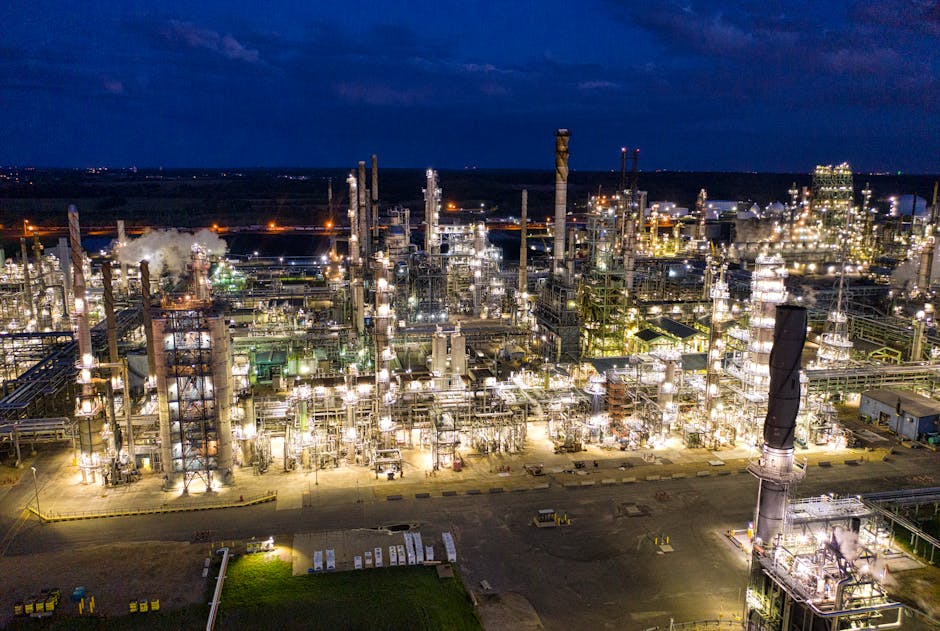
In early 2024, satellite images captured thick plumes of black smoke rising from the Romashkino oil refinery in Tatarstan, one of Russia’s largest refining hubs. The smoke, laced with benzene and sulfur dioxide, drifted over nearby villages, forcing school closures and spiking respiratory hospitalizations. This was not the result of industrial negligence—but of a deliberate Ukrainian military campaign. Since mid-2023, Kyiv has launched over 50 drone and missile strikes on Russian oil infrastructure, targeting refineries and storage facilities deep inside Russian territory. While aimed at degrading Moscow’s war economy, these strikes have triggered an unforeseen consequence: a cascading environmental disaster. Oil lakes now pool near damaged sites, rivers run slick with hydrocarbons, and air quality monitors in border regions have recorded pollution levels exceeding safety thresholds by as much as 300%.
From Targeted Strikes to Environmental Blowback

For over four years, Russia’s invasion of Ukraine brought widespread ecological destruction across the frontlines: contaminated groundwater from exploded munitions, deforestation from artillery barrages, and the devastation of the Kakhovka Dam in 2023, which released 550 million cubic meters of water and flooded vast agricultural zones. Now, the tables have turned. Ukraine’s retaliatory strikes on Russian energy infrastructure are designed to erode the Kremlin’s $1 billion daily war budget, with oil exports accounting for nearly half of federal revenues. While militarily strategic, these attacks have ignited fires that burn for days, releasing carcinogenic particulates and rendering surrounding ecosystems toxic. Environmental watchdogs warn that the cumulative impact may rival some of history’s worst wartime pollution events, even if the damage is dispersed across multiple sites rather than concentrated in one catastrophe.
Inside the Strike Campaign

The Ukrainian military, supported by Western intelligence and domestically produced long-range drones, has systematically targeted key refining centers including Kstovo, Tuapse, and Angarsk. These facilities, located hundreds of kilometers from the front, were once considered insulated from direct attack. However, advancements in drone technology—such as the domestically built UJ-22 and adapted commercial models—have enabled Kyiv to strike with precision. According to data from the Institute for the Study of War, at least 12 major refineries have sustained significant damage since January 2023, reducing Russia’s refining capacity by an estimated 15%. Russian authorities have confirmed several incidents, including a September 2023 fire at the Omsk refinery that halted operations for over two weeks. While Ukraine rarely claims specific attacks officially, military analysts note a shift toward economic warfare as a core doctrine, aiming to undermine domestic morale and strain Russia’s industrial resilience.
The Environmental Toll

Each strike triggers a chain reaction of ecological harm. When refineries burn, they release volatile organic compounds (VOCs), polycyclic aromatic hydrocarbons (PAHs), and heavy metals into the atmosphere. A report by Greenpeace Russia, based on atmospheric modeling and open-source data, found that benzene concentrations near the Ryazan refinery spiked to 9.2 times the permissible limit following a May 2024 attack. On the ground, ruptured storage tanks have spilled crude and refined products into soil and waterways. The Samara River, a tributary of the Volga, showed elevated hydrocarbon levels after a strike on the nearby Novokuibyshevsk facility, threatening fish populations and drinking water for downstream communities. Cleanup efforts, hampered by wartime secrecy and restricted access, remain minimal. Local activists report that authorities are downplaying risks, while independent environmental monitoring has been curtailed under Russia’s restrictive wartime laws.
Strategic Gains vs. Ecological Costs

Militarily, the campaign has achieved measurable success. Russian crude processing fell from 5.5 million barrels per day in early 2023 to under 4.7 million by mid-2024, according to the International Energy Agency. This has forced Moscow to redirect exports toward less efficient routes and accept discounted prices, particularly in Asian markets. However, the environmental consequences raise ethical and strategic questions. While international law permits attacks on military and dual-use infrastructure, the collateral ecological damage may undermine Ukraine’s standing in the global community, particularly among climate-conscious European allies. Moreover, pollution does not respect borders—wind patterns have carried smoke into Kazakhstan and the Arctic Circle, potentially implicating Ukraine in transboundary environmental harm. Some experts argue that the long-term cost of ecosystem degradation could outweigh short-term economic gains, especially if such tactics become normalized in future conflicts.
Expert Perspectives
“There’s a dangerous precedent here,” says Dr. Elena Voronkova, an environmental scientist at the Moscow School of Social and Economic Sciences. “Even if the targets are legitimate, the lack of containment measures turns each strike into a slow-motion ecological time bomb.” Conversely, defense analyst Taras Kuzio of the Hudson Institute argues that “Russia bears ultimate responsibility for creating the conditions of war that necessitate such asymmetric responses.” International humanitarian law, he notes, permits attacks on war-sustaining infrastructure, though it obligates belligerents to minimize civilian harm. The debate reflects a broader tension between military necessity and environmental stewardship in modern warfare—a tension that has no clear legal resolution under current treaties.
As both sides dig in, the environmental fallout will likely worsen. With Ukraine seeking longer-range drones and more resilient munitions, and Russia fortifying its energy sites with air defenses, the cycle of attack and retaliation appears set to continue. The long-term health impacts on Russian civilians near targeted facilities remain unknown, but early data suggest rising rates of respiratory illness and skin conditions. Meanwhile, the global community faces a dilemma: how to support a nation defending its sovereignty without endorsing tactics that risk lasting planetary harm. One thing is certain—the war in Ukraine is no longer just reshaping borders, but also the very air, water, and soil of the region.
Source: The New York Times