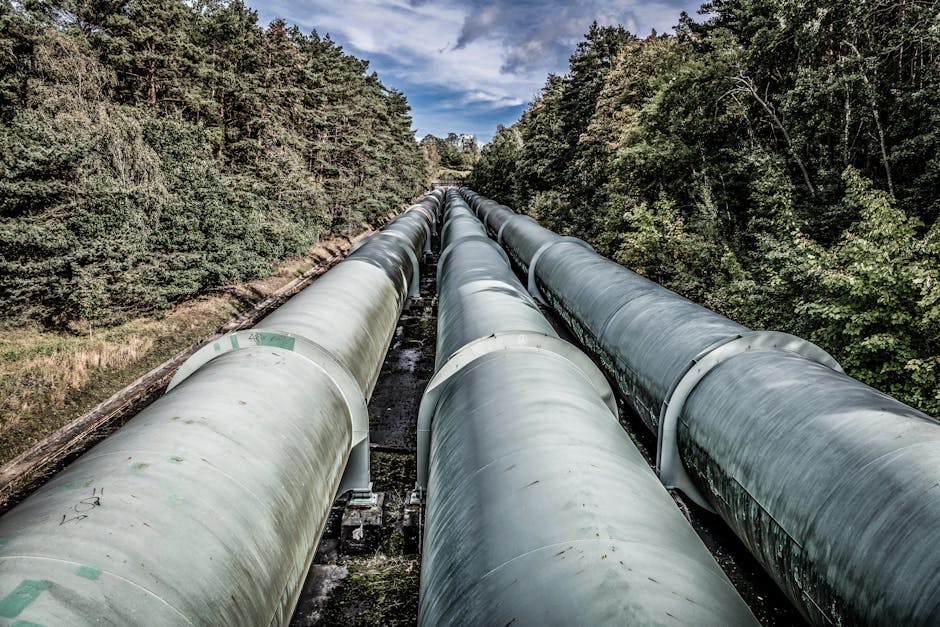
- Russian President Vladimir Putin proposed a new natural gas pipeline to China, but negotiations stalled.
- The pipeline, dubbed ‘Power of Siberia-2 Expansion,’ aims to deliver 50 billion cubic meters of Russian gas annually.
- China cited ‘economic feasibility, environmental impact assessments, and long-term energy strategy realignments’ as reasons for the delay.
- Beijing has grown cautious about relying on Russian energy due to international scrutiny and environmental concerns.
- The stalled pipeline deal is a significant setback for Russia’s efforts to diversify its gas exports away from Europe.
On a crisp autumn morning in Beijing, the halls of the Great Hall of the People buzzed with quiet tension. Russian President Vladimir Putin, flanked by energy ministers and security advisors, sat across from Chinese leader Xi Jinping, his expression taut beneath a carefully composed smile. Outside, a light drizzle slicked the stone plaza, mirroring the chill in the room. For over two hours, Putin laid out his vision: a vast new natural gas pipeline, dubbed the ‘Power of Siberia-2 Expansion,’ slicing through Mongolia to deliver 50 billion cubic meters of Russian gas annually to China’s northern provinces. It was to be the crown jewel of their deepening energy alliance. But as the final papers remained unsigned and the interpreters fell silent, it became clear—Xi was not convinced. The silence that followed was not diplomatic; it was definitive.
China Rejects Putin’s Pipeline Proposal

Russian state media later confirmed that no agreement was reached on the proposed expansion of the Power of Siberia network, a project Moscow had billed as essential to diversifying its gas exports away from Europe. The Chinese government, in a rare public statement, cited ‘economic feasibility, environmental impact assessments, and long-term energy strategy realignments’ as reasons for the delay. Analysts note that Beijing has grown increasingly cautious about over-reliance on Russian energy, particularly as pipeline negotiations coincided with mounting international scrutiny over Russia’s war in Ukraine. While China continues to import Russian oil at discounted rates, gas infrastructure requires decades-long commitments—something Beijing appears unwilling to make. According to Reuters, Chinese officials expressed concern over Mongolia’s potential opposition to the transit route and the high construction costs in permafrost zones, which could exceed $25 billion.
How Energy Ties Between Russia and China Evolved

The roots of this energy partnership stretch back to 2014, when Western sanctions over Crimea pushed Russia toward Asia. The original Power of Siberia pipeline, finalized that year after a decade of talks, began delivering gas in 2019 and now supplies about 38 billion cubic meters annually. That deal, hailed as a geopolitical breakthrough, was forged during a period of mutual necessity: Russia needed markets, and China sought cleaner alternatives to coal. Since then, bilateral energy trade has surged, with China becoming Russia’s top oil buyer by 2023. But the relationship has always been asymmetrical. As BBC analysis noted, China holds the leverage—it can afford to wait, to negotiate, to demand discounts. Now, with Beijing investing heavily in renewables and domestic gas production, the urgency to lock in new Russian supplies has diminished.
The Leaders Shaping the Energy Standoff

Vladimir Putin framed the pipeline as a symbol of trust and strategic unity, a way to cement Russia’s pivot to Asia. For him, the project was not just economic but existential—a lifeline to offset losses in Europe. Xi Jinping, however, operates on a different calculus. His administration is prioritizing energy diversification, including LNG imports from Qatar and Australia, as well as a massive buildout of solar and wind capacity. Recent policy documents emphasize ‘energy resilience’ over dependency, even on friendly nations. Moreover, Xi remains wary of deepening ties that could invite secondary sanctions or complicate China’s global positioning. As one senior Chinese energy official, speaking anonymously to Reuters, put it: ‘We are not rejecting Russia, but we are no longer desperate.’
Consequences for Russia, China, and Global Markets

The stalled pipeline has immediate repercussions. For Russia, it means fewer options to replace lost European revenue, potentially forcing deeper cuts in gas production. Gazprom, already strained by declining exports, may face further financial pressure. For China, the decision preserves negotiating power and aligns with its green transition goals. But it also risks cooling the political warmth between Beijing and Moscow, which both leaders have worked to project as an anti-Western alliance. Globally, the hesitation underscores a shift: even strategic partnerships are subject to cost-benefit analysis. Energy security is no longer just about proximity or politics—it’s about flexibility, sustainability, and risk management in an era of sanctions, climate targets, and supply volatility.
The Bigger Picture
This moment reflects a broader realignment in global energy geopolitics. No longer are alliances rigid or transactions automatic. Nations are hedging, diversifying, and recalibrating based on long-term stability rather than short-term gains. China’s reluctance to embrace Putin’s pipeline is not a rejection of Russia per se, but a signal that Beijing is thinking decades ahead, not just through the lens of current crises. As the world transitions toward lower-carbon systems, even fossil fuel deals must now pass environmental and strategic scrutiny. The era of energy as a purely political tool may be fading, replaced by a more complex web of interdependence, caution, and calculation.
What comes next remains uncertain. Russia may seek alternative routes, possibly through Kazakhstan, though those face similar hurdles. China will continue to weigh its options, balancing relations with Moscow against its global image and energy goals. Meanwhile, the empty chair at the negotiation table in Beijing stands as a quiet testament to the limits of influence—even between allies. In the shifting terrain of 21st-century power, trust must now be earned not just through rhetoric, but through viability, transparency, and mutual benefit.
Source: Pravda