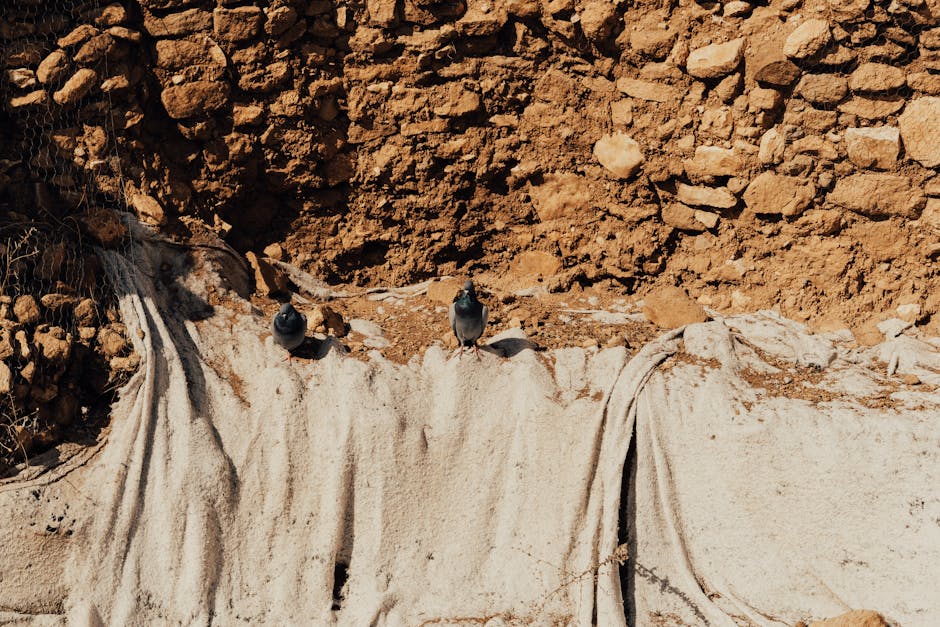
- Pigeons have been living near humans for over 3,400 years, dating back to 1400 B.C.
- The discovery pushes back the timeline for pigeon-human coexistence by centuries, challenging previous assumptions.
- Pigeons adapted to early human habitation, thriving on the margins of society rather than as pets or livestock.
- The ancient site of Hala Sultan Tekke in Cyprus is home to the earliest known urban pigeons.
In the sun-bleached ruins of a Bronze Age settlement on the southern coast of Cyprus, where olive trees claw at limestone and the Mediterranean wind carries salt and dust, a quiet revelation emerged from the earth. Archaeologists sifting through layers of ash, broken pottery, and animal bones uncovered something unassuming yet profound: fragments of pigeon skeletons, carefully preserved beneath centuries of sediment. These were not the remains of wild rock doves fleeing human contact, but evidence of birds that had adapted—perhaps even thrived—amid the clutter and chaos of early human habitation. The scene paints a paradox: a species now scorned as ‘rats with wings’ in modern cities may have been one of the first animals to enter into an uneasy truce with civilization, not as pets or livestock, but as opportunistic companions on the margins of society.
The Earliest Known Urban Pigeons

Excavations at the ancient site of Hala Sultan Tekke, a bustling trade hub during the Late Bronze Age, have yielded pigeon bones definitively dated to around 1400 B.C. This discovery, published in a recent study in Nature Ecology & Evolution, pushes back the timeline for pigeon-human coexistence by centuries. Unlike earlier assumptions that pigeons only became urban dwellers in the 19th century, these findings suggest a far deeper entanglement. The bones showed morphological traits consistent with the rock dove (Columba livia), the wild ancestor of today’s city pigeons, but their location—deep within human settlement layers—indicates they were not merely passing through. Isotopic analysis of the remains also revealed dietary markers linked to human agricultural waste, implying the birds were already exploiting food scraps from early farming communities. This positions pigeons as one of the first synanthropic species—animals that live in close association with humans—not by domestication, but by adaptation.
How Pigeons Hitched a Ride on Human Expansion

The story of the pigeon’s urban ascent begins long before skyscrapers or subway grates. As Neolithic villages gave way to dense settlements, the rock dove—a cliff-dwelling bird native to Mediterranean and Middle Eastern coasts—found an unexpected parallel in human architecture. Stone buildings, temple facades, and storage silos mimicked the rocky ledges of their natural habitats. But it was the surplus of grain and organic waste that sealed the bond. Archaeological records from Mesopotamia and Egypt already hinted at pigeon use in messaging and ritual, but the Cyprus findings suggest a more organic, less intentional relationship. Rather than being tamed, pigeons were likely self-domesticating, drawn by the reliability of human environments. Over generations, natural selection favored bolder, less flight-prone individuals, a process now visible in the genetic divergence between rural and urban populations. This gradual shift, occurring over millennia, underscores how human ecological footprints reshape animal behavior long before formal domestication.
The People Who Shaped the Pigeon’s Path

While no single individual can be credited with the pigeon’s urban integration, the farmers, traders, and builders of ancient Cyprus played an unwitting role. These early settlers, part of a vast maritime network connecting Egypt, the Levant, and the Aegean, created dense, waste-producing communities ideal for scavengers. Though they left no written accounts of pigeons, their architectural choices—tight alleyways, enclosed courtyards, elevated granaries—unintentionally sculpted a niche for the birds. Later civilizations, such as the Romans and Mughals, would formalize pigeon keeping for communication and food, but the Cyprus evidence suggests the relationship began informally, driven by survival on both sides. Modern researchers, like lead archaeologist Dr. Maxime Rageot of the University of Tübingen, emphasize that these ancient humans weren’t managing wildlife—they were altering ecosystems simply by living in them, with pigeons among the first beneficiaries of human disorder.
What This Means for Urban Ecology

The discovery reframes how we understand the origins of urban wildlife. Instead of viewing pigeons as modern pests, they emerge as resilient adapters with a 3,400-year history of coexistence. This has implications for city planning and public health, where pigeons are often targeted for population control. Recognizing their deep-rooted presence may encourage more nuanced strategies—managing waste rather than eradicating birds. Moreover, the findings offer a template for studying other synanthropes, from rats to sparrows, whose integration into human spaces may also stretch further into the past than previously assumed. In an era of rapid urbanization, understanding the ancient roots of human-wildlife friction could inform more sustainable cohabitation models, not through eradication, but through ecological foresight.
The Bigger Picture
Human civilization has always been a force of ecological transformation, often unintentionally. The pigeon’s journey from coastal cliff to city square mirrors broader patterns of adaptation and survival in the Anthropocene. These birds, so often dismissed, are living artifacts of our own development—silent witnesses to the rise of trade, agriculture, and urban life. Their persistence speaks not to nuisance, but to resilience, and their bones in Cypriot soil remind us that the boundaries between wild and urban, natural and artificial, are far more porous than we assume.
As cities expand and climate change reshapes habitats, the lessons from ancient pigeons grow more relevant. The next chapter of human-wildlife coexistence may depend not on exclusion, but on understanding the deep histories embedded in the creatures that share our streets. The pigeon, it turns out, has been trying to tell us something all along—if only we’d looked beyond the poop-stained ledge.
Source: The New York Times