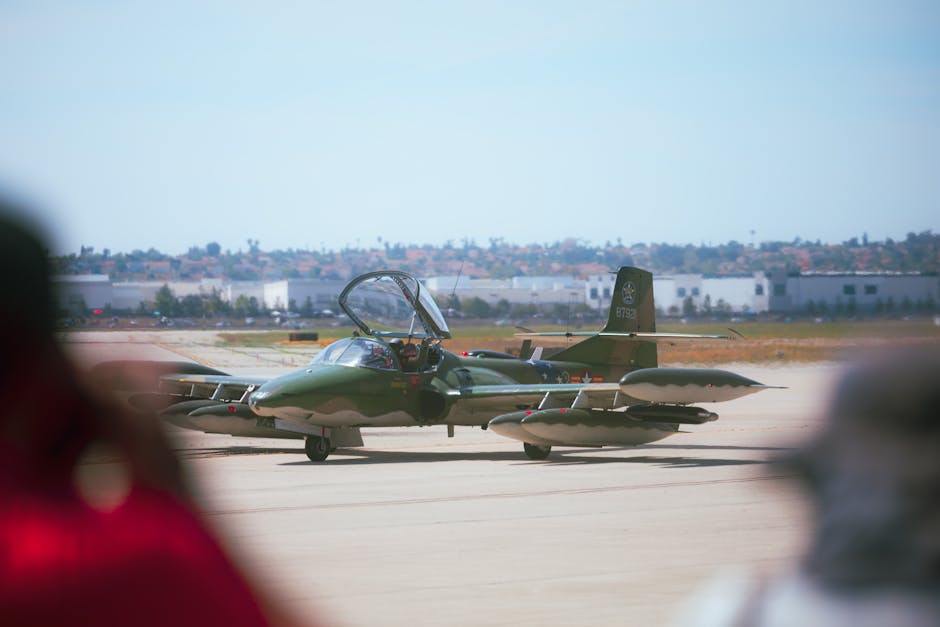
- Operation Epic Fury saw a high attrition rate for U.S. airpower, with 42 aircraft lost or damaged in a single operation.
- The losses occurred despite advanced stealth technology and electronic warfare capabilities.
- The findings highlight a growing vulnerability in U.S. military dominance.
- Each lost aircraft represents tens of millions in taxpayer investment and months of operational downtime.
- The operation’s high cost raises urgent questions about the survivability of current airpower platforms.
In a stark revelation that has sent shockwaves through defense circles, a recently declassified congressional report confirms that 42 U.S. military aircraft were either lost or significantly damaged during Operation Epic Fury — a covert air campaign conducted over hostile territory between 2021 and 2023. This tally, which includes fighter jets, drones, and support aircraft, marks one of the highest attrition rates for American airpower in a single operation since the early stages of the Afghanistan conflict. The losses occurred despite advanced stealth technology and electronic warfare capabilities, raising urgent questions about the survivability of current platforms in contested airspace. With each lost aircraft representing tens of millions in taxpayer investment and months of operational downtime, the findings underscore a growing vulnerability in U.S. military dominance.
Strategic Context Behind the Mission

Operation Epic Fury was launched as a rapid-response initiative to degrade regional threats posed by a non-state armed group operating across a volatile cross-border region in Central Asia. Officially authorized under a classified presidential directive, the operation relied heavily on precision airstrikes and persistent surveillance to neutralize high-value targets and disrupt supply networks. Initially framed as a low-risk campaign leveraging unmanned systems and stand-off weaponry, it quickly escalated as adversaries adapted with advanced anti-aircraft systems, including mobile radar units and shoulder-fired missiles. The congressional report notes that the mission’s duration and geographic complexity stretched logistical and tactical limits, forcing repeated sorties into high-threat zones. This shift transformed what was intended as a short-term operation into a protracted air campaign with mounting operational costs.
Breakdown of Aircraft Losses and Key Incidents

The 42 aircraft affected during Operation Epic Fury included 17 drones — primarily MQ-9 Reapers — 12 F-16 Fighting Falcons, 6 F-35 Lightning IIs, and 7 support aircraft such as KC-135 tankers and E-3 Sentry AWACS. While most drone losses occurred due to electronic jamming or surface-to-air missile strikes, the downing of multiple F-35s has drawn particular concern given their advanced stealth capabilities and $100 million+ price tag. One incident in October 2022 saw two F-35s damaged during a refueling operation near the border, likely due to coordinated radar-guided fire. Additionally, the report details 15 cases of aircraft returning with critical damage, requiring extensive repairs that sidelined them for an average of 11 months. Notably, all crew members were recovered or accounted for, a testament to improved combat search-and-rescue protocols.
Analysis: Why Losses Were Higher Than Expected

Military analysts point to several converging factors behind the unexpectedly high attrition rate. First, adversaries in the region acquired next-generation air defense systems — some traced back to foreign state suppliers — capable of detecting and engaging low-observable aircraft under certain conditions. According to a Reuters investigation corroborating parts of the report, these systems exploited environmental conditions and flight patterns to narrow stealth advantages. Second, the concentration of sorties through limited air corridors increased predictability, making aircraft more vulnerable to ambush. Third, maintenance delays and spare parts shortages in forward bases reduced aircraft readiness, forcing older models into active combat roles. As Dr. Elena Torres, a defense strategist at the Center for Strategic and International Studies, noted: “We’re seeing a return to contested airspace environments that challenge the assumptions underpinning post-Cold War air doctrine.”
Global and Domestic Implications

The consequences of these losses extend beyond immediate tactical setbacks. Domestically, the report has triggered a bipartisan review of defense procurement and readiness metrics, with lawmakers demanding greater transparency on future covert operations. The financial impact is substantial: replacing the lost aircraft could exceed $2.5 billion, not including long-term maintenance and training costs. Internationally, allies are reassessing their reliance on U.S. airpower guarantees, particularly in regions with dense air defense networks like Eastern Europe and the South China Sea. Moreover, the disclosure may embolden adversarial states to accelerate investments in counter-stealth technologies. For the U.S. Air Force, the episode underscores an urgent need to modernize electronic warfare systems, expand drone autonomy, and diversify strike platforms to reduce overreliance on high-value assets.
Expert Perspectives
Reactions among defense experts are divided. Some, like retired General Michael Langston, argue that the losses were an inevitable cost of maintaining global deterrence: “You can’t project power without risk,” he stated in a BBC interview. Others, including Dr. Naomi Chen of the RAND Corporation, warn of strategic overreach: “When attrition rates approach those of peer-conflict scenarios in a covert operation, we must ask whether the objectives justify the means.” The debate centers on whether current doctrine adequately accounts for hybrid threats and whether budget allocations favor prestige platforms over resilient, scalable systems.
Looking ahead, Operation Epic Fury is likely to influence future defense strategy, particularly in how the Pentagon plans for high-threat environments. Upcoming initiatives, including the development of loyal wingman drones and next-generation jamming pods, may gain urgency in light of these findings. Yet, without clearer metrics for mission success and risk tolerance, similar operations could face the same scrutiny. The central question remains: can air dominance be sustained in an era where even the most advanced aircraft are increasingly vulnerable?
Source: Stripes