- Marshall’s new on-ear headphones blend iconic design with cutting-edge ANC technology.
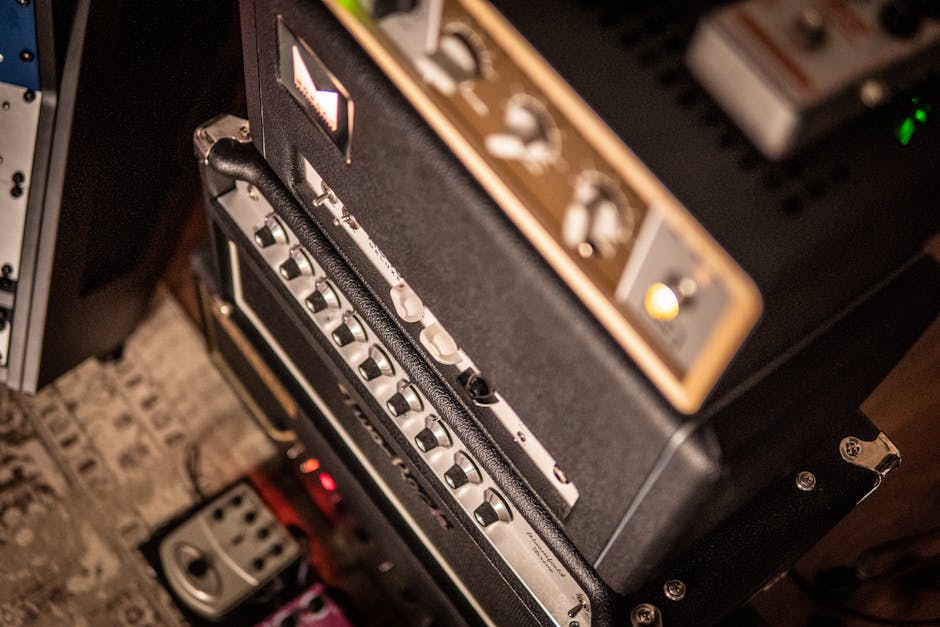
- The headphones feature a striking stage amplifier-inspired design with black textured vinyl and brass-finished corners.
- Marshall’s move into premium portable audio signals a bold expansion beyond its heritage in speakers and instruments.
- The new on-ear model replicates the grill cloth, angular cabinet shape, and gold-toned hardware of Marshall’s amplifiers.
- The headphones are poised to disrupt the premium portable audio market with a unique blend of style and sophistication.
Marshall, the iconic British audio brand synonymous with rock ‘n’ roll history and guitar amplification, has unveiled a striking new pair of on-ear headphones that look as if they were ripped straight from a stage amplifier. Blending its signature design language—black textured vinyl, brass-finished corners, and the classic script logo—with cutting-edge active noise cancellation (ANC), the headphones are poised to disrupt the premium portable audio market. With global headphone sales exceeding $35 billion annually and demand for noise-canceling models growing by 12% year-over-year, Marshall’s move signals a bold expansion beyond its heritage in speakers and instruments into the competitive personal audio space.
Why Design Meets Function in Marshall’s Audio Evolution

Marshall’s latest release is more than a nostalgic nod—it represents a strategic evolution in the company’s identity. Since its founding in 1962 by Jim Marshall, the brand has defined the sound of rock music, powering legendary acts from Jimi Hendrix to Metallica. Now, as consumers increasingly demand both aesthetic distinction and technical sophistication in wearable tech, Marshall leverages its instantly recognizable visual language to stand out in a market crowded with minimalist, monochrome designs. The new on-ear model replicates the grill cloth, angular cabinet shape, and gold-toned hardware of its amplifiers, appealing to music purists and design enthusiasts alike. This fusion of form and function underscores a broader trend in consumer electronics: emotional resonance as a driver of brand loyalty and product differentiation.
Engineering the Signature Marshall Sound for Portable Use

The headphones feature 40mm dynamic drivers tuned to deliver Marshall’s hallmark sound profile—balanced mids, crisp highs, and punchy bass—optimized for both live and studio recordings. Active noise cancellation uses hybrid dual-microphone systems to monitor and counter ambient sound in real time, making them suitable for urban commuters and frequent flyers. Battery life reaches up to 30 hours with ANC enabled, and a quick-charge function provides five hours of playback from just 10 minutes of charging. Built with foldable hinges and detachable coiled cables, the design retains vintage portability cues while integrating Bluetooth 5.3 for stable wireless connectivity. The inclusion of an inline microphone supports hands-free calls, aligning the product with hybrid work and mobile lifestyle demands.
Market Positioning and Competitive Landscape

Priced at $249, the new model enters a fiercely contested segment dominated by established players like Sony, Bose, and Sennheiser. Unlike the Sony WH-CH720N or Bose QuietComfort Earbuds II, Marshall’s offering prioritizes aesthetic boldness over stealthy minimalism, betting that consumers are ready to trade subtlety for statement-making style. According to a 2023 report by Statista, 43% of headphone buyers now cite design as a top purchasing factor, second only to sound quality. Marshall also benefits from a loyal fan base among musicians and audio professionals, who trust the brand’s tuning philosophy. However, competing on technical specs alone remains a challenge; while the ANC performance is solid, it does not yet match the class-leading suppression offered by Sony’s XM5 series, particularly in low-frequency environments like airplanes.
Implications for Music Lovers and Urban Professionals

These headphones are particularly well-suited for creative professionals who value both sonic accuracy and personal expression. Musicians, podcasters, and content creators may find the balanced sound signature ideal for on-the-go monitoring, while the rugged build and detachable cables offer reliability in dynamic environments. Urban commuters gain tangible benefits from ANC in noisy transit systems, though the on-ear design may sacrifice some comfort and isolation compared to over-ear alternatives. Additionally, the retro design fosters a sense of identity and cultural affiliation, turning a functional accessory into a fashion statement. As remote and hybrid work models persist, demand for devices that seamlessly transition from studio to street continues to rise.
Expert Perspectives
Audio engineer and Grammy-nominated producer Linda Lee notes, “Marshall’s strength has always been in translating stage energy to consumer gear. Their tuning choices favor musicality over clinical precision, which resonates with artists.” In contrast, tech analyst Raj Patel from Gartner cautions, “In a market where noise cancellation efficacy is quantifiable, branding alone won’t sustain long-term adoption. Marshall must prove its engineering matches its aesthetics.” These perspectives highlight the tension between emotional branding and technical performance in premium audio.
Looking ahead, Marshall may expand its ANC lineup to include over-ear and true wireless variants, potentially integrating spatial audio and adaptive sound modes. The success of this model could also influence how legacy audio brands reimagine their heritage in the wearable tech era. As consumers increasingly seek products that reflect personal identity, the question isn’t just whether Marshall’s headphones sound good—but whether their iconic look can become a symbol of audio authenticity in a digital world.
Source: Engadget