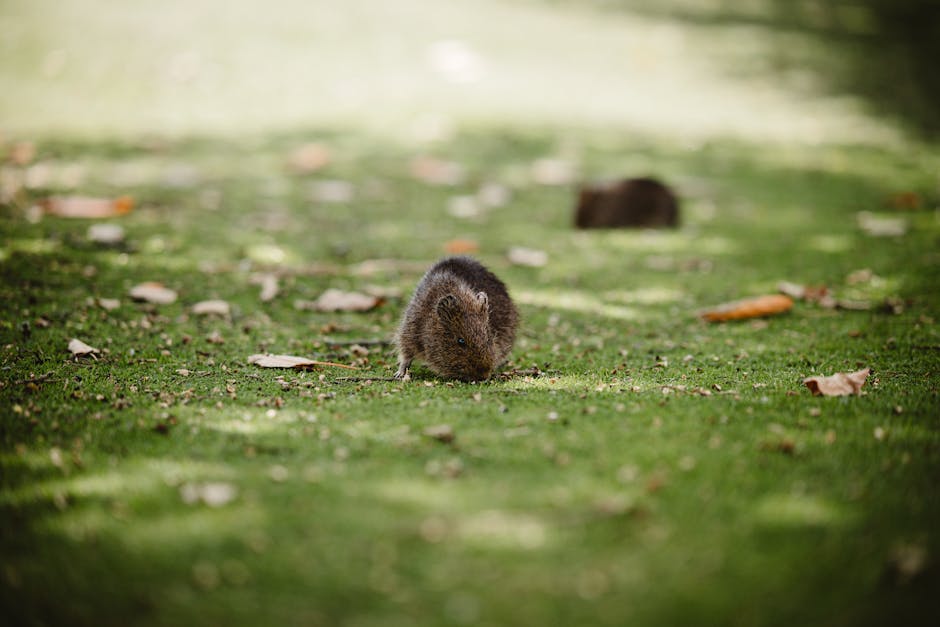
- Scientists are using environmental DNA from poop to protect the critically endangered Gilbert’s potoroo.
- The Gilbert’s potoroo is a small, nocturnal marsupial found in Western Australia’s heathlands, with fewer than 150 individuals remaining.
- Habitat loss, invasive predators, and bushfires threaten the survival of the Gilbert’s potoroo.
- Microscopic fungi in the potoroo’s droppings hold clues to its diet, habitat, and climate resilience.
- Conservationists are using non-invasive eDNA sampling to track and protect the Gilbert’s potoroo.
What if the key to saving a species from extinction wasn’t found in blood, bone, or behavior—but in its poop? That’s the revolutionary approach now being used to protect one of the world’s rarest marsupials: the Gilbert’s potoroo. With fewer than 150 individuals left in the wild, this tiny, rat-kangaroo-like creature is teetering on the edge of extinction, threatened by habitat loss, invasive predators, and catastrophic bushfires. Scientists in Western Australia are turning to a non-invasive, cutting-edge method—extracting environmental DNA (eDNA) from fecal samples—to uncover what the potoroo eats, where it thrives, and how it can survive in a changing climate. The answer, it turns out, lies in the microscopic fungi hidden in its droppings.
What Is the Gilbert’s Potoroo and Why Is It Vanishing?

The Gilbert’s potoroo (Potorous gilbertii) is a small, nocturnal marsupial once thought extinct until its rediscovery in 1994 in the remote heathlands of Two Peoples Bay Nature Reserve. Now classified as critically endangered by the IUCN, it survives in only a handful of isolated populations, primarily on Bald Island and in fenced sanctuaries on the mainland. The potoroo’s decline stems from historical land clearing, predation by foxes and feral cats, and increasingly frequent wildfires that destroy its fragile habitat. Because the animal is elusive and lives in dense vegetation, traditional tracking methods are nearly impossible. Conservationists have struggled to understand its ecological needs—especially its diet—making it difficult to establish new populations or choose suitable relocation sites. Without this knowledge, even well-intentioned reintroduction efforts could fail.
How Does Poop Reveal a Marsupial’s Survival Secrets?

Researchers from the Department of Biodiversity, Conservation and Attractions in Western Australia and the University of Western Australia have pioneered the use of fecal eDNA to decode the potoroo’s diet. By collecting fresh scat samples and sequencing the DNA fragments within, they can identify the species of fungi, plants, and microbes the animal has consumed. This method revealed that Gilbert’s potoroo relies heavily on a diverse array of underground fungi—specifically truffle-like hypogeous fungi—which form symbiotic relationships with native plants and are crucial for healthy forest ecosystems. A 2022 study published in Animal Conservation found over 40 fungal species in potoroo droppings, many of which are rare and localized. These fungi aren’t just food—they’re indicators of ecosystem health and help scientists pinpoint habitats that can support viable potoroo populations.
Are There Limits to the DNA-from-Poop Approach?

Despite its promise, eDNA analysis from scat isn’t without limitations. DNA degrades quickly in warm, humid environments, meaning samples must be collected quickly and preserved meticulously. Contamination from soil microbes or other animals can skew results, requiring rigorous lab protocols. Some experts caution that dietary DNA reflects only recent consumption and may not represent long-term nutritional needs. Additionally, while fungi are a major component of the potoroo’s diet, other factors—such as shelter availability, predator pressure, and soil composition—also determine habitat suitability. As Dr. Keith Morris, a senior conservation biologist involved in the recovery program, noted in a 2021 interview with ABC News, “Just because a site has the right fungi doesn’t mean it’s safe from fire or foxes.” Skeptics argue that overreliance on eDNA could lead to misplaced conservation priorities if broader ecological and logistical factors aren’t considered.
How Is This Science Changing Conservation on the Ground?

The real-world impact of this research is already unfolding. Armed with fungal DNA maps, conservationists have identified several mainland sites with suitable soil and vegetation types that mirror the potoroo’s current habitats. In 2023, a new population was successfully established in the Waychinicup National Park after eDNA confirmed the presence of key fungal species in soil and scat samples. This site was chosen not only for its ecological match but also for its lower fire risk and predator-proof fencing. Meanwhile, ongoing monitoring uses regular scat collection to assess diet stability and stress levels in translocated animals. The technique is also being adapted for other endangered mycophagous (fungus-eating) species, such as the woylie and mountain pygmy possum, suggesting a scalable model for precision conservation in fire-prone ecosystems.
What This Means For You
The story of the Gilbert’s potoroo illustrates how innovative science can turn overlooked biological traces into powerful conservation tools. While most people will never see this elusive creature, its survival depends on unseen networks—fungi beneath the soil, DNA in droppings, and scientists connecting microscopic clues to macro-scale action. This approach reminds us that biodiversity protection isn’t just about saving charismatic animals but understanding the intricate, often invisible relationships that sustain life. For anyone concerned about extinction and ecosystem collapse, it’s a hopeful sign that even the smallest biological remnants can yield big answers.
Still, questions remain: Can eDNA analysis predict long-term population viability, or will climate change shift fungal distributions faster than we can adapt? As temperatures rise and fire seasons lengthen, will today’s ideal habitat become tomorrow’s ecological trap? The potoroo’s fate may ultimately depend not just on what’s in its poop—but on whether we act in time on what that poop tells us.
Source: ScienceDaily