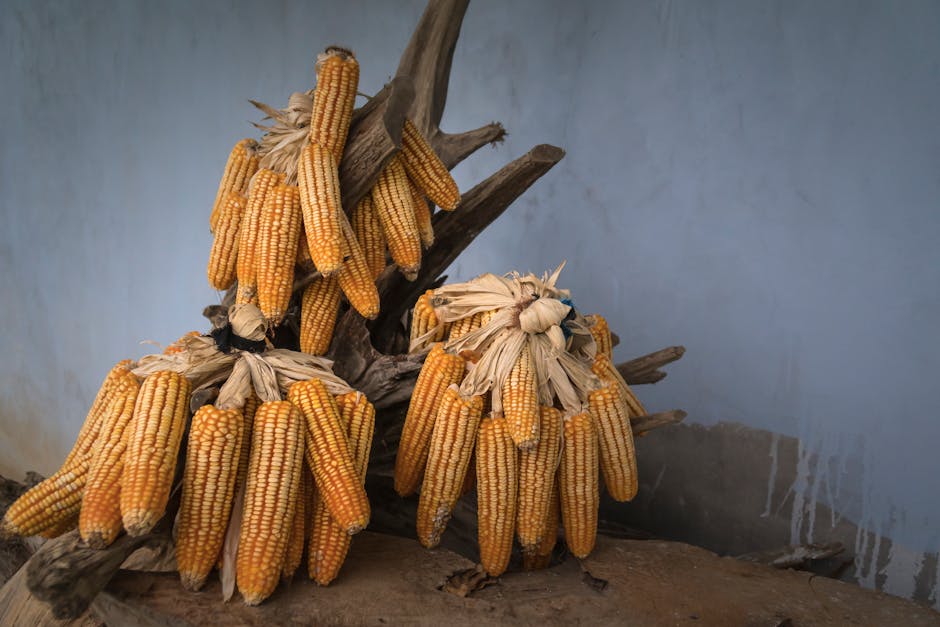
- Climate change is intensifying droughts across agricultural zones, making drought-resilient crops a pressing need.
- Drought during flowering can devastate maize yields due to a mismatch between pollen release and silk emergence.
- A single gene, ZmSAUR72, plays a crucial role in maize drought resilience by promoting silk elongation.
- ZmSAUR72 expression accelerates silk growth, shortening the anthesis-silking interval and increasing fertilization chances.
- Maize lines with heightened ZmSAUR72 activity showed up to a 40% reduction in ASI under water-limited conditions.
As climate change intensifies droughts across key agricultural zones, a pressing question looms: Can we breed crops that reliably produce food even when water is scarce? Nowhere is this more urgent than in maize cultivation, a staple for over a billion people worldwide. Drought during flowering can devastate yields, primarily because of a mismatch between pollen release and silk emergence—a delay known as the anthesis-silking interval (ASI). But a breakthrough study published in Nature suggests a genetic solution may be within reach. Could a single gene hold the key to drought-resilient maize?
What role does ZmSAUR72 play in maize drought resilience?

The answer lies in a small but powerful protein called ZmSAUR72, a member of the Small Auxin Up RNA (SAUR) family in maize (Zea mays). This gene promotes silk elongation by activating plasma membrane H+-ATPase enzymes, which acidify the cell wall and facilitate cell expansion. Under drought conditions, silks often emerge too late to be pollinated, leading to barren ears and yield loss. However, ZmSAUR72 expression accelerates silk growth, shortening the anthesis-silking interval and increasing the chances of successful fertilization. Researchers found that maize lines with heightened ZmSAUR72 activity exhibited up to a 40% reduction in ASI under water-limited conditions, directly linking this gene to improved drought tolerance. This mechanism doesn’t just boost growth—it synchronizes a critical reproductive window when water is scarce.
What evidence supports ZmSAUR72’s role in silk development?

Multiple lines of experimental evidence confirm ZmSAUR72’s function. Using CRISPR-Cas9 gene editing, scientists generated maize mutants with suppressed ZmSAUR72 expression and observed significantly delayed silk emergence, particularly under drought stress. Conversely, overexpression lines showed rapid silk elongation even with limited water. Biochemical assays revealed that ZmSAUR72 interacts directly with H+-ATPase proteins, enhancing their activity and promoting proton efflux, which loosens cell walls and allows expansion. Field trials across three growing seasons in arid regions of northern China demonstrated that ZmSAUR72-enhanced lines maintained 35–40% higher kernel set under drought compared to controls. According to the study’s lead author, “This gene acts as a molecular switch that keeps reproductive development on track when stress hits.” These findings, published in Nature, establish a direct causal link between auxin signaling, cellular growth mechanics, and climate resilience.
Are there limitations or opposing views on this discovery?

While promising, some scientists urge caution in overestimating ZmSAUR72’s immediate impact. Critics note that drought resilience is polygenic, and enhancing silk elongation alone may not suffice under extreme or prolonged water deficits. For instance, root architecture, stomatal regulation, and overall plant vigor also play crucial roles. Additionally, overexpressing growth-promoting genes can lead to trade-offs, such as reduced root biomass or increased susceptibility to pests. There are also concerns about genetic diversity: most tests were conducted in inbred maize lines, and performance in diverse genetic backgrounds remains uncertain. Furthermore, regulatory hurdles and public skepticism around genetically modified crops could slow adoption, especially in regions most in need. As one agronomist noted, “A single gene won’t solve climate chaos—resilience requires systems, not silver bullets.”
How could this discovery transform agriculture in practice?

In real-world terms, ZmSAUR72 could reshape maize farming in drought-prone regions like sub-Saharan Africa, northern China, and parts of Central America. By shortening the anthesis-silking interval, farmers could maintain yields even during erratic rainfall patterns. Seed companies are already exploring ways to incorporate ZmSAUR72 into elite breeding lines using marker-assisted selection or gene editing. Preliminary collaborations with the International Maize and Wheat Improvement Center (CIMMYT) suggest that integrating this trait into drought-tolerant hybrids could boost food security for millions. Moreover, because ZmSAUR72 acts locally in silks, it may face fewer regulatory barriers than genes affecting whole-plant metabolism. If deployed responsibly, this innovation could become a cornerstone of climate-smart agriculture, offering a biological buffer against increasingly unpredictable growing seasons.
What This Means For You
For consumers, farmers, and policymakers, this discovery underscores how targeted genetic research can yield practical solutions to climate challenges. It suggests that future crops may not need more water—but smarter biology—to thrive. While not a standalone fix, ZmSAUR72 represents a measurable step toward more resilient food systems. As extreme weather becomes the norm, such innovations will be critical in maintaining stable food supplies and prices.
Yet, key questions remain: Can ZmSAUR72’s benefits be replicated across diverse maize varieties and environments? And how will societal and regulatory frameworks adapt to gene-edited crops designed for climate resilience? These are not just scientific inquiries—they are societal ones.
Source: Nature