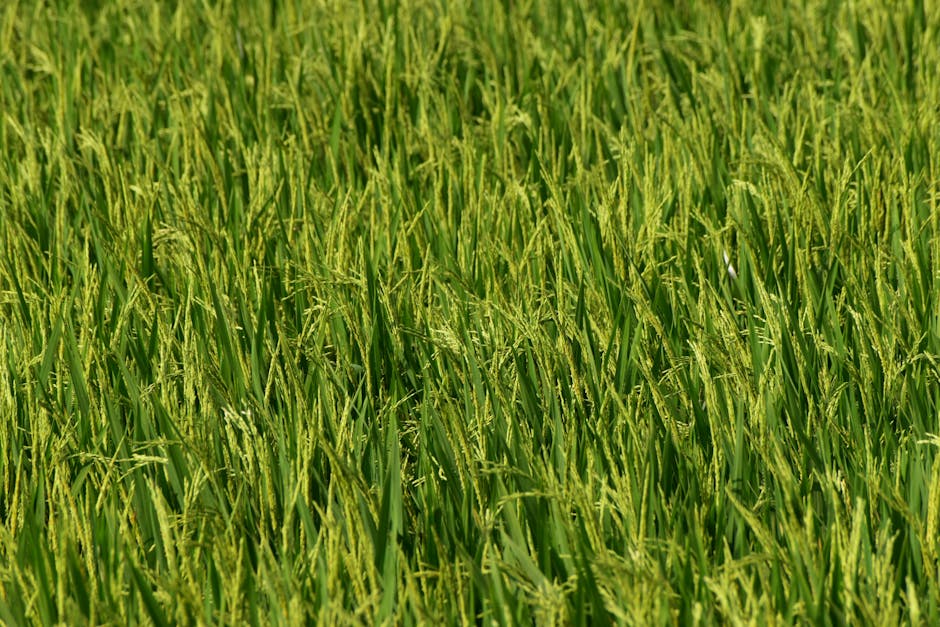
- Scientists have successfully genetically modified rice to resist three major pathogens using a single gene.
- The modification enhances the plant’s basal immunity without compromising growth under normal conditions.
- The research team disabled the SnRK1β1A gene, which encodes a regulatory subunit of the SnRK1 energy-sensing complex.
- The genetically modified rice can fend off multiple deadly diseases at once, a feat previously considered improbable in plant pathology.
- Researchers hope to apply this breakthrough to other crops, improving global food security.
In the humid paddies of southern China, where morning fog clings to flooded fields and rice stalks sway under the weight of developing grain, a silent battle rages beneath the surface. Pathogens lurk in the water and air—fungi, bacteria, and viruses that have plagued rice cultivation for centuries. For generations, farmers have relied on pesticides, resistant varieties, and crop rotation to stave off destruction. But now, in a quiet laboratory at the Chinese Academy of Agricultural Sciences, a team of molecular biologists has altered the genetic fate of rice itself. By disabling a single gene, they’ve turned the plant’s own immune system into a vigilant sentinel, capable of fending off multiple deadly diseases at once—a feat long considered improbable in plant pathology.
Genetic Switch Unlocks Immune Response

Researchers have discovered that inactivating the SnRK1β1A gene in rice triggers a broad-spectrum defense mechanism against major pathogens, including Magnaporthe oryzae (the cause of rice blast), Xanthomonas oryzae (responsible for bacterial blight), and the rice stripe virus. Unlike traditional resistance genes that target specific pathogens, this modification enhances the plant’s basal immunity without compromising growth under normal conditions. The gene normally encodes a regulatory subunit of the SnRK1 energy-sensing complex, which helps plants manage stress and metabolism. When silenced, the plant shifts resources toward defense, activating immune-related genes and reinforcing cell walls. Field trials showed up to 70% reduction in disease incidence across multiple growing seasons, marking a significant leap in durable crop protection. The findings were originally published in Nature, followed by a formal author correction to clarify methodological details in the supplementary data.
From Energy Sensor to Immune Gatekeeper

The road to this discovery began over a decade ago with studies on SnRK1, a protein kinase complex conserved across eukaryotes and functionally analogous to AMP-activated protein kinase (AMPK) in animals. Initially studied for its role in energy homeostasis during nutrient stress, SnRK1 was thought to suppress immune responses to conserve energy—a trade-off between growth and defense. In rice, the β1 subunit exists in two isoforms: β1A and β1B. Early experiments suggested functional redundancy, but targeted knockout of SnRK1β1A produced an unexpected phenotype: enhanced disease resistance without yield penalty. This contradicted the presumed cost of immunity, prompting deeper investigation. Over the next five years, researchers used CRISPR-Cas9 to generate null mutants, transcriptomic profiling to map immune activation, and pathogen challenge assays to confirm resistance breadth. The breakthrough came when they realized β1A specifically dampens salicylic acid and jasmonic acid signaling pathways—central regulators of plant immunity—while β1B retains metabolic functions, allowing for selective immune enhancement.
The Scientists Behind the Gene Edit

The research was led by Dr. Lin Mei of the Institute of Crop Sciences, whose team has focused on sustainable disease control in staple crops. Motivated by recurring outbreaks that devastate smallholder farms across Asia, Lin’s group sought alternatives to chemical inputs and single-gene resistance, which pathogens rapidly overcome. “We weren’t looking for another R-gene,” she stated in a recent interview. “We wanted to rewire the plant’s decision-making at a systems level.” Her collaborator, Dr. Hiro Tanaka from Kyoto University, contributed insights into SnRK1 structure from Arabidopsis studies, enabling precise targeting in rice. The team included molecular biologists, field agronomists, and bioinformaticians, reflecting the interdisciplinary nature of modern crop science. Their persistence through failed constructs and inconclusive trials underscores the long arc of discovery in plant genomics—where a single gene can take years to fully understand.
Implications for Farmers and Food Security

This genetic modification holds transformative potential for rice-producing regions where disease pressure threatens food security. Countries like Bangladesh, Indonesia, and the Philippines lose up to 30% of annual rice yields to pathogens. Current resistant varieties often fail within a few seasons due to pathogen evolution. In contrast, broad-spectrum resistance via SnRK1β1A inactivation targets multiple infection mechanisms, making it harder for pathogens to adapt. Because the edit does not impair growth or yield under non-stress conditions, it could be integrated into elite cultivars without agronomic trade-offs. Regulatory and public acceptance of gene-edited crops remains a hurdle, particularly in regions with strict GMO policies. However, since CRISPR-mediated knockout avoids foreign DNA insertion, it may qualify as non-transgenic in some jurisdictions, accelerating deployment.
The Bigger Picture
This discovery exemplifies a shift in agricultural science—from reactive pest control to proactive immune engineering. As climate change intensifies disease spread and arable land shrinks, enhancing crop resilience at the genetic level becomes imperative. The SnRK1 pathway is conserved in many crops, suggesting similar strategies could work in wheat, maize, or potatoes. It also challenges long-held assumptions about growth-defense trade-offs, opening new avenues for breeding high-yielding, durable crops. Beyond food production, the work illustrates how fundamental research on cellular metabolism can yield practical solutions to global challenges.
What comes next is translation: moving from controlled trials to real-world farming systems. The team is now collaborating with national breeding programs to introgress the SnRK1β1A mutation into locally adapted rice varieties. If field performance holds, farmers could see disease-resistant seeds within the next decade. Meanwhile, further research will explore whether fine-tuning SnRK1 activity—rather than full inactivation—can optimize both immunity and stress tolerance. The quiet revolution in the rice paddy may soon ripple across the world’s food supply.
Source: Nature