- The AI revolution is facing hard limits in computing power, algorithmic progress, and societal tolerance.
- The insatiable appetite for computing power is outpacing supply, with semiconductor manufacturing operating at near capacity.
- Training cutting-edge AI models requires exaflops of computation, concentrated over weeks or months, causing bottlenecks.
- The era of unchecked AI expansion may be drawing to a close due to physical and technical constraints.
- The convergence of constraints in computing power, algorithmic progress, and societal tolerance is slowing AI growth.
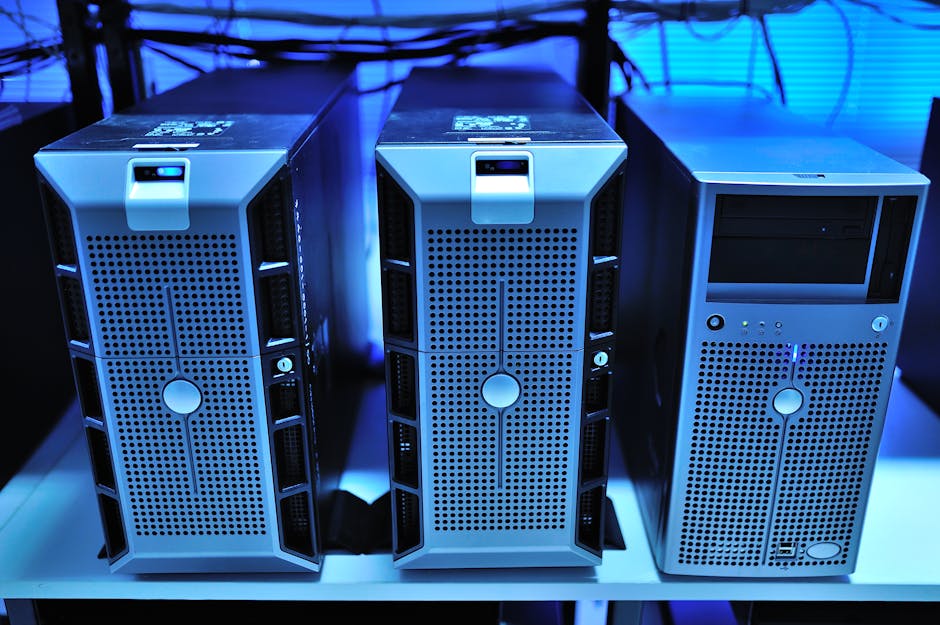
In a dimly lit server farm outside Taipei, rows of humming racks pulse with light — each a node in the global neural network driving the AI revolution. The air thrums with heat, cooled by industrial fans working at maximum capacity. This is where artificial intelligence lives: not in sleek interfaces or viral chatbots, but in kilowatts and silicon. Yet even here, engineers whisper about bottlenecks — chips running hot, power grids groaning, and models that grow larger but smarter only at a crawl. The dream of endlessly scaling AI is meeting the reality of finite resources. What once felt like an unstoppable wave now shows signs of turbulence, as constraints in computing power, algorithmic progress, and societal tolerance begin to converge. The era of unchecked AI expansion may be drawing to a close, not with a crash, but with a slow, grinding halt.
AI Growth Confronts Physical and Technical Walls

The most immediate threat to AI’s momentum lies in its insatiable appetite for computing power. Training cutting-edge models like GPT-4 or Gemini requires exaflops of computation — equivalent to billions of billion mathematical operations per second — concentrated over weeks or months. This demand is outpacing supply. Semiconductor manufacturing, dominated by TSMC and a handful of foundries, operates at near capacity, with lead times stretching beyond a year. The U.S. CHIPS Act has injected billions into domestic production, but new fabs take years to come online. Meanwhile, energy consumption is soaring: one estimate suggests that if AI’s current trajectory holds, data centers could consume as much electricity as Japan by 2027, according to analysis by the BBC. Water use, too, is becoming a flashpoint, with AI facilities drawing millions of gallons daily for cooling. These are not theoretical concerns — they are operational limits being felt today.
The Myth of Exponential AI Progress

For years, the AI industry has relied on Moore’s Law and its spiritual successor — the idea that machine intelligence would improve exponentially with scale. But evidence suggests this assumption is fraying. While model size has ballooned, performance gains are diminishing. Recent studies show that doubling parameters yields smaller and smaller improvements in accuracy, reasoning, or fluency. This phenomenon, known as model plateauing, signals that brute-force scaling may be nearing its end. Researchers are scrambling for alternatives — sparse models, neuromorphic computing, algorithmic innovations — but none have yet delivered a breakthrough at scale. Moreover, the environmental cost of training ever-larger models is drawing scrutiny from regulators and academics alike. As Raghuram Rajan argues in a Project Syndicate commentary, the belief that AI will autonomously solve its own inefficiencies is not just optimistic — it’s dangerously naive.
The Key Players Shaping AI’s Trajectory

Behind the scenes, a small group of technologists, corporate leaders, and policymakers are making high-stakes decisions that will determine AI’s future. At NVIDIA, Jensen Huang continues to preside over a de facto monopoly on AI accelerators, his company’s stock surging as demand for H100 and Blackwell chips outstrips supply. Meanwhile, executives at Google, Microsoft, and Meta push for tighter integration of AI into core products, betting that user engagement will justify the cost. On the regulatory front, officials in Washington, Brussels, and Beijing are increasingly wary of both concentration of power and uncontrolled deployment. Figures like FTC Chair Lina Khan and EU AI Act architects are demanding transparency, accountability, and limits on high-risk applications. These actors are not merely reacting — they are shaping a new equilibrium where innovation must contend with oversight, sustainability, and equity.
Consequences for Industry and Society

The implications of a stalled AI revolution are profound. Tech companies face margin pressure as compute costs rise and returns on model scaling decline. Startups without access to cloud credits or specialized hardware may find the barrier to entry insurmountable. For nations, the geopolitical stakes are high: countries without advanced semiconductor capabilities risk falling behind in both economic competitiveness and national security. Workers may see fewer productivity gains than promised, undermining the economic case for widespread AI adoption. And public trust — already fragile amid concerns about deepfakes, job displacement, and opaque decision-making — could erode further if AI delivers more hype than value. The risk is not just technological stagnation, but a backlash that could slow investment and invite heavier regulation.
The Bigger Picture
This moment mirrors past technological inflection points — the dot-com bust, the 2008 financial crisis in housing — where overconfidence met hard limits. AI was never going to be immune to the laws of physics, economics, or politics. The current reckoning may, in fact, be healthy: forcing a shift from scale at all costs to smarter, more efficient, and more responsible innovation. If managed well, this pause could lead to more sustainable architectures, energy-aware algorithms, and governance frameworks that balance progress with protection. But if ignored, the consequences could include wasted capital, environmental strain, and a loss of faith in one of the defining technologies of the 21st century.
What comes next will depend less on breakthroughs in labs than on choices in boardrooms and legislatures. The age of AI mania may be cooling, but the era of AI maturity has yet to begin. Whether that transition is orderly or chaotic will shape not just the tech industry, but the global economy for decades to come.
Source: Reddit