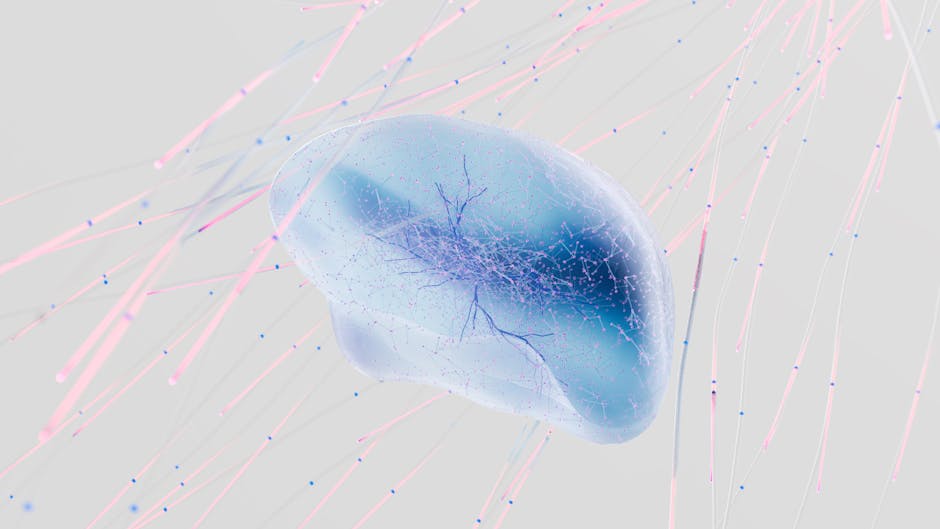
- A population of neurons in the macaque monkey’s brain encodes discrete action units that can be recombined for novel behavior.
- The brain constructs new actions from modular components, rather than just storing motor memories.
- This capacity for recombinative planning may underlie the flexibility seen in primate problem-solving.
- The discovery challenges traditional models of motor control that rely on learned sequences.
- The neural basis of behavioral flexibility is linked to the dorsolateral prefrontal cortex (DLPFC) in macaque monkeys.
In a breakthrough that reshapes understanding of motor cognition, neuroscientists have discovered a population of neurons in macaque monkeys that encode discrete, reusable action units—akin to a neural alphabet for movement. These ‘action symbols’ can be dynamically recombined to generate novel behavior, even in the absence of prior experience. The finding, published in Nature, demonstrates that the brain doesn’t merely store motor memories but actively constructs new actions from modular components. This capacity for recombinative planning may underlie the flexibility seen in primate problem-solving, from tool use to complex social interactions, and suggests a previously hidden layer of cognitive architecture within the motor system.
The Neural Basis of Behavioral Flexibility

For decades, scientists have grappled with how animals—and humans—generate adaptive responses to unfamiliar challenges. Traditional models of motor control emphasize learned sequences, where repeated actions become ingrained through practice. Yet such models fail to explain how primates can spontaneously assemble new behaviors, such as drawing a previously unseen shape or manipulating a novel object. The discovery of action-encoding neurons in the dorsolateral prefrontal cortex (DLPFC) of macaques offers a compelling solution. These neurons do not fire in response to specific movements alone but instead represent abstract, goal-directed subroutines—like ‘draw a curve’ or ‘start a line’—that can be combined in varied orders. This modular system allows the brain to innovate without trial-and-error learning, suggesting that cognitive flexibility is hardwired at the neural circuit level.
Decoding the ‘Action Alphabet’ in Real Time

In controlled experiments, researchers trained macaques to use a digital interface to ‘draw’ shapes based on visual cues, including unfamiliar patterns they had never encountered before. Using high-resolution neural recordings, the team monitored activity in the DLPFC while the animals planned and executed these novel drawing sequences. They identified a distinct population of neurons that activated not during movement execution, but during the planning phase, with each neuron selectively tuned to a specific action primitive—such as initiating a stroke, changing direction, or terminating a line. Crucially, these neural representations were stable across different contexts and could be recombined flexibly. For example, the same ‘start stroke’ neuron fired whether the monkey was drawing a circle or a zigzag, indicating a generalized, symbolic function. This combinatorial coding system mirrors the way language uses phonemes and morphemes to generate infinite expressions from finite elements.
From Motor Planning to Cognitive Architecture

The implications of this discovery extend far beyond motor control. The existence of neurons that encode abstract, recombinable actions suggests a deeper organizational principle in the brain—one where cognitive operations are built from reusable units. This aligns with theories in cognitive science proposing that higher-order thinking relies on symbolic manipulation, previously thought to be unique to human language and reasoning. By demonstrating that such symbolic processing occurs in nonhuman primates during motor planning, the study blurs the line between action and thought. Data analysis revealed that the timing and sequence of neuron activation predicted the accuracy and efficiency of the monkeys’ performance, indicating that these neurons are not just correlates but functional components of flexible behavior. Moreover, the findings challenge long-standing assumptions that such cognitive complexity requires the human neocortex, pointing instead to evolutionary precursors in nonhuman primates.
Implications for Neuroscience and Artificial Intelligence

The identification of action-encoding neurons has profound consequences for both brain science and machine learning. In neuroscience, it opens new avenues for understanding disorders marked by cognitive rigidity, such as autism spectrum disorder, Parkinson’s disease, and certain forms of aphasia, where patients struggle with novel tasks or sequencing actions. Therapies targeting these neuronal populations could one day enhance cognitive flexibility. In artificial intelligence, current models of reinforcement learning often rely on brute-force trial-and-error, lacking the efficiency of biological systems. Incorporating modular, symbolic action representations—inspired by these neural ‘primitives’—could enable AI agents to generalize across tasks more effectively. Robotics, in particular, stands to benefit, as machines could learn to assemble complex behaviors from reusable components, much like primates do in the wild.
Expert Perspectives
Dr. Elena Torres, a cognitive neuroscientist at the University of Geneva not involved in the study, called the findings ‘a landmark in systems neuroscience.’ ‘For the first time, we have direct evidence of neurons that function like symbols in a programming language for action,’ she said. However, some researchers urge caution. Dr. Rajiv Mehta of MIT’s McGovern Institute notes that while the data are compelling, ‘we must be careful not to anthropomorphize. These neurons may represent action chunks, but that doesn’t mean monkeys are ‘thinking’ in symbols the way humans do.’ The debate centers on whether such neural activity reflects true symbolic representation or merely efficient chunking of motor patterns—a distinction with deep philosophical and scientific ramifications.
Looking ahead, researchers aim to explore whether similar neuronal populations exist in humans, using non-invasive brain imaging and neuroprosthetic data. They also plan to investigate how these action symbols are learned during development and whether they interact with language-related brain regions. A key open question is whether this system is domain-specific—limited to motor planning—or whether it forms part of a broader cognitive framework used in reasoning, communication, and social behavior. As scientists decode the brain’s modular architecture, one thing is clear: the ability to create the new from the known may be rooted in a surprisingly simple neural grammar.
Source: Nature