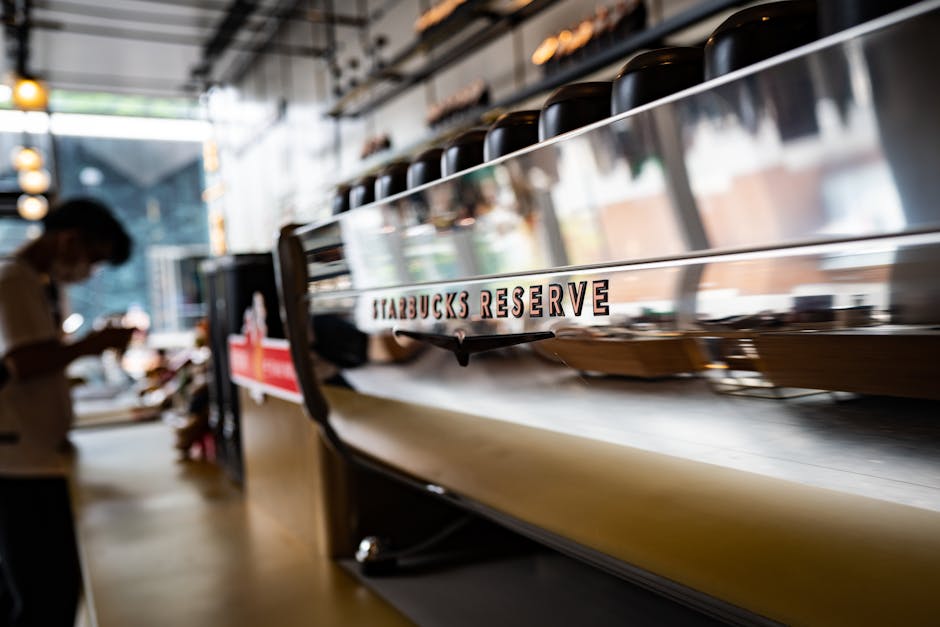
- Starbucks Korea’s ‘Let’s Tank Up’ promotion was meant to encourage sustainability but sparked outrage over its similarity to a phrase associated with a tragic event in South Korean history.
- The campaign’s slogan and imagery unintentionally evoked the 1980 Gwangju Uprising, where military tanks killed hundreds of people protesting against military dictatorship.
- The date of the promotion, near May 18, coincided with the annual commemoration of the Gwangju Uprising, making the campaign even more insensitive.
- Starbucks Korea initially dismissed the connection as coincidental, but public outrage grew as social media users shared images that highlighted the similarity.
- The controversy ultimately led to the firing of Starbucks Korea’s top executive, highlighting the importance of cultural sensitivity in marketing efforts.
Why did a seemingly innocent eco-friendly promotion by Starbucks Korea lead to the firing of its top executive? The answer lies in a tragic chapter of South Korean history that millions still remember with pain and reverence. In May 2024, Starbucks launched a campaign promoting reusable tumblers with the phrase ‘Let’s Tank Up,’ meant to encourage sustainability. But to many South Koreans, the slogan and timing—near May 18—evoked the 1980 Gwangju Uprising, when military tanks crushed a pro-democracy movement, killing hundreds. The backlash was swift and severe, turning a routine marketing effort into a national scandal that cost the CEO their job.
What Was the ‘Tank Day’ Promotion and Why Was It Offensive?

The campaign, officially titled ‘Let’s Tank Up,’ was part of Starbucks Korea’s broader initiative to reduce single-use plastics by incentivizing customers to use reusable containers. However, the phrase ‘tank’ and the imagery of large metal vessels unintentionally mirrored the military tanks that rolled into Gwangju on May 18, 1980, during a brutal suppression of student-led protests against military dictatorship. The date is commemorated annually as a national tragedy and day of mourning. Critics argued that the slogan trivialized the suffering of victims and their families. Starbucks Korea initially claimed the connection was coincidental, but public outrage grew as social media users shared images juxtaposing the tumbler ads with archival footage of tanks in Gwangju. Within days, over a million people signed a petition demanding accountability, forcing the company to pull the campaign and issue a formal apology.
What Evidence Shows the Public and Government Took This Seriously?

The scale of public condemnation was unprecedented for a corporate misstep in South Korea. The National Assembly convened an emergency session to discuss corporate responsibility in cultural sensitivity, and the Ministry of Patriots and Veterans Affairs issued a rare public rebuke, calling the campaign ‘a deep insult to the spirit of the May 18 Democratic Uprising.’ According to Reuters, the petition on the presidential website garnered more than 1.2 million signatures—well above the 200,000 threshold for an official response. Survivors of the Gwangju massacre expressed personal anguish, with one survivor telling BBC News, ‘We bled on the streets so democracy could breathe. For a global company to use tanks as a marketing punchline is unbearable.’ Internal documents later revealed that the campaign had passed through multiple review stages without triggering cultural red flags, raising questions about Starbucks Korea’s local oversight and training protocols.
Are There Alternative Views Defending the Campaign?

Some commentators and marketing experts argued that the backlash reflected an overreach, emphasizing that the phrase ‘tank up’ is a common English idiom meaning to refill or recharge, often used in contexts like fueling vehicles or boosting energy. They contended that holding a multinational company to strict interpretations of localized historical trauma could stifle global branding efforts. A columnist at the Korea Herald wrote that while the timing was ‘regrettable,’ the campaign itself lacked malicious intent and that firing the CEO set a dangerous precedent of disproportionate punishment. Others noted that similar phrases have been used by global brands in Korea without incident, suggesting that the intensity of the reaction was amplified by social media outrage cycles. However, even these voices acknowledged that in sensitive historical contexts, global corporations must exercise greater cultural due diligence before launching campaigns.
What Are the Real-World Consequences of This Incident?

The fallout extended far beyond the CEO’s dismissal. Starbucks Korea saw a 30% drop in foot traffic in the two weeks following the controversy, according to retail analytics firm Shinhan Investment Corp., and several high-profile Korean celebrities terminated endorsement deals. The company also launched a $2 million fund to support historical education about the Gwangju Uprising, signaling an attempt to rebuild trust. Internationally, the incident became a case study in corporate cultural intelligence, cited in business ethics courses at Seoul National University and Yonsei University. More broadly, it triggered a wave of self-audits among foreign brands operating in South Korea, with companies like McDonald’s and Coca-Cola revising their marketing approval processes to include mandatory historical sensitivity reviews. The episode underscored how deeply historical memory is woven into South Korea’s national identity—and how quickly commercial missteps can become moral failures.
What This Means For You
This incident serves as a stark reminder that language and symbolism carry deep cultural weight, especially in markets with recent, painful histories. For consumers, it highlights the power of collective action in holding global brands accountable. For businesses, it underscores the need for localized insight and empathy in global marketing strategies. Even well-intentioned campaigns can backfire without proper cultural context, and in the age of social media, the margin for error is razor-thin. Ethical branding is no longer optional—it’s essential.
As global commerce becomes increasingly interconnected, how can multinational companies balance standardized branding with local historical sensitivities? And who should be responsible for ensuring that marketing messages do not inadvertently insult national traumas? These questions will only grow more urgent in an era where a single slogan can ignite a national firestorm.
Source: BBC