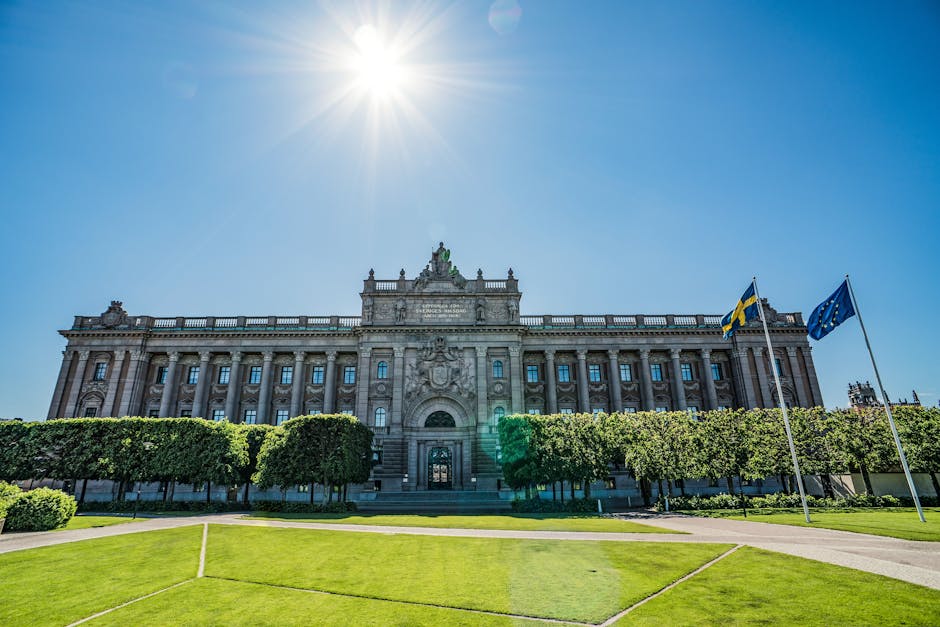
- Sweden has announced a $4 billion defense spending boost, marking a significant shift in its security posture.
- The country’s NATO membership has led to a rapid realignment of its defense strategy with collective security obligations.
- Sweden’s defense investment will focus on modernizing air defenses, expanding cyber capabilities, and increasing troop readiness.
- The $4 billion funding represents a substantial escalation from previous defense budgets in Sweden.
- Sweden’s decision to join NATO has raised concerns about the potential for militarization in Northern Europe.
What does Sweden’s sudden $4 billion defense investment mean for European security? After decades of military neutrality, Sweden has not only joined NATO but immediately announced a major defense spending surge, sending shockwaves through geopolitical circles. The move comes as Russia’s war in Ukraine continues to reshape alliances and defense postures across Europe. With its strategic location bordering the Baltic Sea and proximity to Russia’s Kaliningrad enclave, Sweden’s transformation from non-alignment to active alliance membership raises urgent questions: Is Northern Europe entering a new era of militarization? And how will this shift influence NATO’s posture against potential aggression?
Sweden’s NATO Accession and Strategic Reckoning

Sweden’s decision to join NATO marks a historic reversal of its two-century-long policy of neutrality, driven overwhelmingly by Russia’s full-scale invasion of Ukraine in 2022. The country officially became NATO’s 32nd member in March 2024, following a prolonged ratification process, particularly delayed by Türkiye and Hungary. Now, as a formal ally, Sweden is rapidly aligning its defense strategy with collective security obligations. The newly announced $4 billion investment over the next decade will modernize air defenses, expand cyber capabilities, increase troop readiness, and strengthen surveillance in the Baltic and Arctic regions. This funding represents a significant escalation from previous defense budgets, which hovered around 1.3% of GDP—now set to rise toward NATO’s 2% target. The shift reflects a broader Scandinavian realignment, with neighboring Finland also recently joining NATO and boosting defense spending.
Defense Expansion and Industrial Response

The $4 billion package includes funding for advanced missile systems, submarine warfare enhancements, and expanded radar networks across northern Sweden and the strategically vital island of Gotland. A significant portion will go to domestic defense contractor Saab, which saw its stock rise 5% following the announcement. Saab, known for producing the Gripen fighter jet and advanced air defense systems like the Giraffe radar, is poised to play a central role in Sweden’s military modernization. According to Reuters, the government plans to accelerate procurement timelines, with initial capabilities deployed by 2026. Swedish Defense Minister Pål Jonson stated, “Our NATO membership is not symbolic—it requires tangible contributions to collective defense.” The investment also includes joint exercises with NATO forces and plans for permanent allied military access to Swedish bases, a dramatic departure from past restrictions.
Skepticism and Regional Tensions

Despite broad political consensus, some analysts caution against over-militarization. Critics argue that increased defense spending could provoke rather than deter Russia, potentially triggering a destabilizing arms race in the Baltic region. Russia has already labeled NATO’s Nordic expansion as a direct threat, with state media warning of “military-technical responses” near its northwestern borders. Moreover, some Swedish lawmakers and peace advocacy groups question whether such spending could divert funds from climate, healthcare, and education priorities. Others point to the limitations of small-state deterrence, noting that Sweden’s population of 10.5 million may struggle to sustain prolonged military engagement. Still, supporters counter that deterrence through strength has become the prevailing doctrine across Europe, especially after Ukraine’s experience demonstrated the risks of underpreparedness.
Strategic Impact Across Northern Europe

The consequences of Sweden’s defense buildup are already being felt. With both Finland and Sweden now in NATO, Russia faces a fully encircled Baltic flank, significantly altering regional military dynamics. The alliance will gain enhanced intelligence-gathering capabilities, improved air defense coverage, and deeper interoperability across Nordic forces. Joint patrols in the Baltic Sea have increased, and NATO is exploring permanent rotational deployments to Sweden. In practical terms, this means faster response times to potential incursions and greater integration with U.S. and European forces. The move also strengthens NATO’s Arctic posture, a region gaining strategic importance due to climate change and resource exploration. According to BBC News, military planners view the Nordic corridor as essential for transatlantic reinforcement in any large-scale conflict scenario.
What This Means For You
For citizens across Europe and beyond, Sweden’s defense pivot underscores a new reality: security can no longer be taken for granted. This shift may lead to higher taxes or reallocated public spending, but it also promises greater collective protection. Travelers, businesses, and policymakers should expect increased military activity in Nordic airspace and waters. At a broader level, the trend signals that even historically neutral nations are redefining safety in an age of hybrid warfare and geopolitical uncertainty.
As Sweden integrates into NATO’s command structure and ramps up defense production, one question remains: will this deter aggression, or inadvertently escalate tensions in one of the world’s most sensitive regions? The answer may shape European security for decades to come.
Source: CNBC