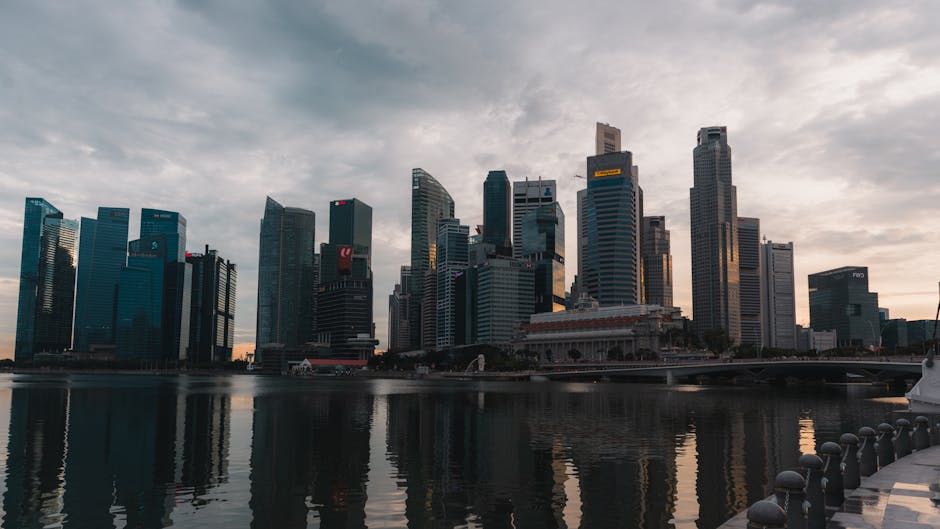
- Singapore is positioning itself as a leading AI hub in Asia through strategic partnerships with tech giants like Google and OpenAI.
- OpenAI has pledged $234 million to build out its local ecosystem, focusing on infrastructure, talent development, and startup incubation.
- Google is expanding its AI research footprint in Singapore, deepening work on multilingual AI models and ethical deployment frameworks.
- Singapore’s AI push aims to transform the city-state into a trusted, rules-based intermediary for responsible AI development in the region.
- The city-state is competing with the US, China, and the EU for dominance in AI, but is betting on its strategic partnerships and governance model to succeed.
What does it take for a small nation to punch above its weight in the global artificial intelligence race? Singapore, with a population under six million, is making a bold claim: that strategic partnerships with tech giants like Google and OpenAI can transform it into a leading AI hub in Asia. As competition intensifies between the U.S., China, and the EU for dominance in AI, Singapore is positioning itself as a trusted, rules-based intermediary where innovation meets governance. With OpenAI pledging $234 million to build out its local ecosystem, and Google expanding its AI research footprint, the city-state is betting big on becoming the go-to node for responsible AI development in the region.
What Are the Details of Singapore’s New AI Partnerships?

At the heart of Singapore’s latest tech push are two landmark agreements: one with OpenAI, the creator of ChatGPT, and another with Google. OpenAI has committed $234 million to develop an AI innovation ecosystem in Singapore, focusing on infrastructure, talent development, and startup incubation. This includes funding for local AI research, support for regulatory sandbox environments, and collaboration with universities and government agencies. Meanwhile, Google announced an expansion of its existing AI research center in Singapore, pledging to deepen work on multilingual AI models and ethical deployment frameworks. These agreements, formalized during a high-level tech summit hosted by Singapore’s Economic Development Board, signal a coordinated effort to position the country as a neutral, high-trust environment for AI experimentation and scaling across Southeast Asia.
What Evidence Supports Singapore’s Rise as an AI Hub?

Backing these ambitions is a track record of strategic tech investments and strong governance. According to the World Intellectual Property Organization, Singapore ranked 7th globally in innovation in 2023, ahead of Japan and the UK. Its regulatory framework, particularly through the Personal Data Protection Commission and the Model AI Governance Framework, has been cited by BBC News as a benchmark for ethical AI deployment. The country already hosts regional headquarters for Microsoft, Nvidia, and Meta, and has invested heavily in digital infrastructure, including high-speed broadband and secure cloud networks. Furthermore, a 2024 report by the Reuters Institute highlighted that Singapore accounts for nearly 30% of all AI startups in Southeast Asia, despite making up less than 10% of the region’s population. These factors make it an attractive partner for global firms seeking stable, scalable environments for AI deployment.
What Are the Skeptical Views on Singapore’s AI Strategy?

Despite the optimism, some experts caution against overestimating Singapore’s ability to compete with larger AI powers. Critics point out that while the city-state excels in governance and infrastructure, it lacks the sheer volume of talent, data, and homegrown tech giants that fuel innovation in the U.S. or China. Dr. Lim Wei Chen, a tech policy analyst at the National University of Singapore, noted in a recent interview that “Singapore is a great testbed, but not necessarily a birthplace of breakthrough AI models.” Others worry that reliance on foreign tech firms could lead to dependency, with critical AI infrastructure and decision-making power remaining outside national control. There are also concerns about digital equity—whether the benefits of AI will reach small businesses and lower-income communities, or remain concentrated among multinational corporations and elite institutions. These challenges suggest that while Singapore can play a key coordination role, it may never rival Silicon Valley or Shenzhen in raw innovation output.
What Are the Real-World Impacts of These AI Deals?

The immediate effects of these partnerships are already visible. Local startups are gaining access to OpenAI’s API credits and mentorship programs, while Singapore’s Infocomm Media Development Authority has launched a pilot initiative to deploy AI chatbots in public healthcare and housing services. In one example, Singapore General Hospital is testing an AI triage system powered by GPT-4 to streamline patient intake, reducing wait times by up to 40% in early trials. Meanwhile, Google’s work on multilingual AI models could help overcome language barriers across Southeast Asia, where over 1,000 languages are spoken. This has implications for education, disaster response, and financial inclusion. On a broader scale, the deals reinforce Singapore’s role as a bridge between Western tech firms and Asian markets, offering a politically stable, English-speaking gateway for market entry and regulatory compliance.
What This Means For You
If you’re a business leader, developer, or policymaker, Singapore’s AI strategy offers a model of how smaller economies can leverage partnerships to stay competitive. The $234 million OpenAI commitment isn’t just about funding—it’s about access to tools, networks, and credibility that can accelerate innovation. For professionals in the region, this means more opportunities in AI research, ethics, and application development. Even for everyday citizens, the push could lead to more efficient public services and smarter urban solutions. However, it also underscores the need for vigilance around data privacy, job displacement, and equitable access to emerging technologies.
As Singapore ascends in the global AI hierarchy, one question remains: can a nation built on pragmatism and regulation also foster the kind of disruptive, boundary-pushing innovation that defines technological revolutions? The answer may shape not only Singapore’s future but the balance of power in the next era of artificial intelligence.
Source: CNBC