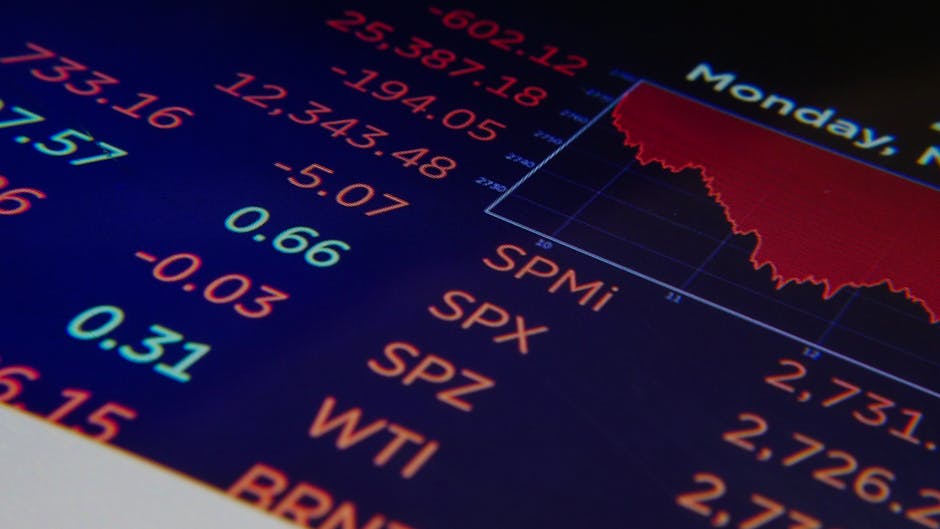
- Asian equity markets fell 2% amid rising US Treasury yields and geopolitical tensions.
- The 10-year Treasury yield reached its highest level since 2007, over 4.8%, rattling global markets.
- Investors responded to tighter financial conditions and supply disruptions from Iran-Israel hostilities.
- The selloff affected technology, consumer, and financial sectors, signaling a shift toward risk-off behavior.
- Export-dependent economies in the Asia-Pacific region are vulnerable to global capital flow reversals.
Asian equity markets plunged on Wednesday, with major indexes across Japan, South Korea, and Australia shedding over 2% on average, as U.S. Treasury yields surged to their highest levels in over a decade and geopolitical tensions flared in the Middle East. The 10-year Treasury yield climbed above 4.8%, its highest since 2007, rattling global markets and increasing borrowing costs worldwide. Investors, already cautious about persistent inflation and aggressive central bank policies, reacted swiftly to the dual pressures of tighter financial conditions and the threat of supply disruptions from escalating Iran-Israel hostilities. The selloff was broad-based, affecting technology, consumer, and financial sectors alike, signaling a shift toward risk-off behavior across the Asia-Pacific region, where export-dependent economies are especially vulnerable to global capital flow reversals.
Mounting Pressure from Global Yield Surge

The rapid ascent of U.S. Treasury yields has become a central concern for international markets, especially in the Asia-Pacific, where capital flows are highly sensitive to U.S. interest rate expectations. With the Federal Reserve indicating fewer rate cuts this year than previously anticipated, bond yields have climbed steadily, pulling global borrowing costs upward. Higher yields in the U.S. make American assets more attractive, prompting capital outflows from emerging and developed Asian markets alike. This dynamic has weakened regional currencies, including the Japanese yen and South Korean won, further complicating monetary policy decisions for local central banks. The Bank of Japan, for instance, is caught between preventing excessive yen depreciation and avoiding a disruption to its fragile economic recovery. As real yields rise, equity valuations—particularly in growth sectors—face increasing scrutiny, contributing to the broad-based selloff seen this week.
Iran Tensions Reignite Geopolitical Fears

Adding to market unease, renewed tensions between Iran and Israel have heightened fears of a broader Middle Eastern conflict. Iran launched a series of drone and missile attacks on Israeli targets in late April, marking a significant escalation after months of proxy confrontations. In response, Israel is preparing a targeted counterstrike, according to intelligence reports from Reuters. Such developments threaten to disrupt oil supplies, particularly through the Strait of Hormuz, a critical chokepoint for global energy shipments. Brent crude surged above $95 per barrel, amplifying inflation concerns and pressuring central banks to maintain restrictive policies. For energy-importing nations across Asia—such as Japan, South Korea, and India—higher oil prices could dampen economic growth and widen trade deficits. The combination of elevated bond yields and energy volatility has created a challenging environment for policymakers and investors alike.
Market Mechanics and Investor Behavior

The current market dynamics reflect a recalibration of risk following months of optimism about a potential ‘soft landing’ for the global economy. However, persistent inflation, resilient labor markets, and geopolitical instability have undermined that narrative. The yield on 10-year U.S. Treasuries, a global benchmark, has risen nearly 150 basis points since the start of 2024, driven by stronger-than-expected economic data and expectations of delayed Federal Reserve easing. This has triggered a repricing of risk assets, with equities in Asia particularly vulnerable due to their high sensitivity to U.S. liquidity conditions. Foreign institutional investors have pulled billions from regional equity funds, according to data from the Institute of International Finance. Moreover, the weakening yen has amplified losses for foreign investors holding Japanese assets, creating a feedback loop that exacerbates selling pressure.
Economic and Sectoral Fallout

The combined impact of higher yields and geopolitical risk is likely to slow investment and consumer spending across Asia. Export-oriented economies such as Taiwan and South Korea, which rely heavily on semiconductor and electronics demand, face declining external demand as higher U.S. rates cool tech spending. Meanwhile, property markets in China and Australia remain fragile, with rising global rates limiting monetary easing options. Financial institutions are also under pressure, as wider interest rate spreads boost net interest margins but are offset by declining bond holdings and loan demand. For emerging markets like Thailand and the Philippines, capital outflows could force central banks to raise rates despite sluggish growth, increasing the risk of stagflation. The region’s diverse economies are united in their exposure to global financial conditions, making coordinated policy responses difficult.
Expert Perspectives
Economists are divided on the outlook. Some, like Takashi Miwa at Nomura Institute, argue that the selloff is an overdue correction that will improve long-term market health. Others, including Ellen Zhu at ANZ Research, warn that the confluence of high yields and geopolitical shocks could trigger a more sustained downturn if confidence erodes. “Markets are pricing in a narrow path to stability,” Zhu noted, “but any further escalation in the Middle East or surprise inflation data could tip sentiment sharply.” Meanwhile, U.S. Federal Reserve officials have downplayed immediate spillover risks, emphasizing the strength of domestic fundamentals. However, global ripple effects suggest the Fed’s influence extends far beyond American borders.
Looking ahead, investors will closely monitor upcoming U.S. CPI data, central bank meetings in Japan and Australia, and diplomatic efforts to de-escalate Middle East tensions. The resilience of Asian markets will depend on whether Treasury yields stabilize and geopolitical risks subside. For now, volatility remains elevated, and risk management has taken precedence over yield-seeking behavior across the region.
Source: CNBC