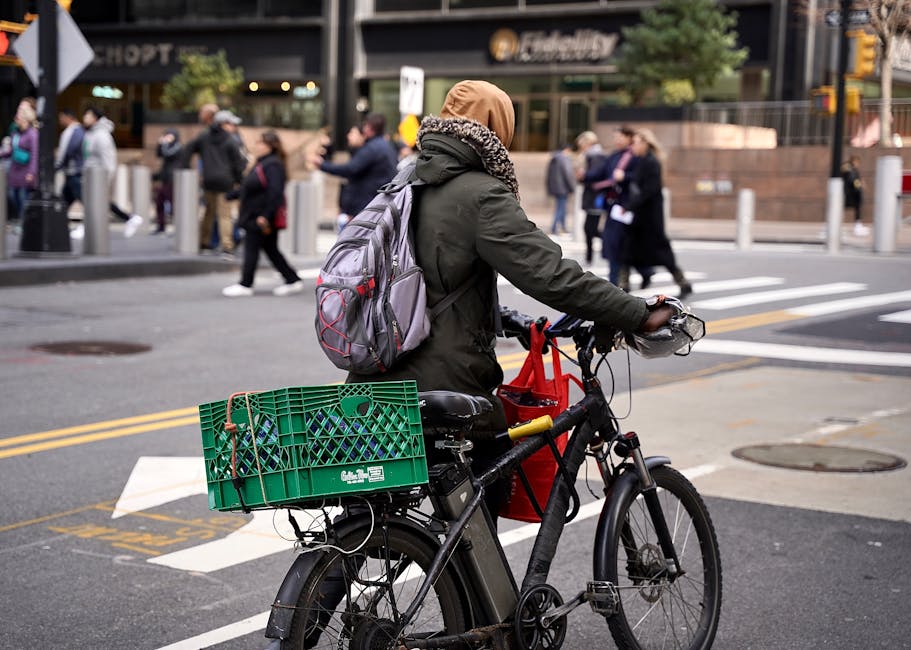
- Amazon has deployed 1,200 e-bikes in NYC to improve delivery efficiency and reduce emissions.
- The e-bikes are operated by third-party delivery companies, specializing in micro-mobility delivery.
- Amazon’s e-bike pilot program began in 2023, initially focusing on dense boroughs like Brooklyn and Manhattan.
- E-bikes are cutting delivery times and sidestepping parking and emissions challenges associated with traditional vans.
- The use of e-bikes raises the possibility of a two-wheeled future for urban logistics.
Why is Amazon suddenly flooding Manhattan and Brooklyn with electric bikes? As city streets grow more congested and delivery demand soars, the e-commerce giant is turning to a nimble, low-emission solution: e-bikes operated by third-party delivery companies. These compact vehicles are weaving through traffic, cutting delivery times, and sidestepping the parking and emissions challenges of vans. With New York City imposing stricter rules on truck traffic and pollution, Amazon’s pivot raises a critical question: could the future of urban logistics be two-wheeled? The answer may already be rolling down Pacific Street and Broadway.
The Role of E-Bikes in Amazon’s Urban Delivery Strategy

Amazon is directly addressing urban delivery inefficiencies by integrating electric bikes into its last-mile network, particularly in dense boroughs like Brooklyn and Manhattan. Rather than deploying its own riders, the company partners with small logistics firms—such as Rogue Urban Transport Systems and Pedal Me—that specialize in micro-mobility delivery. These subcontractors use Amazon-branded e-bikes equipped with cargo trailers to deliver packages, often completing routes faster than traditional vans. According to internal Amazon documents reviewed by Reuters, the pilot program began in 2023 with around 1,200 e-bikes, aiming to reduce congestion and carbon emissions while meeting customer expectations for same-day and next-day delivery.
Evidence of Success from NYC Operations

Data from New York City’s Department of Transportation supports the efficiency of bike-based delivery. In pilot zones where e-bikes have been deployed, delivery times have improved by up to 30% during peak traffic hours. A 2023 study by the NYC Environmental Protection Agency found that cargo e-bikes produce 90% fewer emissions per mile than diesel delivery vans. Amazon’s partners report high rider satisfaction and lower operating costs—no fuel, reduced maintenance, and easier parking. “We’re getting three times as many deliveries done during lunch hour compared to our old van,” said a logistics manager at a Brooklyn-based contractor. The city has also issued new permits and designated cargo bike loading zones, indicating institutional support. Amazon is reportedly analyzing this data to determine expansion into cities like Chicago, Seattle, and Washington, D.C.
Skeptical Voices and Urban Challenges

Despite the momentum, the e-bike rollout faces criticism from safety advocates and labor groups. Some worry that increased bike traffic, especially with heavy cargo trailers, could endanger pedestrians, particularly in crowded areas like Williamsburg and the Lower East Side. The lack of standardized safety gear and training across subcontractors has raised concerns. Additionally, gig economy critics point out that delivery workers, though essential, often work without health benefits or union representation. “These riders are bearing the risks while Amazon reaps the efficiency gains,” said a spokesperson for the Independent Delivery Workers Alliance. There are also logistical limits: e-bikes can’t carry large appliances or serve low-density suburbs effectively. Some experts argue that while e-bikes work in hyper-dense urban cores, they’re not a universal solution.
Real-World Impact on Cities and Consumers

The ripple effects of Amazon’s e-bike program are already visible. In neighborhoods like Park Slope and Dumbo, residents report fewer idling delivery vans and quieter streets. Local businesses are adapting, with some coffee shops offering free charging stations to couriers. The city has responded with new infrastructure, including protected bike lanes and secure cargo bike parking near commercial hubs. Beyond New York, cities like Portland and Minneapolis are watching closely, with officials citing Amazon’s model as a potential blueprint for reducing urban freight emissions. If scaled, such programs could significantly cut delivery-related traffic—a 2022 ScienceDaily report estimated that replacing 10% of urban delivery vans with e-cargo bikes could reduce CO2 emissions by 300,000 tons annually in the U.S.
What This Means For You
If you live in a major city, you may soon see more Amazon-branded e-bikes zipping past your window. This shift could mean faster deliveries, less neighborhood noise, and cleaner air—all while raising questions about labor conditions and street safety. For city planners and policymakers, Amazon’s experiment offers a template for sustainable logistics. For consumers, it’s a reminder that convenience and sustainability can align, but not without trade-offs. The broader transformation of urban delivery is underway, and it’s being powered by electricity and pedals.
As Amazon evaluates national expansion, one question lingers: can a gig-based, bike-powered delivery network deliver not just packages, but fair wages and safer streets? The answer may shape the future of how goods move in America’s cities.
Source: The New York Times