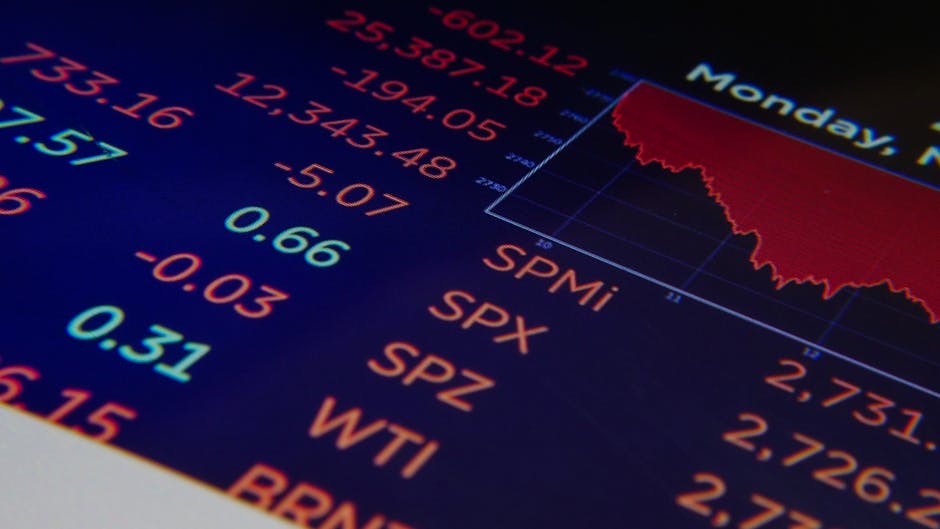
- The 30-year U.S. Treasury yield breached 5.18%, a threshold not seen since July 2007, signaling a shift away from ultra-low interest rates.
- Pension funds, mortgage lenders, and foreign central banks are reassessing their investments in U.S. government debt due to rising inflation and deficits.
- The era of cheap, stable long-term borrowing is fracturing, forcing investors to adapt to a future of persistent inflation and uncertain monetary policy.
- The 30-year Treasury yield surge reflects market anxiety over inflation, which has remained above the Federal Reserve’s 2% target for 18 months.
- Investors now face a reality where U.S. government debt is being repriced, making it less attractive as a safe-haven asset.
On a quiet Tuesday morning in May 2026, the hum of electronic trading floors in New York and Chicago masked a seismic tremor coursing through global financial markets. At precisely 9:47 a.m. Eastern Time, the 30-year U.S. Treasury yield breached 5.18%, a threshold not seen since July 2007, just months before the global financial crisis unraveled. Traders paused, screens blinked red and green in unison, and algorithms recalibrated. This wasn’t just a number—it was a signal. Decades of assumptions about cheap, stable long-term borrowing were fracturing. Pension funds, mortgage lenders, and foreign central banks took note: the era of ultra-low rates was not merely over, but actively reversing. Investors now face a stark reality—U.S. government debt, once considered the world’s safest asset, is being repriced for a future of persistent inflation, swelling deficits, and uncertain monetary policy.
Yield Surge Reflects Market Anxiety Over Inflation

The 30-year Treasury yield topping 5.18% marks a pivotal moment in the bond market’s reassessment of risk. This long-term rate, which influences everything from mortgage costs to corporate borrowing, has climbed steadily over the past 18 months as inflation has remained above the Federal Reserve’s 2% target. March 2026 data showed core CPI rising at a 3.9% annual rate, driven by housing, healthcare, and services inflation that has proven stubbornly resistant to higher short-term rates. Unlike the 10-year yield, which reacts more to Fed policy expectations, the 30-year yield reflects long-term inflation and fiscal outlooks. Analysts at Reuters note that this surge suggests investors now expect inflation to remain structurally elevated, possibly due to demographic pressures, deglobalization trends, and sustained government spending. With the national debt exceeding $40 trillion, markets are demanding a higher premium to hold long-dated Treasuries.
From Crisis to Calm and Back: The Bond Market’s Rollercoaster

The journey to this peak began in the aftermath of the 2008 financial crisis, when the Federal Reserve slashed rates and launched quantitative easing to stabilize the economy. For over a decade, the 30-year yield remained below 3%, reaching a historic low of 0.72% in March 2020 during the pandemic’s early chaos. That era of near-zero rates encouraged massive borrowing by governments, corporations, and households. But as inflation surged post-2021, driven by supply chain disruptions, fiscal stimulus, and energy shocks, the Fed reversed course. By 2023, it began hiking rates aggressively. Though inflation cooled temporarily in 2024, it rebounded in 2025 as wage growth accelerated and climate-related disruptions impacted food and energy prices. Each Fed statement hinting at a ‘higher-for-longer’ rate path further pressured long-term yields, culminating in the 2026 breakout. The 2007 high of 5.24% now appears within reach.
The Policymakers and Investors Shaping the New Reality

At the Federal Reserve, Chair Jerome Powell’s successor, Governor Sarah Lin, has faced mounting pressure to clarify the central bank’s long-term strategy. Unlike her predecessor, Lin has emphasized fiscal sustainability, warning Congress in early 2026 that persistent deficits could undermine monetary policy. Her testimony before the Senate Banking Committee drew sharp reactions from lawmakers on both sides of the aisle. Meanwhile, major bondholders like PIMCO, BlackRock, and the Bank of Japan have adjusted their portfolios, reducing exposure to long-dated U.S. debt. Foreign demand, once a stabilizing force, has waned as global investors diversify into European, Middle Eastern, and Asian sovereign bonds. Traders at major Wall Street firms report increased volatility in the long bond market, with hedge funds betting on further yield increases through interest rate swaps and Treasury futures. The psychology has shifted: safety is no longer assumed, but priced.
Consequences for Borrowers, Homeowners, and the Federal Budget

The rise in 30-year yields has immediate and far-reaching implications. For homeowners, the average 30-year fixed mortgage rate—closely tied to the Treasury yield—has climbed to 7.4%, up from 3% in 2021, pricing many first-time buyers out of the market. Corporations planning long-term investments face higher financing costs, potentially slowing capital expenditures. Most critically, the federal government’s interest burden is soaring. With over $9 trillion in debt maturing in the next five years, the U.S. Treasury may soon pay more than $600 billion annually in interest—surpassing defense spending. This squeezes funding for infrastructure, education, and social programs. Economists warn of a potential feedback loop: higher rates increase deficits, which spook investors, pushing rates even higher—a dynamic seen in past sovereign debt crises abroad.
The Bigger Picture
This yield surge is not just a financial event—it’s a reckoning. It reflects a broader shift in how markets assess risk in an age of climate change, geopolitical fragmentation, and aging populations. The post-1980 era of disinflation and falling interest rates, which enabled decades of asset growth and debt-fueled expansion, may be over. The 30-year Treasury yield’s climb to 5.18% is a signal that investors are no longer willing to lend to the U.S. government at historically low rates without compensation for long-term uncertainty. This repricing could reshape everything from retirement planning to global capital flows.
What comes next will depend on the interplay of policy, inflation, and market psychology. If inflation shows sustained moderation, yields could stabilize. But without credible fiscal reform or structural economic shifts, the path may lead to even higher borrowing costs. The 5.18% threshold is not an endpoint, but a milestone in a new economic era—one where debt is no longer cheap, and confidence must be earned, not assumed.
Source: Reddit