- Synthetic egg technology may bring back three extinct bird species by 2030, with Colossal Biosciences leading the research.
- The fully synthetic egg replicates the nutrient exchange, gas diffusion, and mechanical protection of a natural bird’s egg.
- The synthetic system has sustained edited band-tailed pigeon embryos for up to 48 hours in lab tests.
- The breakthrough in artificial incubation raises questions about the ethics of reviving species lost to human recklessness.
- The research, published in Nature, marks a significant leap toward de-extinction with the use of hydrogel, proteins, and lab-grown tissue.
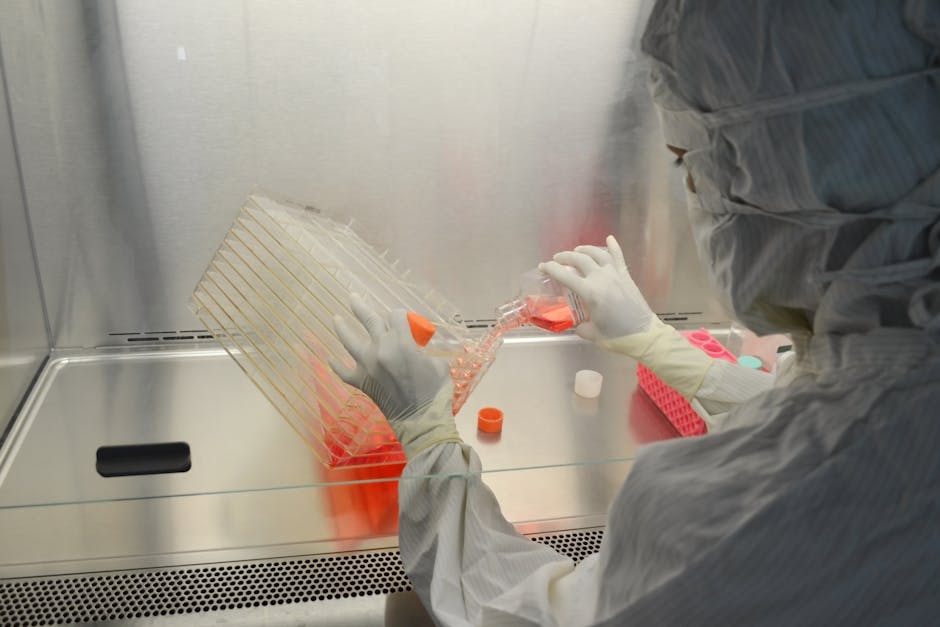
In a dimly lit lab in Dallas, a translucent, jelly-like sphere pulses faintly under a microscope, its membrane rippling with the quiet energy of bioengineered life. This is no ordinary egg. It is a synthetic avian incubator, meticulously crafted from hydrogel, proteins, and lab-grown tissue—designed to mimic the complex environment of a bird’s natural egg. Researchers at Colossal Biosciences watch in tense silence as a cluster of cells, derived from edited stem cells of the band-tailed pigeon, begins to organize into early embryonic structures. The moment, though still preliminary, represents a leap toward a once-impossible dream: the resurrection of extinct birds. Yet beyond the awe lies a deep unease. Can science responsibly bring back species lost to human recklessness? And if so, should it?
Breakthrough in Artificial Incubation

Colossal Biosciences, the high-profile de-extinction startup co-founded by entrepreneur Ben Lamm and geneticist George Church, announced the development of a fully synthetic egg capable of supporting early avian embryonic development. Published in a study in Nature on May 19, 2026, the research details a bioactive scaffold that replicates the nutrient exchange, gas diffusion, and mechanical protection of a natural bird’s egg. So far, the synthetic system has sustained edited band-tailed pigeon embryos for up to 48 hours—far short of full hatching, but a critical proof of concept. The team aims to integrate gene-edited cells from extinct species like the passenger pigeon and the dodo, using CRISPR to reassemble key genomic sequences from preserved museum specimens. While no viable offspring have yet been produced, the synthetic egg marks the first functional platform for avian de-extinction outside a living host.
The Long Road to De-Extinction

The idea of reviving extinct species has captivated scientists since the discovery of DNA’s structure in the 1950s, but avian de-extinction has remained especially elusive. Unlike mammals, which can be gestated in surrogate mothers, birds rely on external incubation within a highly specialized egg—a self-contained ecosystem nearly impossible to replicate. Previous attempts, including failed efforts to hatch edited chicken embryos in artificial shells, collapsed under the complexity of calcium regulation, vascular development, and microbial sterility. Colossal’s breakthrough builds on advances in biomaterials and developmental biology, particularly from studies on quail and zebra finch embryos conducted at the University of California, Santa Cruz. By reverse-engineering the egg’s chorioallantoic membrane and yolk sac analogs, researchers created a dynamic, semi-permeable system that responds to embryonic metabolic needs—a milestone decades in the making.
The Scientists Behind the Shell

At the helm of Colossal’s avian division is Dr. Mary Nguyen, a developmental biologist who previously led stem cell research at the San Diego Zoo Wildlife Alliance. She argues that the synthetic egg is not just a tool for de-extinction, but a potential lifeline for critically endangered birds like the kakapo and the California condor, whose low reproduction rates hinder conservation. “We’re building more than a time machine,” Nguyen said in an interview. “We’re constructing a new kind of nursery—one that could bypass the fragility of natural incubation in threatened species.” Yet the company’s ambitions have drawn scrutiny. Critics note that Colossal is backed by venture capital firms with profit-driven timelines, raising concerns about scientific rigor versus media spectacle. Some researchers within the conservation biology community worry that focusing on charismatic extinct species distracts from protecting living ones now on the brink.
Ecological and Ethical Repercussions

If successful, the synthetic egg could enable the reintroduction of species absent for over a century, potentially restoring lost ecological functions—such as seed dispersal by the dodo in Mauritius. But reintroduction poses risks: modern ecosystems have evolved in their absence, and introducing a proxy species could disrupt existing balances. Moreover, animal welfare concerns loom large. Would a resurrected passenger pigeon, raised in a lab and hatched artificially, possess the behavioral instincts to survive in the wild? The International Union for Conservation of Nature (IUCN) has issued preliminary guidelines on de-extinction, urging caution and demanding rigorous environmental impact assessments before any release. Legal frameworks remain underdeveloped, with no international consensus on the status of revived species—whether they are considered new organisms or legal continuations of extinct ones.
The Bigger Picture
This innovation forces a reckoning with humanity’s role in both extinction and restoration. The synthetic egg embodies a newfound power: not just to manipulate genes, but to rebuild the very cradles of life. Yet it also reflects a deeper tension—between technological optimism and ecological humility. As climate change accelerates biodiversity loss, tools like this may become essential. But they must be guided by more than scientific possibility. The question is not only whether we can revive lost species, but whether doing so helps heal ecosystems—or merely salves our guilt.
What comes next will depend on collaboration between geneticists, ecologists, and ethicists. Colossal plans to open its synthetic egg platform to independent researchers by 2027, inviting peer validation. Field trials with endangered species could begin within five years. But the ghost of the dodo and the whisper of the passenger pigeon’s wings remain just that—echoes of a past we are only beginning to understand. The synthetic egg is not an end, but a threshold.
Source: Nature