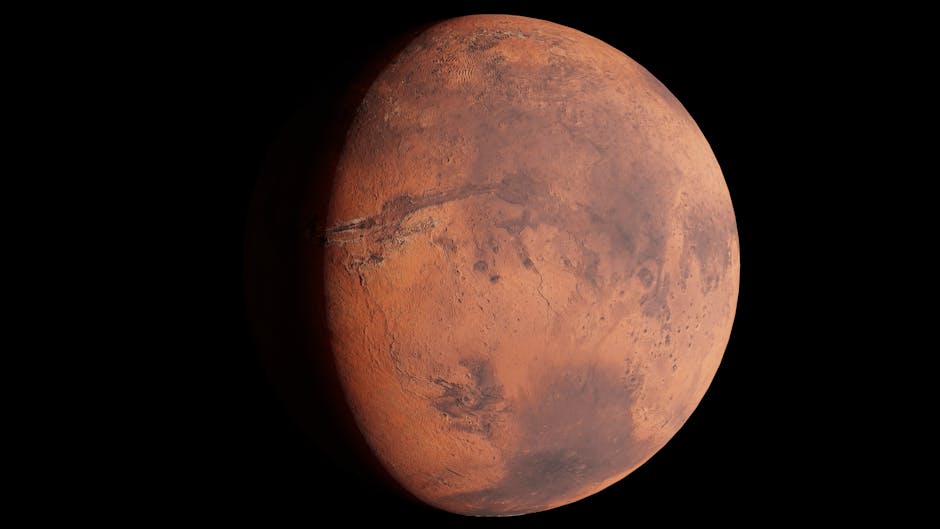
- Proxima Centauri b is a rocky planet about 1.17 times the mass of Earth, orbiting a faint red dwarf star just 4.24 light-years away.
- The discovery of a stable atmosphere on Proxima Centauri b could be a crucial indicator of potential habitability.
- Scientists are no longer focused on detecting the planet, but rather on characterizing its atmosphere and composition.
- The presence of oxygen, methane, or carbon dioxide in the atmosphere could strengthen the case for habitability.
- The James Webb Space Telescope has already conducted observations of the Proxima Centauri system to search for signs of an atmosphere.
In the vast, star-strewn dark beyond our solar system, one small world glimmers with quiet promise. It circles Proxima Centauri, a faint red dwarf just 4.24 light-years away—the closest star to our Sun. There, bathed in crimson starlight, lies Proxima Centauri b: a rocky planet about 1.17 times the mass of Earth, clinging to the edge of its star’s habitable zone. For over a decade, it has loomed large in the imaginations of astronomers and dreamers alike—not because it is particularly Earth-like in appearance, but because it is tantalizingly close, and just possibly, habitable. Telescopes have watched it pass in front of its star, collecting whispers of light, parsing shadows for clues. The air is thick with anticipation: if life exists beyond Earth, this unassuming sphere may be our first glimpse of it.
The Hunt for an Atmosphere

Today, the focus has shifted from mere detection to characterization. Scientists are no longer asking if Proxima Centauri b exists—they know it does. The critical question now is whether it possesses an atmosphere, and if so, what it’s made of. Without one, the planet would be a barren, irradiated rock, scorched by stellar flares and stripped of liquid water. But with a stable atmosphere, especially one containing oxygen, methane, or carbon dioxide, the case for potential habitability grows stronger. The James Webb Space Telescope (JWST) has already conducted observations of the system, analyzing the starlight filtering through the planet’s potential atmospheric envelope during transits. Early data remains inconclusive, but researchers are refining models to distinguish between a barren world and one that might nurture microbial life. These observations are complicated by Proxima Centauri’s frequent and violent solar flares, which could erode any atmosphere over time—yet simulations suggest that under the right conditions, atmospheric retention is still possible.
From Speculation to Discovery

The story of Proxima Centauri b began in earnest in 2016, when a team led by astronomers at the European Southern Observatory announced its existence using the radial velocity method. By measuring the star’s subtle wobble—induced by the planet’s gravitational tug—they inferred the presence of a world orbiting every 11.2 days. Its location within the habitable zone, where temperatures could allow liquid water, made it an instant scientific sensation. The discovery was part of a broader revolution in exoplanetary science, one driven by missions like Kepler and TESS, which have identified over 5,000 confirmed exoplanets. Yet Proxima b stood apart: proximity allows for deeper study than distant worlds. Before its discovery, most habitable-zone candidates were hundreds or thousands of light-years away; Proxima b, by contrast, is practically next door in cosmic terms. This closeness has made it a prime target for follow-up observation and a focal point in the debate over interstellar exploration.
The Minds Behind the Mission

At the heart of this pursuit are astronomers like Dr. Guillem Anglada-Escudé, who led the original discovery team, and Dr. Sara Seager at MIT, a pioneer in exoplanet atmosphere research. These scientists are driven by a blend of curiosity and methodological rigor, balancing optimism with skepticism. Seager, for instance, has developed models to detect biosignature gases in alien atmospheres, even as she cautions against overinterpreting early data. Meanwhile, initiatives like Breakthrough Starshot—a project aiming to send gram-scale probes to the Alpha Centauri system at 20% the speed of light—are betting that Proxima b is worth visiting. Funded by billionaire Yuri Milner and supported by figures like the late Stephen Hawking, the project embodies a long-term vision: if we can’t go ourselves, we’ll send our eyes in the form of tiny spacecraft. For these researchers, the planet represents not just a scientific target, but a symbol—a test of whether life is a universal phenomenon or a lonely Earthbound accident.
Implications for Earth and Beyond

Confirming an atmosphere on Proxima Centauri b—or better yet, signs of biological activity—would reshape humanity’s understanding of its place in the cosmos. For astrobiologists, it would validate decades of theoretical work and redirect funding toward similar nearby systems. For planetary scientists, it would offer a natural laboratory to study atmospheric evolution under extreme stellar conditions. Ethically and philosophically, the discovery of even microbial life on a neighboring world would challenge religious, cultural, and existential frameworks. Conversely, if Proxima b turns out to be lifeless despite its favorable position, it may suggest that habitability requires more than just location—that factors like stellar stability, magnetic fields, and planetary composition are equally crucial. Either outcome advances science, but only one could ignite a new era of interstellar ambition.
The Bigger Picture
Proxima Centauri b is more than a single data point; it is a milestone in humanity’s quest to answer Carl Sagan’s enduring question: Are we alone? Its study exemplifies how modern astronomy blends telescope observation, theoretical modeling, and engineering innovation. As Nature recently highlighted, the coming decade could deliver definitive answers thanks to next-generation instruments like the Extremely Large Telescope in Chile. Whether or not life exists there, the planet forces us to confront the fragility and rarity of our own biosphere.
What comes next is a new phase of inquiry—deeper, sharper, and more focused. If an atmosphere is confirmed, the search for biosignatures will intensify. If not, scientists will turn to other red dwarf systems, refining their criteria for habitability. One way or another, Proxima Centauri b has already changed the game. It has brought the dream of finding alien life from the realm of speculation into the domain of testable science.
Source: New Scientist