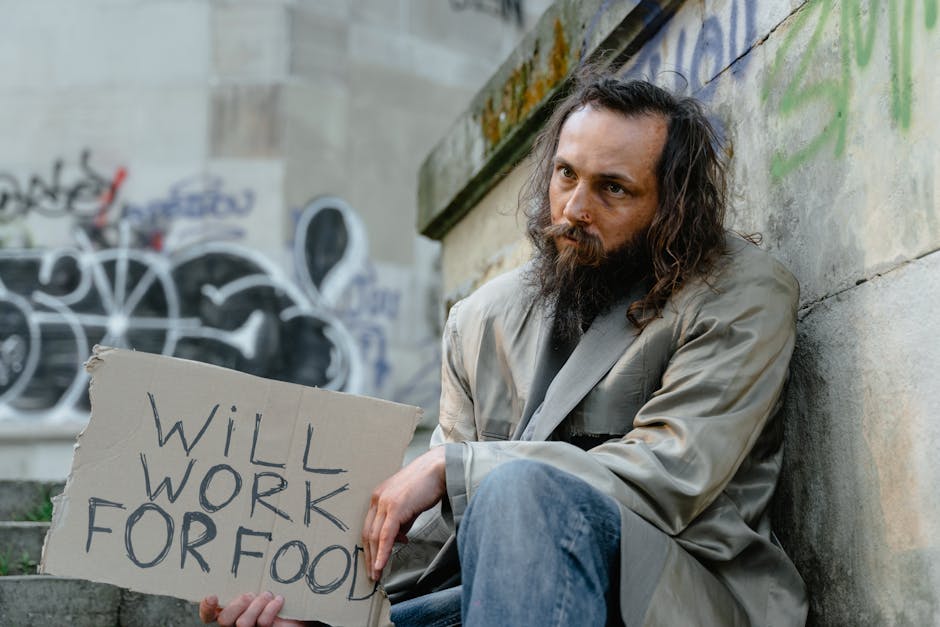
- In 1991, nearly one-third of US college graduates struggled to find full-time work within six months of leaving school.
- This phenomenon has repeated itself in the Class of 2024, with young job seekers facing uncertainty due to inflation, AI-driven automation, and hiring slowdowns.
- Parents who navigated the early-1990s recession are now watching their children struggle to find stable employment in emerging tech fields.
- Traditional career paths are evaporating, leaving recent graduates to adapt to a rapidly changing job market.
- Underemployment among recent graduates rose to 37% in 2023, a level not seen since the Great Recession.
In 1991, nearly one-third of college graduates in the United States struggled to find full-time work within six months of leaving school, according to Bureau of Labor Statistics data cited in a landmark New York Times feature that year. Many took jobs far below their qualifications, some returned home, and optimism gave way to anxiety. Today, their children—members of the Class of 2024—are stepping into a labor market that, despite technological leaps and economic growth, feels just as precarious. With inflation lingering, AI-driven automation accelerating, and hiring slowing across tech, finance, and media sectors, young job seekers face a familiar sense of uncertainty, as if history is repeating itself in high definition.
A Cycle of Economic Anxiety

What makes the current moment distinct is not just the economic turbulence, but the intergenerational echo it creates. Parents who weathered the early-1990s recession now watch their children apply to jobs that didn’t exist a decade ago—prompt engineers, AI ethicists, digital twin analysts—while traditional career paths evaporate. The late 20th-century promise of steady upward mobility through education is fraying. The Federal Reserve Bank of New York reports that underemployment among recent graduates rose to 37% in 2023, a level not seen since the aftermath of the Great Recession. This recurrence underscores a broader pattern: each generation of young workers absorbs the shocks of structural economic shifts, often paying the highest price for transitions they did not create.
From Recession Echoes to Digital Disruption

The Class of 1991 entered the workforce amid a sluggish recovery from the 1990–1991 recession, marked by bank failures, declining manufacturing, and corporate downsizing. Today’s graduates confront a different but equally disorienting landscape—one shaped by rapid digitization, the gig economy, and climate-driven industry shifts. While unemployment remains low at 3.9% nationally, the quality and stability of available jobs are in question. According to a 2024 BBC analysis of OECD labor data, over half of new graduate roles in the U.S. and UK are temporary, contract-based, or lack benefits. Fields like journalism, law, and even academia—once seen as stable—are cutting entry-level positions, while tech giants that once hired en masse now prioritize automation and productivity tools over human capital.
The Hidden Cost of Flexibility

The rise of project-based work and freelance platforms has been framed as a win for flexibility, but for new graduates, it often translates into instability. Many report applying to over 200 jobs without securing an offer, a phenomenon documented in a recent Harvard Business School study. Employers, meanwhile, demand hybrid work models while simultaneously tightening office access—leaving graduates without the informal mentorship and networking crucial for career development. Furthermore, the integration of AI in hiring processes has introduced new biases; résumé-screening algorithms often penalize non-traditional educational paths or employment gaps, disproportionately affecting first-generation college students and those from underrepresented backgrounds. These systemic barriers compound the psychological toll: a 2023 American Psychological Association survey found that 68% of adults under 30 cite job insecurity as a primary source of stress.
Generational Resilience, Structural Limits

Despite these challenges, today’s graduates are more adaptable and digitally fluent than any prior generation. They enter the workforce fluent in data literacy, remote collaboration, and cross-platform communication—skills that were niche in 1991 but now essential. However, adaptability has its limits when structural conditions work against mobility. Real wages for young workers have barely budged since 2000, even as the cost of living and student debt have soared. Median student loan debt now exceeds $37,000 per borrower, with repayment timelines stretching into middle age. Unlike their parents, who could often rely on homeownership or pension plans, today’s youth face a world where wealth accumulation is increasingly out of reach without generational support. The result is not just economic stagnation, but a crisis of confidence in the social contract that once linked education to opportunity.
Expert Perspectives
Economists are divided on whether today’s job market is fundamentally worse than that of 1991. Dr. Lisa Chen of the Economic Policy Institute argues that “the current environment is more insidious—low unemployment masks deep fissures in job quality and access.” In contrast, Wharton professor Michael Rostov contends that “digital platforms offer more entry points than ever before, even if they’re not traditional jobs.” What both agree on is that policy intervention is overdue. Expanding apprenticeship programs, regulating AI in hiring, and forgiving student debt could help bridge the gap between potential and opportunity.
Looking ahead, the trajectory of the graduate labor market will depend not just on economic cycles but on societal choices. Will governments and institutions prioritize youth employment with targeted investments? Can companies balance efficiency with mentorship? As the children of the 1991 cohort navigate this uncertain terrain, their success may hinge less on individual grit and more on whether the economy evolves to honor the promise of a degree in the 21st century.
Source: The New York Times