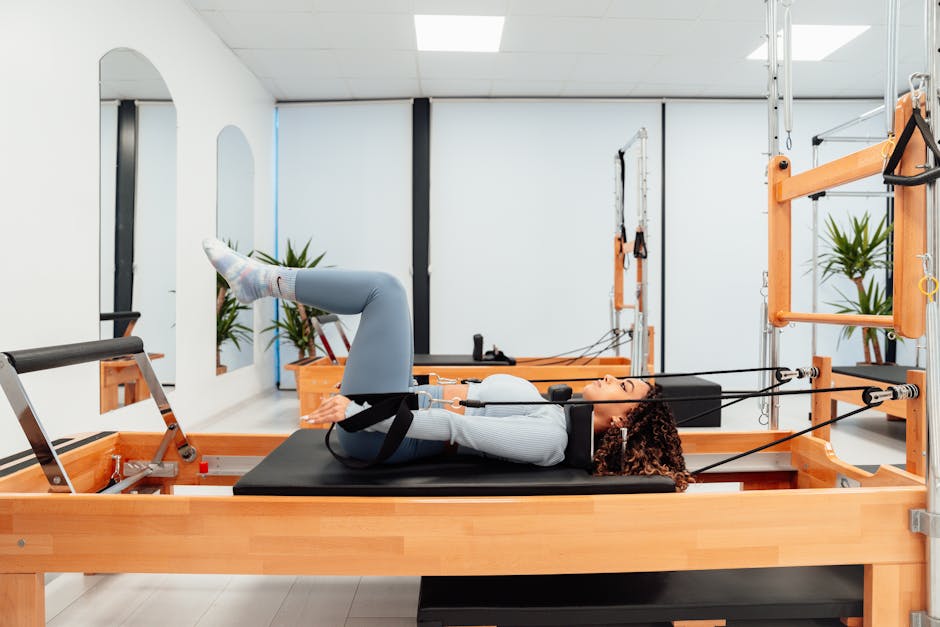
- Gluteal amnesia affects 1 in 3 active adults, impacting even those who exercise regularly and appear to be in peak condition.
- The condition describes a disconnect between the brain and the gluteus maximus, where the muscle exists but fails to fire during functional movements.
- Gluteal amnesia can lead to subtle consequences such as a wobble during squats, ache after long walks, and persistent tightness in the hip flexors.
- The imbalance can cascade into chronic pain, joint degradation, and performance plateaus even among the most disciplined exercisers.
- Gluteal dysfunction is not unique to sedentary individuals, but rather affects active populations who neglect their posterior chain development.
In a quiet corner of a bustling San Francisco physical therapy clinic, a 34-year-old marathon runner lies face down on an examination table, confused and slightly embarrassed. Despite logging 40 miles a week and religiously attending strength training classes, she can’t activate her glutes when asked to lift a single leg. Her hamstrings and lower back tense up instantly, compensating for muscles that should be leading the movement. This phenomenon—clinically known as gluteal amnesia—isn’t reserved for the sedentary. It’s silently spreading through gyms, offices, and fitness studios, affecting people who appear to be in peak condition. Often dubbed ‘dead glutes,’ the condition describes a disconnect between the brain and the gluteus maximus, where the muscle exists but fails to fire during functional movements. The consequences are subtle at first: a slight wobble during squats, an ache after long walks, or persistent tightness in the hip flexors. But over time, the imbalance can cascade into chronic pain, joint degradation, and performance plateaus—even among the most disciplined exercisers.
The Rise of Gluteal Dysfunction in Active Populations

Contrary to popular belief, gluteal amnesia isn’t just a problem for people who sit all day. A growing body of clinical evidence shows that even individuals who exercise regularly are susceptible, particularly if their routines emphasize quad-dominant movements like cycling or running without adequate posterior chain engagement. According to Dr. Jessica White, a sports physical therapist at the University of Colorado’s Movement Science Lab, up to 38% of recreational runners exhibit signs of gluteal inhibition during functional movement assessments. These individuals often over-rely on their hip flexors and lumbar extensors, creating a biomechanical domino effect that increases stress on the knees and lower spine. Diagnosis typically involves manual muscle testing and movement analysis, such as the prone hip extension test, where patients must lift a leg while lying face down. Failure to engage the glutes—indicated by excessive arching of the back or hamstring contraction—signals neuromuscular disconnection. The condition is frequently misdiagnosed as general weakness, but it’s more accurately described as a communication breakdown between the nervous system and the gluteal muscles.
How Modern Lifestyles Switched Off Our Strongest Muscles

The roots of gluteal amnesia trace back to the mismatch between human evolution and contemporary living. Our glutes evolved to power walking, running, climbing, and lifting—activities that required deep hip extension. But today’s average adult spends over nine hours a day seated, shortening the hip flexors and placing the glutes in a lengthened, inactive state. This prolonged positioning downregulates neural signaling to the gluteus maximus, a phenomenon known as arthrokinetic inhibition. Meanwhile, repetitive motions in modern fitness routines—such as forward-leaning cycling postures or shallow-range leg presses—fail to reactivate the dormant muscles. Physical therapists have observed a sharp uptick in gluteal inhibition since the early 2000s, coinciding with the rise of desk-based work and high-volume endurance training. A 2019 study published in the Journal of Sports Rehabilitation found that participants who sat for more than eight hours daily showed significantly reduced gluteal activation during gait, even if they exercised for an hour afterward. The body, it seems, doesn’t fully ‘reset’ after brief activity if the dominant posture remains passive.
The Physical Therapists and Trainers Fighting to Reactivate the Glutes

Behind the growing awareness of gluteal amnesia are physical therapists and corrective exercise specialists who’ve made neuromuscular re-education their mission. Practitioners like Gray Cook, co-founder of the Functional Movement Systems, have long advocated for movement screening before loading the body with strength training. Their approach prioritizes motor control—teaching the brain to ‘find’ and fire the glutes—before adding resistance. This often begins with isolation exercises such as glute bridges with a focus on pelvic tilt control, progressing to single-leg variations and resisted hip thrusts. These professionals emphasize mindfulness during movement, urging clients to concentrate on the sensation of glute contraction rather than simply completing reps. Some clinics now incorporate biofeedback tools, like electromyography (EMG) sensors, to visually demonstrate when the glutes are engaged. For many patients, the revelation that they’ve been ‘cheating’ with their hamstrings or lower back is both surprising and transformative. The goal isn’t just strength—it’s reestablishing the neural highway that allows the body’s largest muscle to do its job.
Consequences of Ignoring the Silent Weakness

Failing to address gluteal amnesia can lead to a cascade of musculoskeletal issues. With the glutes inactive, adjacent muscles compensate, leading to overuse injuries like patellofemoral pain syndrome, iliotibial (IT) band friction, and sacroiliac joint dysfunction. Runners may experience reduced stride efficiency and increased ground reaction forces, while lifters often develop lower back strain from improper deadlift or squat mechanics. Long-term, the imbalance contributes to pelvic instability and accelerated wear in the hip and knee joints. For older adults, the implications are even more serious: weak glutes are a known risk factor for falls and reduced mobility. According to the Centers for Disease Control and Prevention, falls are the leading cause of injury-related deaths among Americans over 65, and gluteal strength is a key predictor of balance recovery. Addressing the issue early, even in asymptomatic individuals, can prevent downstream complications and enhance athletic performance.
The Bigger Picture
Gluteal amnesia is more than a fitness buzzword—it’s a symptom of a deeper disconnect between human physiology and modern life. It underscores how physical health isn’t solely determined by how much we exercise, but by the quality of our movement throughout the day. As work, leisure, and transportation become increasingly sedentary, the body adapts in ways that undermine even the most rigorous workout routines. The rise of this condition reflects a broader shift in healthcare toward preventive, movement-based interventions. Instead of waiting for pain to emerge, experts urge a proactive focus on neuromuscular integrity, especially in populations that appear healthy on the surface.
What comes next is a redefinition of fitness—one that values functional movement as much as strength or endurance. Simple changes, like standing desks, regular posture resets, and glute activation drills before workouts, can reawaken dormant muscles. The message is clear: having strong glutes isn’t just about appearance or performance. It’s about preserving mobility, preventing injury, and ensuring the body functions as the finely tuned machine it was designed to be.
Source: Huffpost