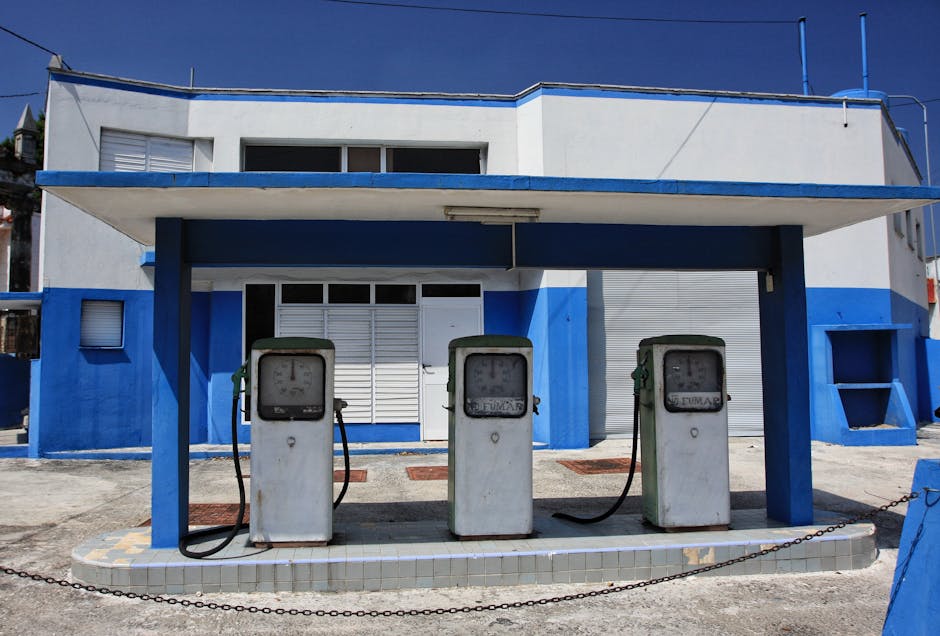
- Cuba is facing its worst fuel crisis in over three decades, with gas stations running dry and public transportation paralyzed.
- The US has offered emergency aid to Cuba, but only if the country accepts political reforms, including the release of political prisoners and free elections.
- The US strategy has sparked international criticism, with some questioning whether it’s humanitarian assistance or a veiled attempt at regime change.
- Decades of economic sanctions have deepened hardship in Cuba without yielding political transformation, according to evidence.
- The fuel crisis in Cuba has disrupted essential services, including healthcare, food distribution, and sanitation, with power outages exceeding 12 hours a day.
Cuba is experiencing its most severe fuel crisis in over three decades, with gas stations running dry, public transportation paralyzed, and hospitals struggling to maintain power. Despite widespread humanitarian need, the United States has conditioned emergency aid on Cuba’s acceptance of political reforms—including the release of political prisoners and a commitment to free elections. This calculated linkage has sparked international criticism, with analysts questioning whether the US strategy is humanitarian assistance or a veiled attempt at regime change. The Biden administration maintains that its policy promotes democracy, but evidence suggests that decades of economic sanctions have deepened hardship without yielding political transformation.
Cuba’s Energy Collapse and Humanitarian Toll

The island nation, already reeling from years of economic stagnation and tightening US sanctions, now faces a paralyzing fuel shortage exacerbated by the collapse of its primary energy supplier, Venezuela, and restrictions on international financial transactions. Power outages exceed 12 hours a day in many regions, disrupting healthcare, food distribution, and sanitation services. In Havana, long lines form at bakeries and pharmacies as residents scramble for basic supplies. The Cuban government blames the crisis on the US embargo, which restricts access to fuel imports and spare parts for aging power plants. According to the United Nations, over 60% of Cuba’s energy infrastructure is obsolete, and repeated blackouts threaten to push the country into a full-scale humanitarian emergency. Despite these conditions, the US insists that any aid must be channeled through opposition groups, not the Cuban state.
US Policy: Humanitarian Aid or Political Leverage?

The Biden administration has allocated $12 million in assistance for Cuba, but funds are directed exclusively toward civil society organizations and dissident networks, bypassing official government channels. Secretary of State Antony Blinken stated the goal is to “empower the Cuban people, not the regime.” However, critics argue this approach undermines national sovereignty and weaponizes aid. The conditions attached to the aid—including demands for political liberalization and the restructuring of Cuba’s electoral system—are seen by many Latin American nations as overreach. Mexico and Argentina have condemned the policy as coercive, while the Caribbean Community (CARICOM) has called for unconditional humanitarian support. Legal experts note that tying aid to regime change may violate international norms, including the UN Charter’s principle of non-intervention.
Historical Echoes of Intervention

The current strategy evokes Cold War-era US policies aimed at isolating and destabilizing Cuba’s socialist government. Since the 1962 embargo, successive US administrations have used economic pressure to force political change, with limited success. The Cuban government, led since 2018 by President Miguel Díaz-Canel, has consistently rejected external interference, framing US actions as imperialist aggression. Historical precedents, such as the 1961 Bay of Pigs invasion and decades of CIA-backed operations, loom large in Cuban political memory. Today, sanctions remain a central tool, with the US listing Cuba as a state sponsor of terrorism—a designation that further restricts trade and financial access. According to a 2023 report by the Cuban Ministry of Foreign Affairs, the embargo has cost the country over $130 billion in economic losses since its inception. Despite this, Cuba has maintained its political system, suggesting sanctions often harm civilians more than regimes.
Global Reactions and Diplomatic Tensions

The US stance has drawn sharp rebukes from international institutions and foreign governments. The United Nations General Assembly has voted overwhelmingly for 31 consecutive years to condemn the US embargo, with only Israel and the US opposing. In 2023, 185 nations supported a resolution calling for an end to the blockade. The European Union has urged Washington to reconsider its approach, warning that conditional aid undermines trust and exacerbates suffering. Meanwhile, Russia and China have stepped up limited energy shipments to Cuba, framing their support as solidarity against Western pressure. Analysts warn that the geopolitical tug-of-war risks escalating regional tensions, particularly as Cuba strengthens alliances with US adversaries. The situation underscores a broader shift in global power dynamics, where humanitarian crises are increasingly politicized.
Expert Perspectives
“Offering aid with political strings attached is not humanitarianism—it’s coercion,” says Dr. Maria Lopez, a Latin America specialist at Georgetown University. “It alienates the very people the US claims to support.” In contrast, Dr. James Thurber of the American Enterprise Institute argues that “engaging authoritarian regimes without demanding reform only perpetuates oppression.” International law scholar Sarah Chen notes that while countries have the right to impose sanctions, conditioning aid on regime change may violate Article 2(7) of the UN Charter, which prohibits intervention in domestic affairs. The debate reflects a deeper divide in foreign policy circles over the ethics and efficacy of sanctions as tools of democratization.
As Cuba’s energy crisis deepens, the world will be watching whether the US reconsiders its conditional aid framework. With winter approaching and hospitals on the brink of collapse, time is running out. The Biden administration faces growing pressure from human rights groups and foreign allies to decouple humanitarian relief from political demands. Yet, without a shift in policy, the cycle of crisis and resistance is likely to continue. The central question remains: Can sustainable change be imposed from the outside, or must it emerge organically from within?
Source: Al Jazeera