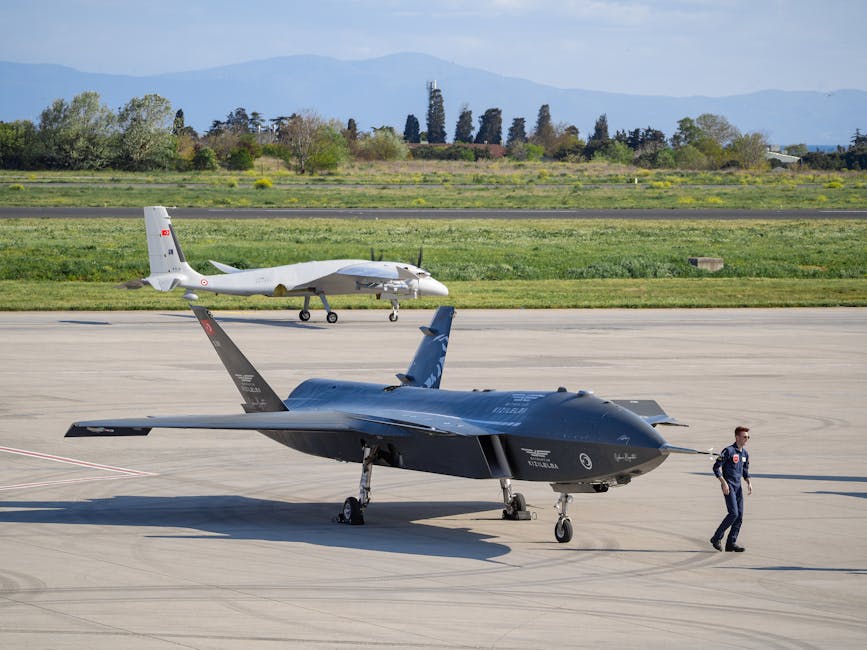
- Cuba has acquired over 300 drones from Russia and Iran in a major military expansion.
- The drones, including reconnaissance and weapon-capable variants, are being assembled at secure facilities on the island.
- Cuba’s drone fleet includes models that have seen action in Syria, Yemen, and Ukraine.
- At least 180 of the acquired drones are armed variants capable of carrying precision munitions.
- The drone expansion marks the most significant military buildup on the island since the Cold War.
On a fog-draped morning in Mariel, a port west of Havana, cranes lowered steel containers from a Russian cargo vessel under tight security. Inside, wrapped in vacuum-sealed casings, were components of unmanned aerial systems—drones bound for Cuban military control. Over the past nine months, Cuba has quietly acquired more than 300 drones from defense contractors in Russia and Iran, according to intelligence reports and shipping manifests reviewed by international analysts. These acquisitions, ranging from reconnaissance models to larger, weapon-capable variants, represent the most significant military buildup on the island since the Cold War. The drones arrived in staggered shipments through third-party nations, evading immediate detection. Now, they are being assembled at secure facilities near Camagüey and Pinar del Río, where Cuban engineers—some trained in Tehran and Moscow—prepare them for operational deployment. The skies above the Caribbean, long considered a buffer zone, may soon be patrolled by machines designed in distant conflicts.
Expanding Surveillance and Military Reach

Cuba’s drone fleet includes Iranian Shahed-129 and Mohajer-6 models, both of which have seen action in Syria and Yemen, as well as Russian Orlan-10 surveillance drones used extensively in Ukraine. According to defense analysts at Janes Defence Weekly, at least 180 of the acquired drones are armed variants capable of carrying precision munitions. The remainder are used for intelligence, surveillance, and reconnaissance (ISR). Some units have already conducted test flights along Cuba’s northern coastline, with radar signatures detected by U.S. Southern Command monitoring stations in Key West. The Cuban government has not confirmed the full extent of the purchases but has acknowledged receiving “unmanned aerial vehicles for coastal monitoring.” However, satellite imagery analyzed by the Center for Strategic and International Studies (CSIS) shows drone launch sites near Guantánamo Bay and the Isla de la Juventud, locations of strategic interest to U.S. military planners. The deployment suggests a dual-purpose strategy: projecting power in the Caribbean while enhancing domestic surveillance.
From Cold War Echoes to Modern Alliances

The current buildup echoes Cold War-era military cooperation between Cuba and the Soviet Union, but today’s alliances are more diffuse and adaptive. After the collapse of the USSR, Cuba’s military capabilities stagnated due to economic hardship and U.S. sanctions. However, in recent years, deepening ties with Russia and Iran have revitalized its defense sector. Since 2022, Cuba has hosted Russian naval vessels and allowed limited port access to Iranian ships, despite U.S. objections. The drone transfers are part of a broader military assistance package that includes radar systems, electronic warfare equipment, and training. According to a 2023 report by the U.S. Defense Intelligence Agency, Tehran and Moscow view Cuba as a strategic foothold to challenge U.S. influence in the Western Hemisphere. The drones, many of which are reverse-engineered from captured Western models, are now being repurposed for Caribbean conditions—adapted for humidity, salt corrosion, and long-endurance maritime patrols.
The Architects of Cuba’s Drone Program

The expansion is being driven by a tight circle of Cuban military and political leaders, notably General Álvaro López Miera, Minister of the Revolutionary Armed Forces, and President Miguel Díaz-Canel, who has prioritized national defense amid growing economic instability. Behind the scenes, Russian defense firms such as Almaz-Antey and Iranian entities like the Shahid Hemmat Industrial Group have provided technical support under opaque contracts. Some of the Cuban engineers involved in the program trained at the Imam Hussein University in Tehran, a military-affiliated institution known for drone development. Motivations are both defensive and geopolitical: Cuban officials cite the need to monitor illegal fishing, drug trafficking, and potential U.S. incursions. But analysts warn the drones could also be used to suppress dissent, especially as economic protests have increased since 2021. Internal documents suggest the program is framed as a matter of national sovereignty, but its ties to adversarial states complicate that narrative.
Regional Implications and U.S. Response

The drone buildup has triggered alarm in Washington and among Caribbean neighbors. U.S. officials fear the technology could be used to monitor American military activity in the region, particularly at the Guantanamo Bay Naval Base. There are also concerns that Cuba could share drone capabilities with allied non-state actors or allow foreign operators to use its territory for surveillance. In response, the Pentagon has increased reconnaissance flights and deployed additional radar systems to Florida and Puerto Rico. The State Department has issued diplomatic protests, calling the arms transfers a threat to regional stability. Meanwhile, countries like Jamaica and the Bahamas have quietly requested U.S. assistance in bolstering their own air defense systems. The situation risks escalating into a new phase of hemispheric tension, particularly if armed drones are deployed near international shipping lanes or U.S. airspace.
The Bigger Picture
This shift underscores how smaller nations are leveraging asymmetric technologies to alter strategic balances. Drones, once the domain of major militaries, are now accessible tools for states seeking to project power beyond their means. Cuba’s acquisitions reflect a global trend where countries bypass traditional arms limitations by sourcing from alternative suppliers. As seen in Ukraine, Ethiopia, and the South China Sea, drones are redefining modern conflict—offering surveillance, precision strikes, and psychological impact at relatively low cost. For the U.S., the Cuban case highlights vulnerabilities in its own backyard, challenging long-held assumptions about regional dominance. The spread of drone warfare technology is no longer confined to battlefields abroad; it has arrived on America’s doorstep.
What comes next may depend on diplomatic maneuvering and intelligence assessments in the coming months. If Cuba continues to integrate these drones into active military operations, the U.S. could respond with expanded sanctions or increased military presence in the region. Alternatively, backchannel talks might seek to de-escalate tensions. But one thing is clear: the Caribbean is no longer a quiet periphery. With over 300 new eyes in the sky, Cuba has rewritten its strategic posture—and the hemisphere must now reckon with the consequences.
Source: Dw